Intermediate Music Theory and Harmony
Diatonic Functions
Chords Have Jobs
You know how to build chords, but have you ever thought about why they're arranged in a specific order? A chord progression isn't just a random sequence of triads. It's a story with a beginning, middle, and end, all driven by the function of each chord within a key.
Think of it like a narrative. Some chords feel like home, stable and resolved. Others create tension, making you anticipate what's coming next. Music theorists group these roles into three main categories: Tonic, Predominant, and Dominant. To discuss them, we use Roman numeral analysis, which labels chords based on their scale degree, allowing us to see their function regardless of the key.
| Function | Roman Numerals (Major Key) | Feeling |
|---|---|---|
| Tonic | I, vi, iii | Home, stable, resolved |
| Predominant | IV, ii | Departure, building tension |
| Dominant | V, vii° | Peak tension, needs to resolve |
The Tonic (I) is your home base. It’s the chord that feels like a destination, providing a sense of rest and finality. The Predominant (IV and ii) chords create a sense of moving away from home. They build gentle tension and prepare the ear for something more dramatic. The Dominant (V) is the climax of the story. It contains the most tension and has a powerful magnetic pull back to the tonic. This tension comes primarily from the leading tone—the seventh degree of the scale. Because it's only a half step below the tonic note, it creates a strong desire for resolution.
Punctuating with Cadences
Just as punctuation marks the end of a sentence, a cadence is a two-chord gesture that concludes a musical phrase. The type of cadence used tells the listener whether the thought is finished or if there's more to come.
- Authentic Cadence (V–I): This is the strongest point of arrival, like a period at the end of a sentence. It provides a powerful sense of finality. Think of the end of the "Happy Birthday" song.
- Plagal Cadence (IV–I): This cadence feels softer and is often called the "Amen" cadence for its frequent use in hymns. It's a resolution, but less emphatic than the authentic cadence.
- Half Cadence (ends on V): This feels like a pause or a question, like a comma in the middle of a sentence. It leaves the listener hanging, expecting the music to continue.
- Deceptive Cadence (V–vi): Here, the music sets you up for a powerful V-I resolution but instead moves to the submediant (vi) chord. It's a surprise that skillfully prolongs the musical tension and pushes the narrative forward.
Adding Color with Seventh Chords
Adding a fourth note to our basic triads—a seventh above the root—creates diatonic seventh chords. These chords add richness and complexity to the harmonic landscape, and their functions largely mirror their triadic counterparts, but with more flavor.
In a major key, a predictable pattern of seventh chords emerges:
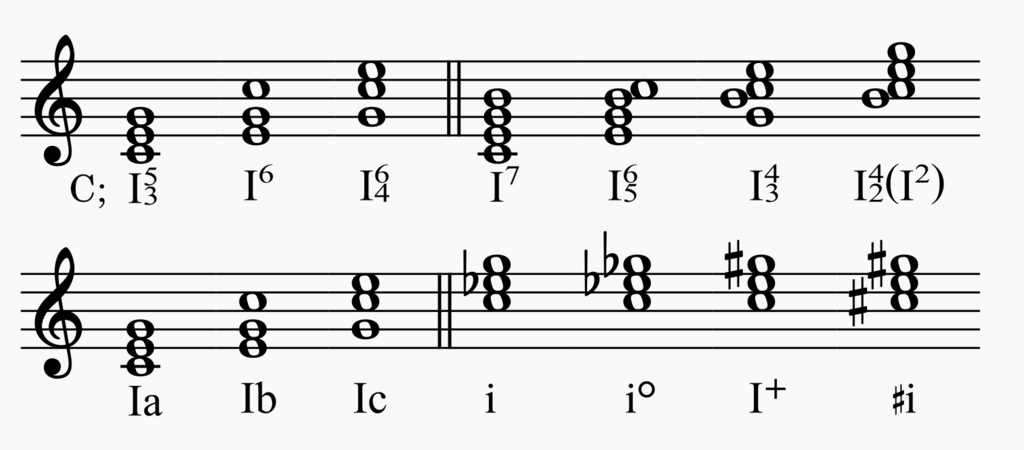
- I and IV become Major 7th chords (Imaj7, IVmaj7).
- ii, iii, and vi become Minor 7th chords (ii_m_7, iii_m_7, vi_m_7).
- V becomes a Dominant 7th chord (V7). This is arguably the most important seventh chord, as its inherent tritone (the interval between the 3rd and 7th) desperately wants to resolve.
- vii° becomes a Half-Diminished 7th chord (viiø7).
This added complexity doesn't change the core functions. The ii-V-I progression (ii_m_7 – V7 – Imaj7) is the backbone of countless jazz standards and pop songs, a perfect demonstration of the predominant-dominant-tonic flow.
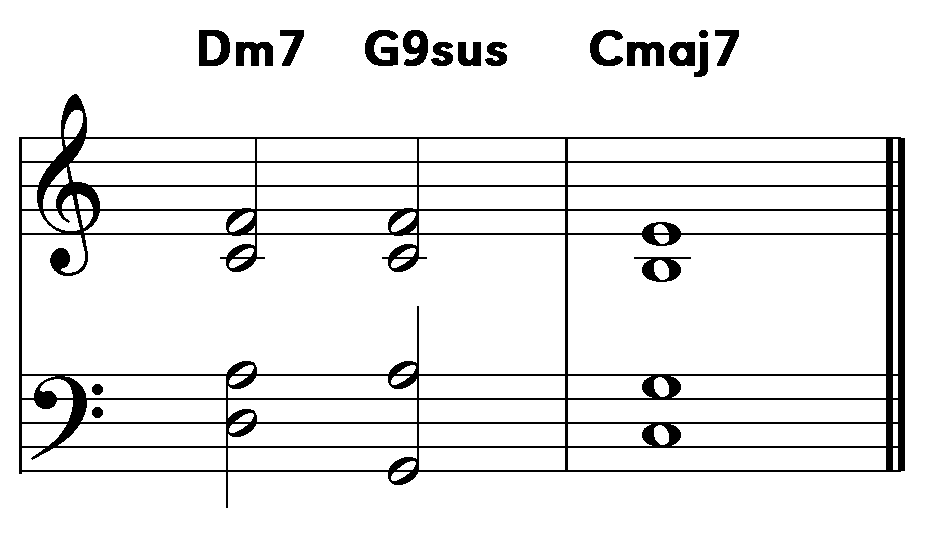
Understanding these functions moves you beyond simply identifying chords. You can now see the 'why' behind a progression. You can anticipate where the music is going and make deliberate choices in your own writing to create specific emotional effects, whether it's the comfort of a return to the tonic or the surprise of a deceptive cadence.
Ready to test your understanding of how these chords work together?
Which chord function is considered the "home base" of a key, providing a sense of stability and resolution?
A musical phrase ends on a V chord, leaving the listener with a sense of pause or expectation, similar to a comma in a sentence. What is this type of cadence called?
By thinking in terms of function, you start to hear music not just as a series of notes, but as a dynamic interplay of tension and release.