Intermediate Music Theory and Composition
Harmonic Function
The Story of a Chord Progression
You already know that keys are built from scales, and chords are built from the notes in those scales. But why do certain chord progressions sound so satisfying? It’s because chords don’t just exist in a key; they have jobs to do. This concept is called , and it treats chord progressions like a story with a beginning, middle, and end.
In this story, there are three main characters, or functions: Tonic, Subdominant, and Dominant.
Tonic (T): The 'home' chord. This is the I chord (like C major in the key of C). It feels stable, resolved, and final. It's where the story begins and ends.
Subdominant (S): The 'journey' chord. These chords, primarily the IV (F major) and ii (D minor), create moderate tension and a feeling of moving away from home.
Dominant (D): The 'climax' or 'return' chord. This function, filled by the V (G major) and vii° (B diminished) chords, has the most tension. It creates a strong desire to resolve back to the tonic.
A classic progression follows this narrative arc: T → S → D → T. You start at home, go on a journey, build tension, and then return for a satisfying conclusion.
Creating More Drama
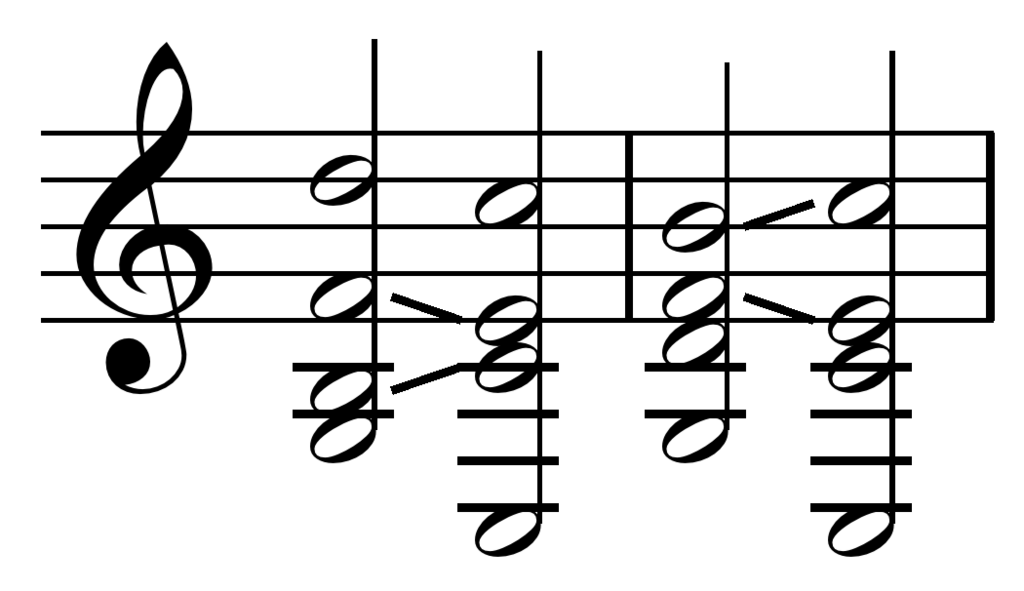
Just like a good story, music needs more than just a basic plot. To increase the drama, composers add complexity to the harmony. One of the most common ways to do this is by adding a 7th to the dominant chord. In the key of C major, the V chord is G major (G-B-D). A G7 chord adds an F, creating G-B-D-F.
That extra note creates a massive amount of tension. Why? Because it forms a —an interval of three whole steps—between the 3rd (B) and the 7th (F) of the chord. This particular interval is famously dissonant and yearns for resolution. The B wants to move up to C, and the F wants to move down to E, the root and third of the tonic C major chord. This two-way pull makes the V7 chord an incredibly powerful signpost pointing directly home to the I chord.
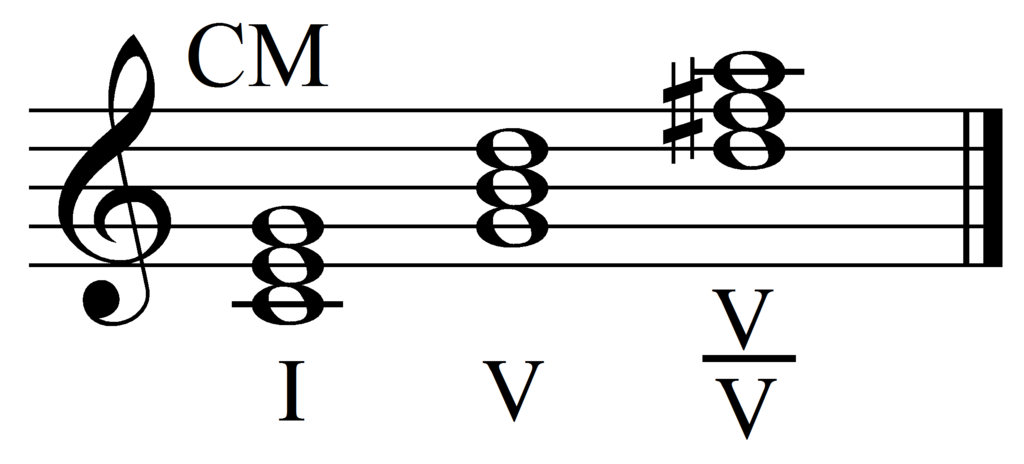
Another powerful technique is the use of secondary dominants. A secondary dominant is the dominant chord of a chord other than the tonic. It's like taking a brief detour to make another chord feel like a temporary 'home'.
For example, in C major, the dominant chord is G7. But what if we wanted to lead into the V chord (G) with extra force? We could use the dominant of G, which is D7. The D7 chord doesn't belong to the key of C major (it contains an F#), but using it just before the G chord makes the arrival on G feel much more impactful. This is written as V7/V, read as "five-seven of five."
The Harmonic Engine
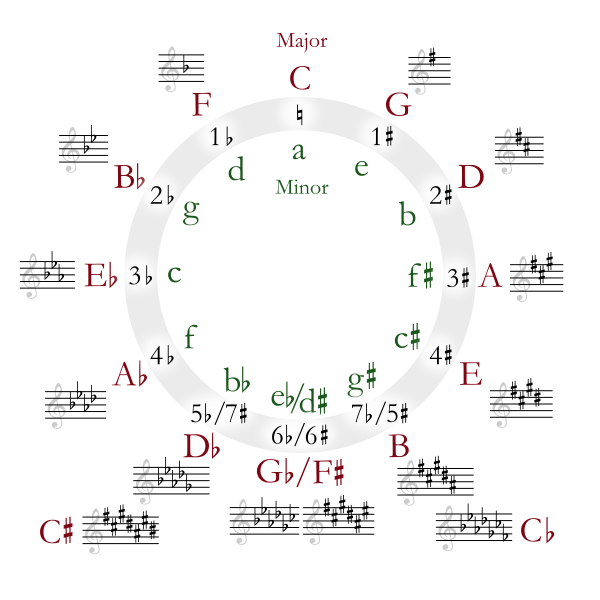
So how do all these chords relate? The provides a beautiful map of these harmonic relationships. While you may know it as a tool for remembering key signatures, it's also a powerful engine for building chord progressions.
Movement counter-clockwise around the circle is a movement of a perfect fourth up (or a perfect fifth down). This is the strongest harmonic movement in tonal music: the dominant-to-tonic relationship. G is a fourth up from C. C is a fourth up from F. F is a fourth up from Bb. This is why the common ii-V-I jazz progression feels so natural; it's just a series of steps around the circle (D → G → C).
Finally, while knowing which chords to use is crucial, how you move between them matters just as much. Good voice leading ensures that the individual notes of one chord move smoothly and logically to the notes of the next, often by the smallest possible step. This creates a pleasing melodic connection that ties the harmony together, making the progression feel less like a series of blocks and more like a flowing piece of music.
What is the core idea behind the concept of functional harmony?
In a G7 chord (G-B-D-F), which two notes form a tritone that creates strong tension pulling towards a C major chord?
Understanding functional harmony unlocks the 'why' behind the music you love. It allows you to analyze existing songs and provides a framework for writing compelling progressions of your own.