Intermediate Marine Biology and Ecology
Extreme Physiological Adaptations
Surviving the Extremes
The deep ocean is a world of extremes. Imagine an environment with crushing pressure, wildly fluctuating salt levels, and temperatures that can swing from near-freezing to boiling around hydrothermal vents. For life to exist here, it can't just tolerate these conditions—it must be fundamentally built for them. Marine organisms in these poly-extreme environments have evolved a remarkable suite of physiological tools to thrive where others would instantly perish. These adaptations operate at the most basic molecular level, reshaping proteins, membranes, and metabolic processes.
Life Under Pressure
Hydrostatic pressure, the force exerted by the immense weight of water above, profoundly affects biological molecules. High pressure can compress cell membranes, hindering their fluidity, and cause proteins to unfold, destroying their function. Organisms that thrive in these conditions are called —literally, "pressure lovers."
Their secret lies in molecular adaptations. The membranes of piezophiles often contain a higher proportion of unsaturated fatty acids, which increases membrane fluidity and counteracts the compressing effect of pressure. Their proteins are also structurally different. They have a more compact core and fewer internal cavities, making them inherently more resistant to being squeezed out of shape. Enzymes like dehydrogenases, crucial for metabolism, and the Na+/K+-ATPase pump, which maintains cellular ion balance, are engineered to function optimally under thousands of pounds per square inch.
The Salt Balancing Act
In addition to pressure, many deep-sea environments, such as hypersaline anoxic lakes (or brine pools), feature extreme salinity. Organisms must actively fight osmosis to avoid either losing all their water to the salty exterior or being flooded with salts. This is the challenge of osmoregulation.
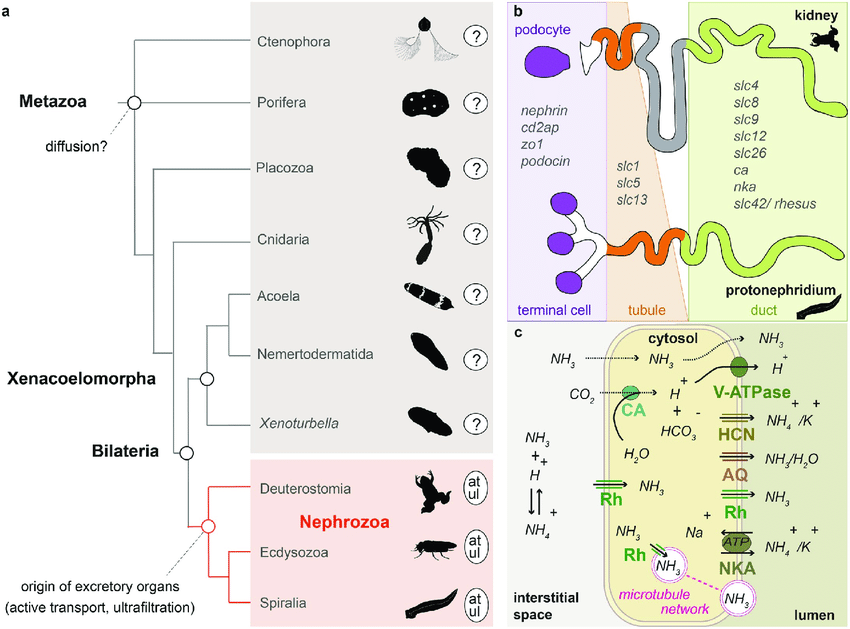
Fish like the Nile tilapia, known for its ability to tolerate a wide range of salinities, provide a great example. When moving into saltier water, they rapidly increase the number and size of chloride cells in their gills. These specialized cells are packed with ion pumps, like the Na+/K+-ATPase, which work tirelessly to actively excrete excess salt, primarily sodium () and chloride (), against a steep concentration gradient. This energy-intensive process is vital for maintaining a stable internal environment.
A Window of Opportunity
Interestingly, these extreme factors don't always work against each other. In some cases, they have synergistic effects that create unique niches for life. For example, high salinity can actually help stabilize proteins against thermal stress. The salt ions interact with the protein surface and water molecules, effectively creating a more structured 'hydration shell' that helps the protein hold its shape at higher temperatures.
This means that for a deep-sea microbe, high salinity can widen its functional 'temperature window,' allowing its enzymes to remain active at temperatures that would normally cause them to denature.
This principle helps explain the existence of halopiezophiles—organisms that thrive in high-salt, high-pressure environments. Their survival hinges on an integrated suite of adaptations where molecular stability is a product of all environmental factors combined. This phenomenon is a prime example of convergent evolution, where unrelated organisms independently evolve similar traits to adapt to similar challenges. In deep-sea vents and brine pools across the globe, we see different species arriving at the same molecular solutions—compact proteins, fluid membranes, and efficient ion pumps—to conquer the deep.
Let's test your understanding of these incredible adaptations.
What is a primary adaptation found in the cell membranes of piezophiles that helps them resist the crushing hydrostatic pressure of the deep ocean?
When a fish like the Nile tilapia moves into a hypersaline (high salt) environment, what is the main role of the chloride cells in its gills?