Intermediate Kali Tactics and Blade Flow
Dynamic Hubud-Lubud Flow
Hubud-Lubud as a Tactical Platform
You already know the basic 3-count Hubud-Lubud flow. It's a fantastic tool for building sensitivity, timing, and coordination. Now, it's time to stop thinking of it as a drill and start treating it as a dynamic platform for attack.
The goal is to move from a cooperative, predictable rhythm to a state of proactive hunting. Instead of simply receiving and passing your partner's energy, you'll learn to hijack the flow, disrupt their structure, and create openings for decisive strikes. The constant contact becomes a network of sensors, feeding you information about your opponent's balance, tension, and intent.
The flow is not the fight. The flow is the conversation that sets up the fight.
Integrating the Gunting
The most direct way to weaponize the Hubud flow is by introducing the —the art of limb destruction. This isn't about trading blows; it's about systematically dismantling the opponent's ability to attack. Within the Hubud cycle, you are constantly making contact with the opponent's arms. Each point of contact is a potential entry point for a Gunting.
Your mindset as the 'receiver' must change. You are no longer just clearing a path. You are actively searching for targets on the kinetic chain. As your partner's arm extends, you look for opportunities to attack the hand, wrist, elbow, or bicep. This is done with a sharp, cutting motion using your own forearm bone (the ulna) or a quick palm strike. The key is to apply the Gunting proactively as part of your defensive motion, not as a separate, delayed action.
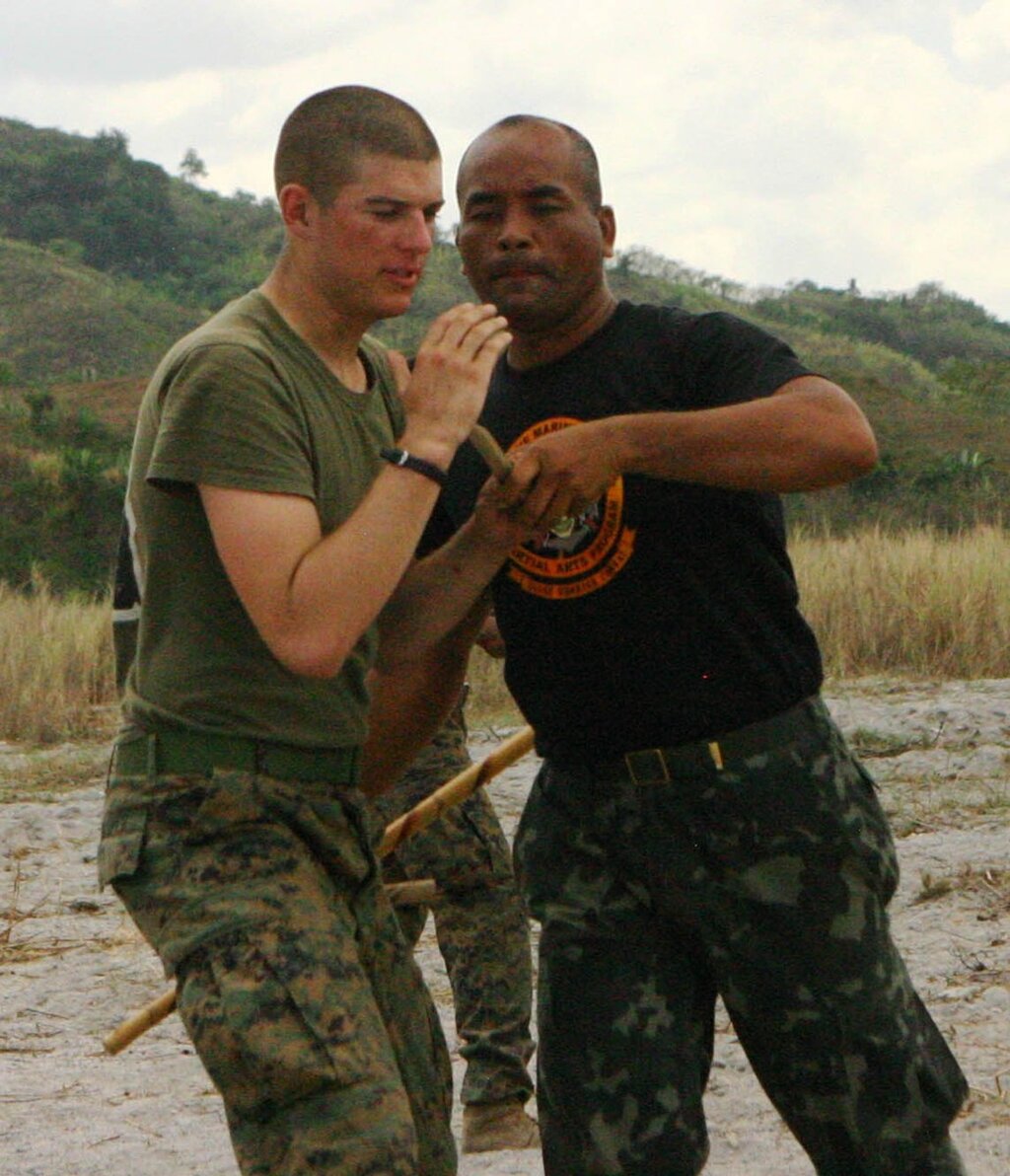
For example, in an Outside Hubud variation (where your clearing hand moves to the outside of your partner's attacking arm), the moment you make contact, you can slide your forearm down their limb to strike the wrist or elbow. In an Inside Hubud variation, you can use your checking hand to pin their arm momentarily while your other hand delivers a strike to the bicep. These aren't wild swings; they are tight, economical movements that integrate seamlessly into the flow.
Hunting for Entries and Traps
A truly advanced practitioner uses Hubud to set up traps. By developing kinetic sensitivity, you can feel when your opponent is off-balance or overly committed to a movement. This is your cue to break the cycle and enter.
One common tactic is to intentionally disrupt the rhythm. You might add a slight push, pull, or a brief pause in the flow. Their automatic reaction to correct their balance creates the opening you need. As they pull back from your push, you can follow their energy, stepping in to control their centerline. If they push into your pause, you can yield and use their momentum to execute a sweep or takedown.
This is where 's influence is profound. The system heavily emphasizes using these transitional moments to 'feed' the opponent a specific limb, only to trap and destroy it when they take the bait. Your Hubud becomes a diagnostic tool to test their reactions before you commit to an entry.
Key principles such as leverage over strength, position before submission, and timing ensure that practitioners can control opponents, conserve energy, and apply techniques efficiently.
Changing Planes
Standard Hubud is often practiced on a single horizontal plane. To make it a truly adaptable tool, you must learn to transition between vertical and horizontal planes. Imagine your partner throws a high strike. You can use the initial Hubud parry to redirect their energy downwards, forcing them to a lower plane.
Conversely, if the energy is low, you can use your clearing motion to lift their arm, creating an opening for an uppercut or a knee strike to the body. This vertical disruption is extremely disorienting. Most opponents expect the fight to stay on the plane where it began. By changing levels, you force them to constantly readjust, preventing them from ever finding a stable rhythm or launching a confident attack.
Combining a Gunting with a plane transition is a powerful tactic. For example, as you execute a Gunting on their extended arm, you can simultaneously drop your level for a leg sweep. The opponent is now dealing with two threats on two different planes at once, overwhelming their ability to process and react.
What is the primary mindset shift when transitioning from practicing Hubud as a drill to applying it combatively?
Within the context of Hubud, what is the primary purpose of a 'Gunting'?
This approach transforms Hubud-Lubud from a simple drill into a sophisticated method for controlling and dismantling an opponent. It’s a constant process of feeling, disrupting, and attacking.