Intermediate Herbalism and Therapeutic Formulation
Plant Chemistry Essentials
Beyond Photosynthesis
Plants, like all living things, produce chemicals to survive. Primary metabolites are the compounds essential for basic life functions: growth, development, and reproduction. Think of sugars from photosynthesis or proteins that build cell walls. They are the universal building blocks of plant life.
But there's another, more intriguing class of compounds: secondary metabolites. These aren't directly involved in keeping the plant alive day-to-day. Instead, they are the plant's toolkit for interacting with the world. They act as defence mechanisms against herbivores, signals to attract pollinators, or weapons against competing plants. It's this vast chemical arsenal that gives medicinal plants their power.
The Major Players
Secondary metabolites are incredibly diverse, but they can be grouped into a few major families based on their chemical structure and effects.
First up are the , a group of nitrogen-containing compounds that often have potent physiological effects on humans. Their names frequently end in "-ine." Caffeine, for example, is a stimulant alkaloid found in coffee and tea, while berberine, from plants like Goldenseal, has powerful antimicrobial properties. Because of their structure, many alkaloids can interact directly with our nervous system.
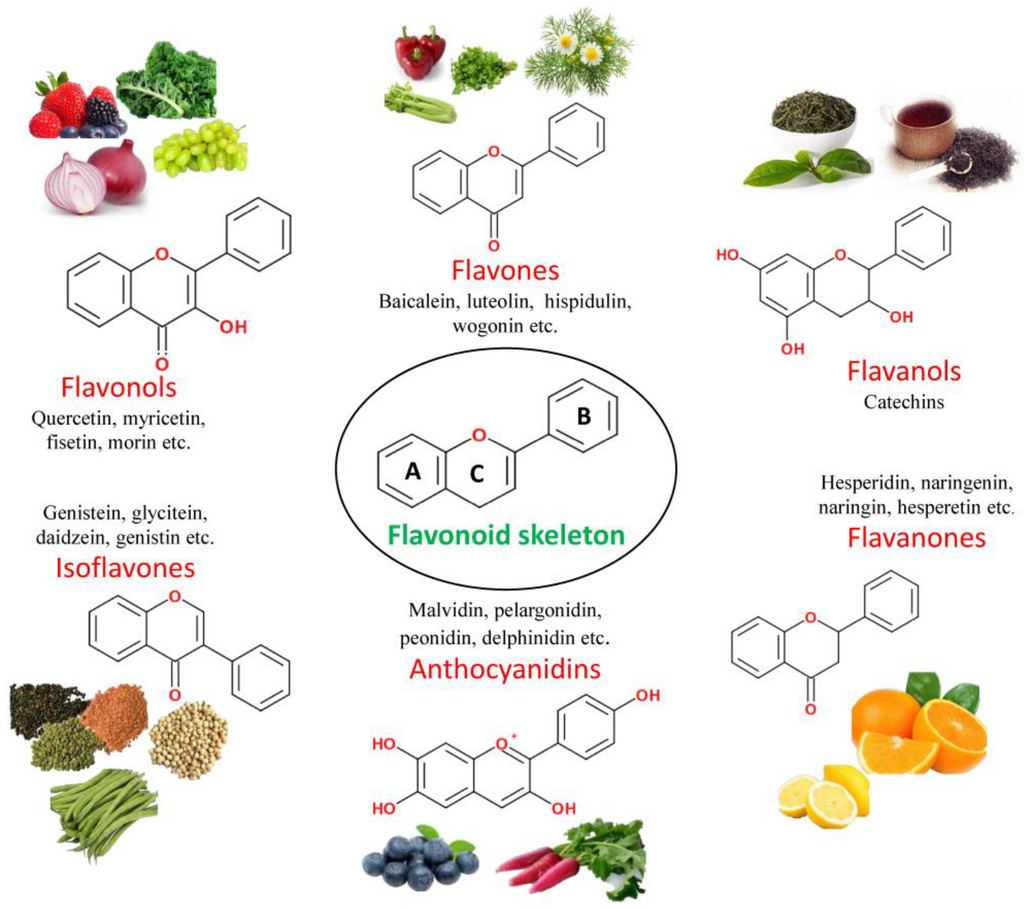
Next are the phenolics, which include and tannins. These compounds are built around a phenol ring structure and are widespread in the plant kingdom. Flavonoids are often responsible for the vibrant colours in flowers and fruits, attracting pollinators and seed dispersers. They are also powerful antioxidants, protecting plant cells from damage, a property we can also benefit from.
Tannins are larger phenolic compounds known for their astringent or drying effect. They achieve this by binding to proteins, which is why a strong cup of black tea can make your mouth feel dry. In the plant, this protein-binding ability is a defence, making the plant tissue less palatable and harder for herbivores to digest.
Glycosides are compounds with a sugar molecule (glycone) attached to a non-sugar active component (aglycone). The attached sugar often makes the molecule more water-soluble and stable. When we ingest a glycoside, our gut bacteria or enzymes can cleave off the sugar, releasing the active aglycone part to do its work. Digitalis from the foxglove plant is a classic example of a cardiac glycoside used in medicine.
Saponins are a special type of glycoside that creates a foam when mixed with water, much like soap. This is due to their molecular structure, which has both water-soluble (the sugar) and fat-soluble (the aglycone) parts. This property helps plants deter microbes and insects, and in humans, it can affect the absorption of other substances.
Chemistry in the Kitchen
Understanding the basic chemistry of these compounds is crucial when you decide how to prepare a plant. The key properties to consider are solubility and heat sensitivity.
refers to what a compound will dissolve in. The simple rule is "like dissolves like." Polar compounds, which have an uneven distribution of electric charge, dissolve in polar solvents like water. Non-polar compounds, with an even charge distribution, dissolve in non-polar solvents like oils or alcohol. This choice determines which chemicals you extract.
A water-based tea will extract polar compounds like tannins and many glycosides, while an alcohol-based tincture can extract less polar compounds like some alkaloids and resins.
| Constituent Class | Typical Solubility |
|---|---|
| Alkaloids | Varies, often soluble in alcohol, some in water |
| Flavonoids | Generally more soluble in water/alcohol mixes |
| Tannins | Water-soluble (polar) |
| Saponins | Water-soluble due to sugar groups (polar) |
| Volatile Oils | Alcohol and oil-soluble (non-polar) |
| Resins | Alcohol and oil-soluble (non-polar) |
Thermolability, or heat sensitivity, is the other critical factor. Some chemical bonds are fragile and can be broken by heat, destroying the compound's medicinal properties. Volatile oils, which are responsible for the aroma and many effects of plants like mint or chamomile, are very heat-sensitive and will evaporate away with prolonged boiling.
This is why a gentle infusion with hot (but not boiling) water is used for delicate flowers and leaves, while a long simmer, or decoction, is reserved for tough roots and barks where the desired compounds are more stable and need the heat to be extracted.
Time to check what you've learned about the chemicals that make plants medicinal.
What is the primary role of secondary metabolites in plants?
A compound with a name ending in '-ine', such as caffeine or berberine, which contains nitrogen and often affects the nervous system, belongs to which group?
By understanding these basic chemical principles, you move from simply identifying a plant to truly understanding how and why it works as a medicine.