Intermediate Guitar Mastery
Advanced Chord Voicings
Beyond the Basics
You've learned the fundamental chord shapes. You can switch between G, C, and D without looking. What's next? The real artistry in playing chords isn't just knowing the shapes, but knowing how to voice them. A voicing is simply the way you arrange the notes of a chord. Playing the same C major chord in different spots on the neck, or with the notes in a different order, can completely change the feel of a song.
This isn't just about sounding fancy. Advanced voicings create smoother transitions between chords, make your playing sound more professional, and unlock a richer harmonic texture. It's the difference between building with plain wooden blocks and building with intricately shaped, colorful ones.
Understanding Inversions
Let's start with a C major chord. Its notes are C, E, and G. When C is the lowest-sounding note, that’s called the root position. It's the standard way most people learn the chord.
But what if E was the lowest note? Or G? It's still a C major chord, because it's still made of C, E, and G. But by changing the bass note, we create an inversion. This gives the chord a slightly different flavor.
An inversion is a chord whose lowest note is not the root.
There are two main inversions for a simple three-note chord (a triad):
- First Inversion: The third of the chord is in the bass. For C major, that means E is the lowest note.
- Second Inversion: The fifth of the chord is in the bass. For C major, G is the lowest note.
Listen to the difference. Root position feels solid and stable. Inversions can feel a bit lighter, or like they're leading somewhere else.
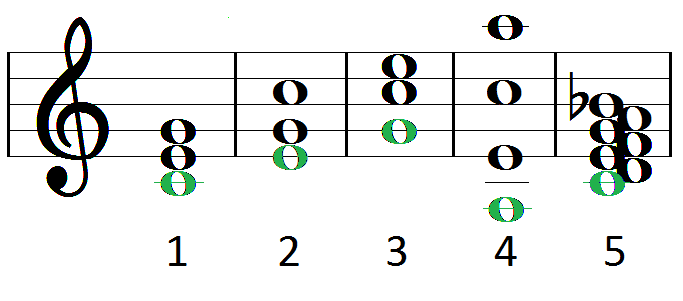
Why bother with this? Inversions are the key to smooth voice leading—making the transition from one chord to the next feel seamless. Instead of jumping your whole hand across the fretboard, you can often find a nearby inversion of the next chord. This creates a more connected, melodic sound.
Finding Chords Up the Neck
Chords aren't confined to the first few frets. You can find voicings for any chord all over the guitar neck. A great way to start exploring this is by playing triads on small sets of strings.
Let’s stick with C major (C-E-G) and try to find its voicings on the top three strings (G, B, and E).
Notice how these are all the same three notes, just rearranged in different spots. Learning these small triad shapes across different sets of strings (4-3-2, 5-4-3, etc.) is a powerful way to master the fretboard. It allows you to play rhythm parts that are more melodic and don't get in the way of the bass player or vocalist.
Adding Color with Extensions
Once you're comfortable with triads and their inversions, you can add more complexity with extensions. These are extra notes added to the basic chord to give it a richer, more specific sound. Common extensions include the 7th, 9th, and 11th.
Adding a 7th is a great place to start. A C major chord with an added B becomes a C major 7th (Cmaj7). A G major chord with an added F becomes a G dominant 7th (G7). These chords are the backbone of genres like jazz, blues, and R&B.
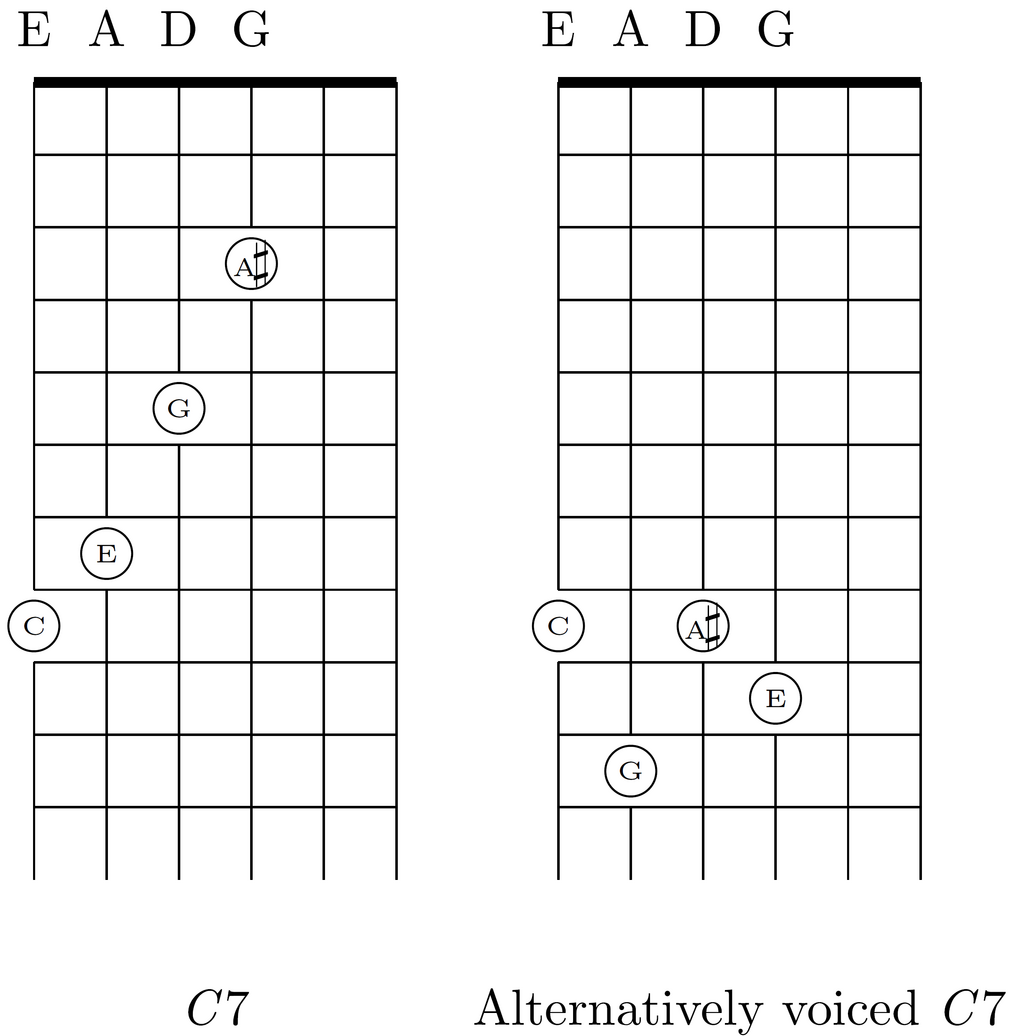
Just like with basic triads, extended chords can be voiced in many different ways. You can arrange the notes to emphasize the extension, or you can even leave certain notes out. For example, in a dense mix, guitarists often omit the 5th of a chord because it adds less character than the 3rd or the 7th. Experimenting with different voicings of 7th and 9th chords will add a huge amount of sophistication to your playing.
Ready to see how well you've grasped these new voicings?
What is a chord "voicing"?
A C major chord consists of the notes C, E, and G. If you play the chord with E as the lowest-sounding note, what is this called?
Moving beyond basic shapes and into the world of inversions and extended voicings is a major step. It transforms the guitar from an instrument you simply strum to one you can use to create intricate harmonic layers. Keep exploring these shapes up and down the neck, and you'll find your playing becomes more dynamic and expressive.