Intermediate Grammar Mastery
Complex Sentence Architecture
Beyond the Basics
You already know how to link complete thoughts using simple connectors like 'and' or 'but'. The next step is to build more sophisticated sentences that show complex relationships between ideas. This is done by attaching a dependent clause to an independent clause. The independent clause can stand on its own as a full sentence, while the dependent clause cannot. This combination creates what's called a complex sentence, a powerful tool for clear and precise writing.
A complex sentence isn't just a long sentence. It's a sentence that logically connects a main idea with a secondary, supporting idea.
Relative Clauses
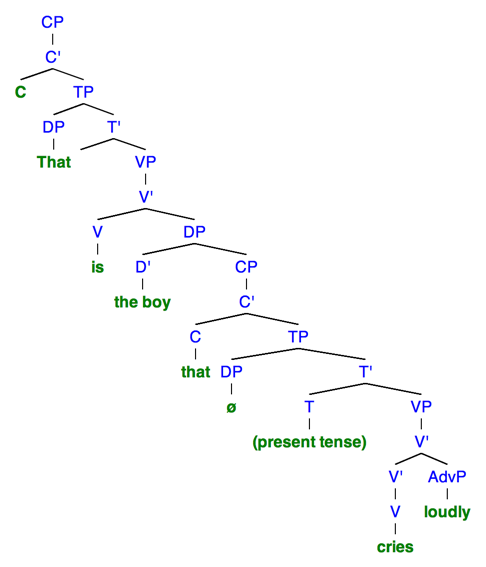
A relative clause is a type of dependent clause that acts like an adjective. It modifies a noun or pronoun in the main clause, adding more detail about it. These clauses are typically introduced by a relative pronoun (like who, whom, whose, which, or that) or a relative adverb (where, when, why).
Relative clauses come in two flavors: defining and non-defining.
A defining relative clause (also called a restrictive clause) provides essential information that identifies the noun. If you remove it, the sentence's core meaning becomes unclear. These clauses are never separated by commas.
- The report that she submitted was incomplete.
A non-defining relative clause offers extra, non-essential information. The sentence would still make sense without it. These clauses are always set off by commas.
- The final report, which was over 50 pages long, was submitted yesterday.
Adverbial and Noun Clauses
While relative clauses modify nouns, other dependent clauses can act as adverbs or nouns, adding layers of meaning about time, cause, condition, or contrast.
An adverbial clause functions as an adverb, modifying a verb, an adjective, or another adverb. It answers questions like when?, where?, why?, how?, or under what condition? These clauses begin with subordinating conjunctions that signal the relationship between the clauses.
| Function | Common Subordinating Conjunctions |
|---|---|
| Time | when, whenever, while, after, before, since, until, as soon as |
| Cause/Effect | because, since, as, so that |
| Contrast | although, though, even though, whereas, while |
| Condition | if, unless, provided that, in case |
The placement of an adverbial clause can change the emphasis of a sentence. When you place it at the beginning, you draw attention to the condition or time first. Always follow an introductory adverbial clause with a comma.
- Although the data was incomplete, the team moved forward with the presentation.
Placing the clause at the end puts the focus squarely on the main clause.
- The team moved forward with the presentation although the data was incomplete.
Finally, a noun clause is a dependent clause that takes the place of a noun in a sentence. It can act as a subject, a direct object, or the object of a preposition. These clauses often begin with words like that, what, whatever, who, whom, whoever, when, where, how, why.
Here it is as a subject:
- What the CEO announced will affect the entire company.
And here it is as a direct object:
- The manager explained how the new software works.
In the sentence, 'The team moved forward with the presentation although the data was incomplete,' what is the function of the clause 'although the data was incomplete'?
Which of the following sentences contains a defining relative clause?
Mastering these clauses allows you to build sentences that are not just grammatically correct, but also logically structured and rich with meaning.