Intermediate Financial Decision Making
Valuation and Growth
Beyond Simple Interest
You understand how money grows over time through interest. Corporations apply a similar logic, but on a much larger scale. Instead of a savings account, they have a portfolio of potential projects: launching a new product, building a factory, or upgrading their software. The goal isn't just to earn a return, but to choose projects that create the most value for the company. The core challenge is comparing these diverse opportunities on an apples-to-apples basis.
How do you decide if building a $10 million factory in Texas is a better use of capital than a $8 million marketing campaign in Europe? This is the central question of capital budgeting. The primary tool we use to answer it is Net Present Value, or NPV.
Net Present Value
Net Present Value tells you exactly how much value a project will add to the firm, in today's dollars. The logic is simple: a dollar today is worth more than a dollar tomorrow. NPV calculates all the future cash a project will generate, discounts each of those future amounts back to what they're worth today, and then subtracts the initial cost of the project.
The calculation looks like this:
The decision rule is straightforward:
- If NPV > $0, accept the project. It's expected to generate more value than it costs.
- If NPV < $0, reject the project. It's expected to destroy value.
Imagine a company is considering a project that costs $100,000 today (). It's expected to generate cash flows of $40,000 per year for the next three years. The firm's discount rate is 10%. The NPV would be:
Since the NPV is negative, the company should reject the project. Even though it generates $120,000 in raw cash flows from a $100,000 investment, the time value of money makes it a losing proposition.
The Other Metric: IRR
Another popular metric is the Internal Rate of Return, or IRR. Instead of giving you a dollar value, IRR gives you a percentage. It represents the project's intrinsic rate of return. Formally, it's the discount rate that makes the NPV of a project equal to exactly zero.
The decision rule for IRR seems simple: accept a project if its IRR is greater than the company's required rate of return (often called the ).
While IRR is intuitive, it has serious pitfalls. One major issue arises with projects that have unconventional cash flows, like a big clean-up cost at the end. For example, a mining project might generate cash for years but end with a massive environmental remediation expense. This pattern of signs (+, -, + or -, +, -) can produce multiple IRRs, leaving you with no clear answer.
Another problem occurs when comparing mutually exclusive projects, meaning you can only choose one. A smaller project might have a higher IRR, but a larger project with a slightly lower IRR could have a much higher NPV and add more actual dollar value to the firm. Because NPV tells you the exact value created, it's the superior decision-making tool.
Cash Flow is King
NPV and IRR calculations rely on future cash flows, not accounting income. This distinction is critical. Accounting income includes non-cash expenses, like depreciation, and can be influenced by different accounting rules. Cash flow is simply the cash moving in and out of the business.
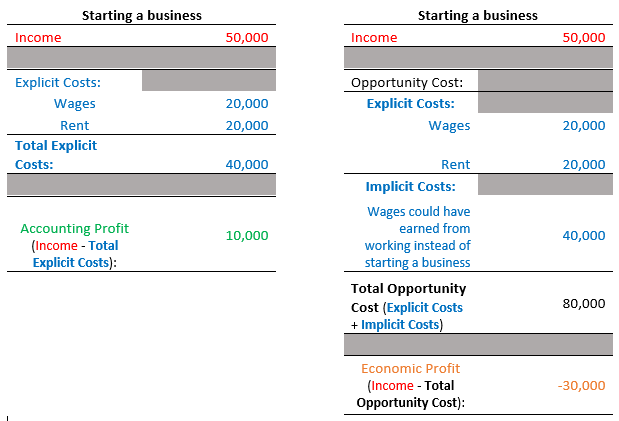
When evaluating a project, we only care about the incremental cash flows. These are the additional cash flows the company receives only if it takes on the project. This includes considering opportunity costs, which are the cash flows you give up by choosing one project over another. For instance, if you build a new factory on land you already own, the opportunity cost is the rent or sale price you could have gotten for that land. That lost income is a relevant cost of the project.
To get to the right cash flow numbers, we need to account for taxes. The government is a silent partner in any profitable venture. We must work with after-tax cash flows because that's the money the company actually gets to keep.
The Depreciation Tax Shield
This is where things get interesting. Depreciation is a non-cash expense, but it has a very real cash impact because it's tax-deductible. By reducing your taxable income, depreciation lowers your tax bill. The amount of taxes saved is called the s.
Let's calculate the after-tax cash flow for a project, taking this into account. We'll use a method called the tax shield approach.
Consider a project with $500,000 in annual sales and $200,000 in costs. It required an asset that provides $100,000 in depreciation per year. The tax rate is 25%.
First, the after-tax operating cash flow:
Next, the depreciation tax shield:
Total after-tax cash flow for the year is . This is the number you would use as in your NPV calculation.
Forgetting the depreciation tax shield is one of the most common errors in capital budgeting. It leads to systematically underestimating a project's true cash flows and its NPV.
Finally, capital budgeting decisions often fall into two categories: growth projects and replacement projects. Growth projects, like opening a new store, are about expansion. Replacement projects involve swapping out old machinery for newer, more efficient models. For replacement decisions, the incremental cash flows are key. You don't analyze the new machine in isolation. You analyze the difference in cash flows between keeping the old machine versus buying the new one. This means looking at differences in operating costs, depreciation, and any potential salvage value.
What is the primary goal of capital budgeting?
A project has a calculated Net Present Value (NPV) of -$5,000. According to the NPV decision rule, what should the company do?
By correctly identifying all incremental, after-tax cash flows and discounting them back to the present, a firm can make investment decisions that consistently build value.