Intermediate English Language Proficiency
Complex Sentence Structures
Adding Detail with Clauses
Simple sentences get the point across, but complex sentences add depth and precision. They allow you to connect ideas, showing how one thought relates to another. The key is using different types of clauses—groups of words with a subject and a verb—to build a more sophisticated structure.
One of the most common ways to add information is with a relative clause. This type of clause acts like an adjective, modifying a noun. It usually starts with a relative pronoun like who, which, or that.
There are two main kinds. The first is a defining relative clause, which provides essential information. Without it, the sentence's meaning is unclear.
- The scientist who discovered the cure became famous.
Here, who discovered the cure tells us exactly which scientist we're talking about. You don't use commas with these clauses. That is often used for objects or things, while who is used for people.
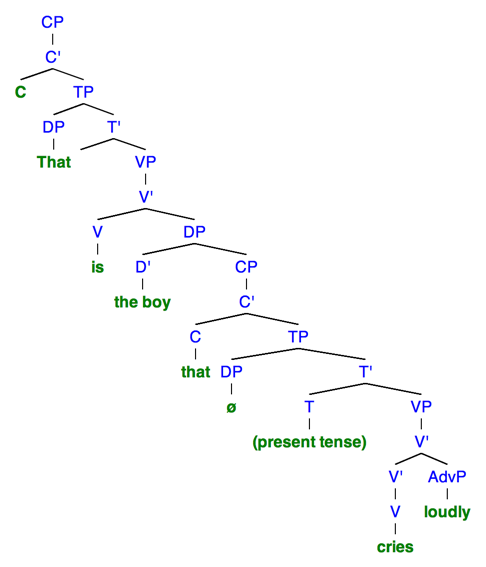
The second kind is a non-defining relative clause. This clause gives extra, non-essential information. The main sentence still makes sense without it. These clauses are always set off by commas.
- Dr. Evans, who is a renowned geologist, will be speaking tonight.
We already know who we're talking about (Dr. Evans), so the clause just adds a bonus fact. For non-defining clauses, you use who for people and which for things. You cannot use that.
Showing Complex Relationships
Beyond just adding detail, you can show the logical connection between ideas using subordinating conjunctions. These words link an independent clause (a complete thought) with a dependent clause (an incomplete thought), creating a complex sentence. This structure explains why, when, or under what condition something happens.
| Relationship | Conjunctions | Example Sentence |
|---|---|---|
| Contrast | although, whereas, while | Although it was raining, we went for a walk. |
| Condition | if, unless, provided that | You can go to the party provided that you finish your homework. |
| Cause/Effect | because, since, as | He was late because the traffic was heavy. |
| Time | when, after, before | She'll call you after she gets home. |
The placement of the dependent clause changes the punctuation. If the dependent clause comes first, you need a comma to separate it from the main clause. If it comes second, no comma is needed.
Making Sentences More Concise
Sometimes, the most elegant sentence is the shortest. help you trim down sentences by turning a full clause into a descriptive phrase. These phrases begin with a participle—a verb form ending in -ing (present participle) or -ed/-en (past participle).
Instead of writing: Because she felt tired, she went to bed early. You can say: Feeling tired, she went to bed early.
Instead of: The car, which was parked illegally, was towed. You can say: Parked illegally, the car was towed.
This technique adds variety and a sense of action to your writing. A word of caution: make sure the participial phrase is clearly connected to the noun it's modifying. Otherwise, you end up with a dangling modifier: Walking down the street, the trees were beautiful. (This incorrectly implies the trees were walking).
Another powerful tool is the noun clause. This is a dependent clause that functions as a noun. It can be the subject of a sentence, the object of a verb, or the object of a preposition. Noun clauses often begin with words like that, what, who, why, and how.
As a subject: What she said surprised everyone. As an object: I don't know why he left.
Using a noun clause allows you to embed an entire idea into a slot where you would normally just put a single noun. This is essential for expressing complex thoughts, opinions, and questions within a single, coherent sentence.
Now, let's test your understanding of these complex structures.
Which sentence contains a defining relative clause?
Which word can introduce a non-defining relative clause?
By combining these different types of clauses and phrases, you can make your writing more detailed, nuanced, and efficient. It's the difference between stating facts and telling a compelling story.