Intermediate Dance Technique
Complex Weight Transfer
Finding Your Moving Center
You already know how to find your center of gravity while standing still. It’s that internal point where your weight feels perfectly balanced. But the moment you move, that point is no longer static. Welcome to dynamic balance, where your is in constant negotiation with momentum and the floor.
Think of it like this: a stationary car is stable. But a car taking a sharp turn at high speed is fighting to stay upright. The driver must lean and steer into the turn, actively managing the forces at play. As a dancer, your body is that car. Every step, turn, or leap shifts your center of gravity. Your stability depends on your ability to continuously reposition your body—your base of support—underneath that moving center. In slow movements, this is a subtle lean of the hips. In fast, powerful sequences, it becomes an explosive push against the floor to redirect your entire body mass.
Grounded vs. Lifted Transitions
Not all weight transfers are created equal. The intention behind the movement dramatically changes its quality. We can broadly categorize these shifts into two approaches: grounded and lifted.
Grounded shifts, common in contemporary and modern dance, emphasize a relationship with gravity. Instead of fighting it, you use it. The transfer feels heavy, fluid, and deliberate. Think of sinking your weight into the floor to gain power for the next movement, like a predator coiling before it strikes. It's about feeling the earth and drawing energy from it. The work of pioneers like is defined by this weighted, powerful quality of movement, focusing on contraction and release.
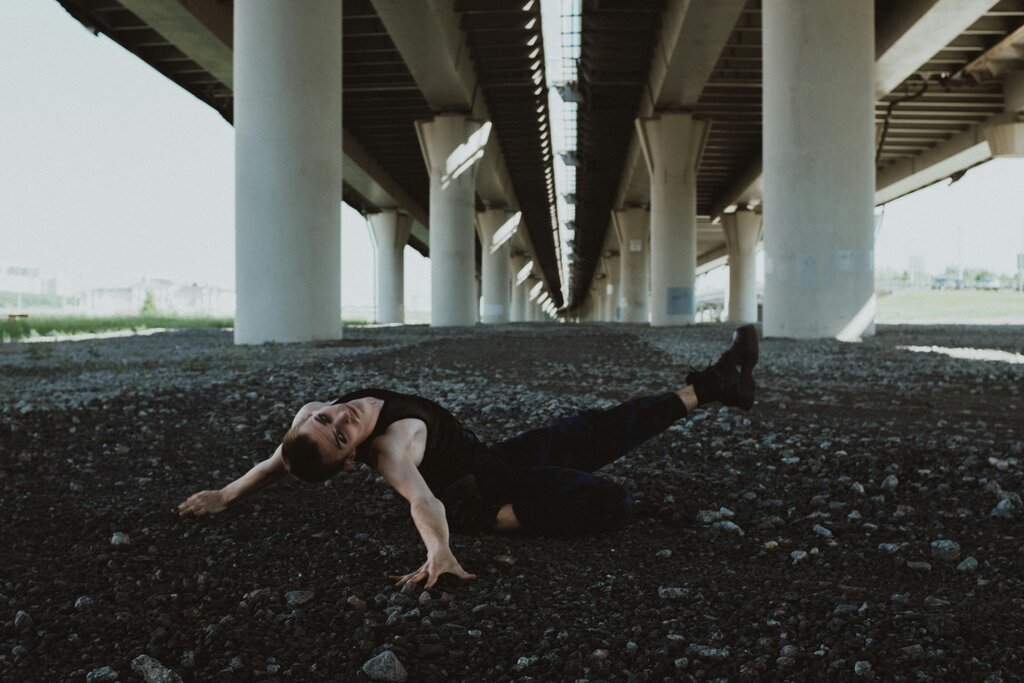
Lifted shifts, prevalent in jazz and ballet, aim to create an illusion of weightlessness. Here, the energy is directed upwards and outwards, away from the floor. The transitions are often quick, sharp, and aerial. Imagine a series of fast turns across the floor or a grand jeté. The goal is to spend as little time on the ground as possible, appearing to float through the air. This requires immense core strength to pull the body up and create a feeling of suspension.
| Feature | Grounded Shift | Lifted Shift |
|---|---|---|
| Relationship to Gravity | Uses gravity, works with it | Defies gravity, works against it |
| Energy Path | Down into the floor, then redirected | Up and out, away from the floor |
| Feeling | Heavy, fluid, powerful | Light, sharp, buoyant |
| Associated Styles | Contemporary, Modern | Jazz, Ballet, Lyrical |
| Example | A deep lunge transitioning to the floor | A chaîné turn or a saut de chat leap |
The Physics of Flow
To master complex weight transfers, you must become an intuitive physicist, controlling both momentum and kinetic energy.
Momentum is simply your mass in motion. Once you're moving, you have momentum that wants to keep you going in the same direction. To change direction, you can't just decide to move sideways; you must apply a new force. This is the push from your standing leg, the swing of your arms, or the press of your torso that redirects your path. Controlling momentum is about making these redirections efficient and seamless, so you don't stumble or lose your line.
Stopping or changing direction isn't about killing your momentum—it's about stealing it and sending it somewhere else.
Kinetic energy, or the energy of motion, is what gives your movements power and speed. A common mistake is to waste this energy. For example, if you land from a jump with stiff legs, you absorb all the impact jarringly. Your kinetic energy dissipates, and you have to generate all new force for the next step.
Instead, a skilled dancer lands with bent knees (plié), absorbing the energy and immediately recycling it. That stored energy in your muscles and tendons helps propel you into the next movement, whether it’s another jump or a turn. This is the secret to both stamina and fluidity. It makes a long, demanding sequence look effortless.
Ultimately, mastering weight transfer is about integrating these physical principles into your body. It's the difference between simply executing steps and truly dancing. By controlling your dynamic center of gravity and managing your energy, you can move with both stability and freedom, making even the most off-balance movements look intentional and graceful.
What is the primary challenge of maintaining "dynamic balance" in dance?
A dancer performs a sequence with a heavy, deliberate quality, sinking into the floor to gather power. This movement quality is best described as a: