Intermediate Cricket Tactics and Technique
Advanced Batting Mechanics
Mastering the Back Foot
Beyond the forward defensive, a batter's strength is often tested on the back foot. Effective back-foot play isn't about moving away from the ball; it's about creating time and space. The key is a crisp weight transfer. As you identify a shorter length, your initial movement should be back and across, shifting your weight onto your back leg. This movement should be decisive, getting you into a stable, balanced position before the shot is played.
From this stable base, shots like the back-foot punch become an option. The punch is not a wild heave but a controlled, powerful push. The bat comes down straight, with the front elbow high, making contact with the ball directly under your eyes. The goal is to use the bowler's pace, guiding the ball into gaps in the field, often between cover and point.
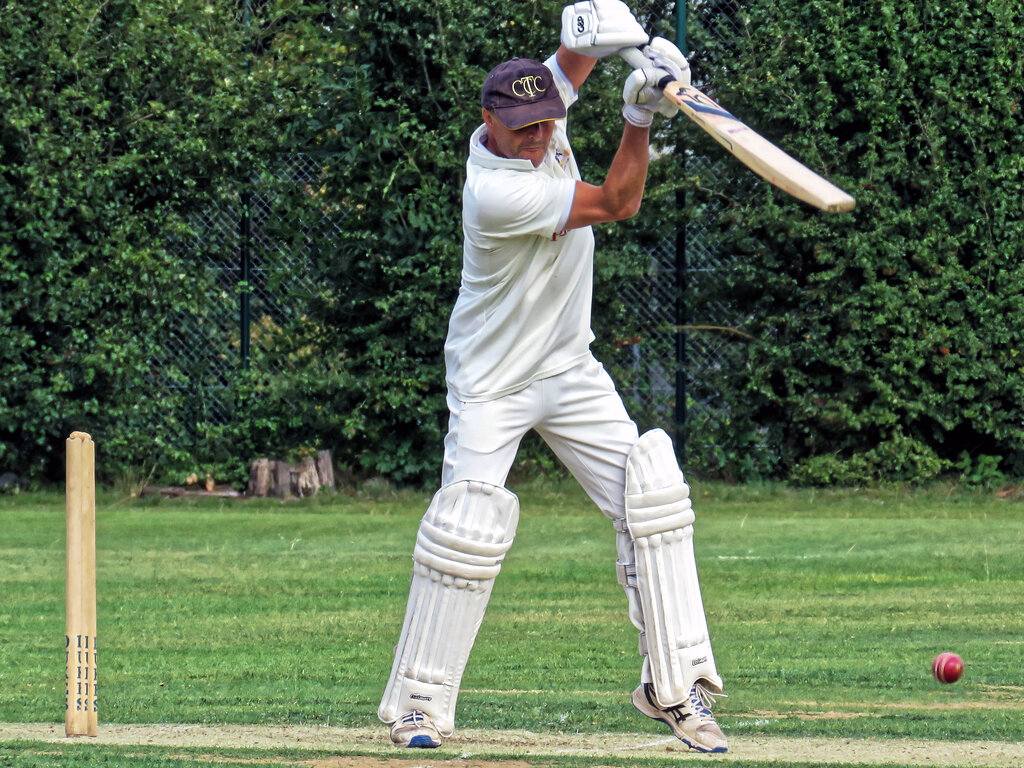
This technique is complemented by the skill of . Against a ball that is swinging or seaming, committing to the shot too early is a common mistake that leads to edges. By waiting for the ball to get closer to your body, you give yourself a fraction of a second longer to see what it's doing off the pitch or in the air. This requires soft hands—a relaxed grip that allows you to guide the ball rather than hitting it hard. Soft hands absorb pace and can turn a potential edge into a controlled shot that runs down to third man.
Dominating Spin
Facing a quality spinner is a strategic battle fought in a few square feet of turf. How you manage your position in the crease can dictate the entire exchange. By effectively, you can disrupt a spinner's length and create scoring opportunities. Moving deep in your crease makes a good-length delivery slightly shorter, giving you more time to pull or cut. Conversely, stepping down the pitch can turn that same delivery into a half-volley or full toss, ready to be driven.
The sweep and reverse sweep are potent weapons against spinners, especially on turning tracks. These shots are about precision and commitment. For a conventional sweep, the batter gets down on one knee, getting their head in line with the ball and swinging the bat in a horizontal arc to make contact.
| Shot Type | Description | Key Execution Points |
|---|---|---|
| Sweep | A cross-batted shot played on one knee to a ball pitching on or outside leg stump. | Get your head to the line of the ball. Keep your eyes level. Roll your wrists on impact to keep the ball down. |
| Reverse Sweep | The same shot but played in the opposite direction, hitting the ball towards point or third man. | Requires quick hand-eye coordination. Switch grip slightly to facilitate the swing. Played against a ball outside off stump. |
Handling Short Deliveries
When a fast bowler drops the ball short, the pull and hook shots are the aggressive responses. These are that require courage, balance, and precise head positioning. As the ball is delivered, the weight transfers onto the back foot, which swivels to open up the body. The most critical element is keeping your head still and your eyes level throughout the entire motion. The bat swings in a horizontal arc, aiming to make contact in front of the body to pull the ball through the leg side.
For both the pull and hook, your head leads the shot. Where your head goes, your body and balance will follow. Never take your eyes off the ball.
Your stance and backlift play a significant role here. A high backlift, favored by aggressive players, can generate more bat speed and power, ideal for dispatching a short ball to the boundary. However, it can also leave a batter vulnerable if their timing is slightly off. A more compact, lower backlift offers more control and can be quicker to get into position, but may sacrifice some power. The choice depends on the batter's style, the pace of the bowler, and the state of the game.
Time to review what you've learned.
Ready to test your knowledge?
What is the primary purpose of the initial 'back and across' movement when playing a back-foot shot?
When facing a spinner, how does moving deep into the crease affect a good-length delivery?
Mastering these advanced mechanics takes practice. Focus on stable weight transfer, precise head position, and intelligent use of the crease to take your batting to the next level.