Intermediate Contract Law Applications
Bargained For Exchange
The Heart of the Bargain
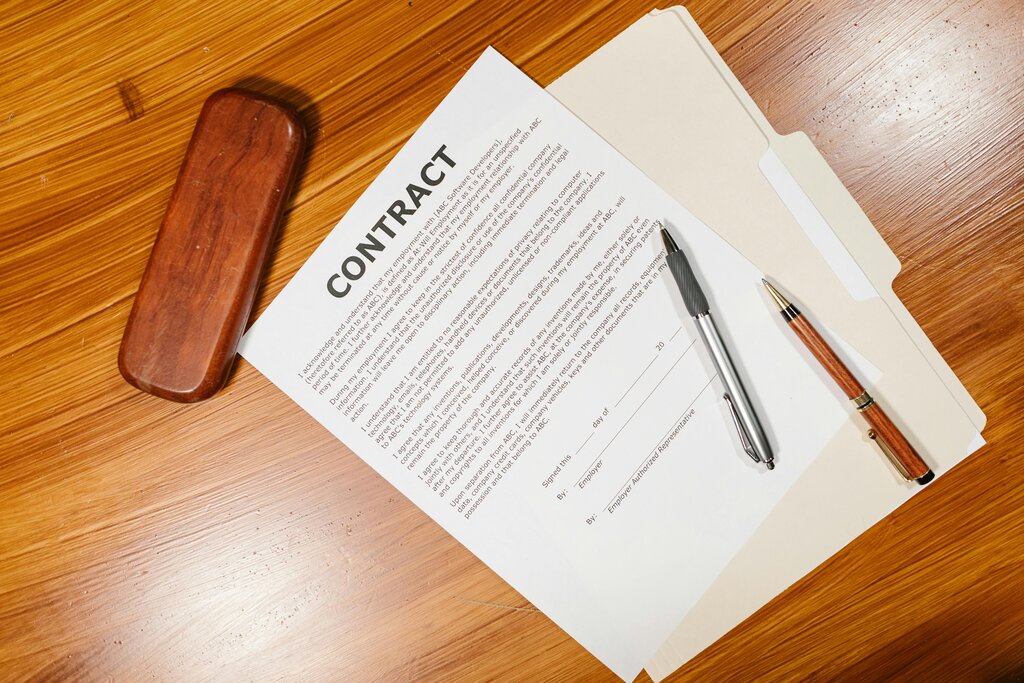
A contract isn't just a set of promises; it's a deal. The legal glue holding that deal together is called consideration. But not just any exchange qualifies. For a contract to be binding, the promises must be part of a “bargained-for exchange.” This is the core of the Bargain Theory of Consideration—the idea that each party’s promise must induce the other party to make their promise. It’s a two-way street.
Think of it this way: If your uncle says, “I’ll give you my vintage car because you’re my favorite niece,” that’s a gift promise. He’s not asking for anything in return. But if he says, “I’ll give you my vintage car if you agree to take over its maintenance costs,” a bargain is forming. His promise to give the car is made to get your promise to pay for its upkeep. Your promise is made to get the car. Both sides are motivated by what the other is offering. This mutual inducement is what separates an enforceable contract from an unenforceable gift.
Value in the Eyes of the Law
So, what has to be exchanged? Legally, we need something of “value.” But the law has a specific way of looking at value. It distinguishes between the sufficiency and the adequacy of consideration.
Sufficiency means the consideration must have some legal value. It can be a promise to do something you’re not obligated to do, or a promise not to do something you have a legal right to do (like suing someone). It doesn’t have to be money.
Adequacy, on the other hand, refers to the fairness of the bargain. Did you get a good deal? Courts almost never get involved in this. They don't ask if the price was “fair” or if the exchange was equal. If you agree to sell your $50,000 car for $1,000, the court won't step in to save you from a bad deal. The $1,000 is legally sufficient, even if it’s not commercially adequate.
This principle is often called the “peppercorn theory.” As long as there’s a peppercorn of value exchanged, consideration is sufficient. The court won’t measure the size or worth of each party's peppercorn.
Empty Promises and Phantom Deals
For a bargain to be real, the promises exchanged must be real. Sometimes, a promise sounds like a commitment but is actually hollow. These are called , and they are not sufficient consideration.
An illusory promise gives the promisor a free pass to back out without consequence. It creates the illusion of a contract but imposes no real obligation. For example, a company promises, “We will buy all the widgets we decide to order from you this year.” The phrase “we decide to order” means they aren't actually required to buy anything. They have a way out. Since one side isn't truly bound, the other side isn't either. This lack of mutual obligation means there's no contract.
| Promise Type | Example | Enforceable? |
|---|---|---|
| Real Promise | "I will buy 1,000 widgets from you for $1 each." | Yes |
| Illusory Promise | "I will buy as many widgets as I want from you for $1 each." | No |
| Real Promise | "I will pay you $500 to paint my house." | Yes |
| Illusory Promise | "I will pay you $500 to paint my house if I'm happy with the color scheme I choose later." | No |
No Extra Pay for the Same Job
Imagine you hire a builder to construct a deck for $5,000. Halfway through, they stop working and demand $7,000 to finish, citing rising lumber costs. You reluctantly agree because you need the deck finished. Is your new promise to pay the extra $2,000 enforceable? Generally, no.
This is due to the . This rule states that performing or promising to perform an act you are already legally obligated to do is not valid consideration for a new promise. The builder was already contractually bound to build the deck for $5,000. They gave nothing new in exchange for your promise of an extra $2,000.
For a contract modification to be valid, both sides must typically offer new consideration. If the builder agreed to add built-in seating in exchange for the extra $2,000, that would be an enforceable modification. The builder is taking on a new duty (building seats) and you are taking on a new duty (paying more). The bargain is restored.
However, the law recognizes that sometimes, things really do change. If unforeseen difficulties arise that were completely unexpected by either party when the contract was made, some courts will enforce a promise to pay more without new consideration. The key is that the difficulty must make performance truly different from what was reasonably anticipated, not just more expensive.
Looking Backwards
As a final point, the bargain must happen at the time of the agreement. An action you've already taken cannot serve as consideration for a new promise. This is known as the rule against “past consideration.”
If you mow your neighbor's lawn out of kindness and they later say, “Thanks! I'll pay you $50 for that,” their promise is generally unenforceable. You didn't mow the lawn in exchange for their promise of $50; the act was already done. The element of bargain is missing.
However, a major exception to this rule was established in the famous case of . The court laid out a three-part test for when a past act can be good consideration:
- The act must have been done at the promisor's request.
- The parties must have understood that the act was to be remunerated, either by a payment or the conferment of some other benefit.
- The payment or benefit must have been legally enforceable had it been promised in advance.
This exception keeps the law from creating unfair results in business situations where everyone involved expects a past service to be paid for, even if the exact terms are only settled later.
With a firm grasp of the bargained-for exchange, you're ready to test your knowledge.
Which of the following scenarios best illustrates an enforceable, bargained-for exchange?
Sam agrees to sell his brand new, fully-loaded laptop, worth $2,500, to his friend Jen for $100. Later, Sam regrets the deal and tries to back out, arguing the price was far too low. Will a court likely find the agreement unenforceable due to the price disparity?