Intermediate Chess Mastery
Advanced Opening Principles
Beyond Memorization
Moving into advanced chess openings isn't about memorizing endless sequences of moves. While knowing a few lines of theory is helpful, true strength comes from understanding the why behind the moves. The goal is to build a consistent opening repertoire that suits your personal playing style, whether you're an aggressive attacker or a quiet positional player.
Think of it like learning a language. You can memorize phrases, but you can only truly communicate once you understand the grammar and structure. In chess, the principles of development, center control, and king safety are the grammar.
The principles of controlling the center, developing pieces, and ensuring king safety provide a strong foundation that applies across various opening scenarios.
Your repertoire should be a collection of openings you understand deeply. For White, you'll need a response to Black's major replies. As Black, you'll need a defense against White's most common first moves, 1.e4 and 1.d4. Let's explore the core ideas that will guide your choices.
The Three Pillars
Nearly every sound opening is built on three fundamental concepts: rapid development, control of the center, and king safety. Mastering these will guide you to good positions, even when you're outside of familiar territory.
Development is the process of moving your pieces from their starting squares to more active positions where they can influence the game. The general rule is to develop your knights and bishops first. This prepares you to castle and gets your pieces into the fight quickly.
A good habit: In the first 10 moves, try not to move the same piece twice unless there's a very good reason, like a tactic or a necessary recapture.
Center control is the fight for the four most important squares on the board: d4, e4, d5, and e5. Pieces placed in the center control more of the board, giving them greater mobility and attacking potential. A knight on the edge of the board, for instance, controls only four squares, while one in the center can control eight.
Finally, king safety is paramount. An exposed king is a weakness your opponent will ruthlessly exploit. The most common way to secure your king early in the game is by castling. This move tucks your king away behind a wall of pawns and brings a rook into the game.

Building Your Repertoire
Now let's look at how these principles apply in two of the most popular and respected openings. They represent two different strategic approaches to the game.
First, the Sicilian Defense. This is Black's most popular response to White's 1.e4. The game starts with the moves 1.e4 c5. Instead of matching White's central pawn with 1...e5, Black immediately creates an imbalance by challenging from the flank. The Sicilian leads to sharp, complex, and tactical positions. It's an excellent choice for players who enjoy a dynamic fight.
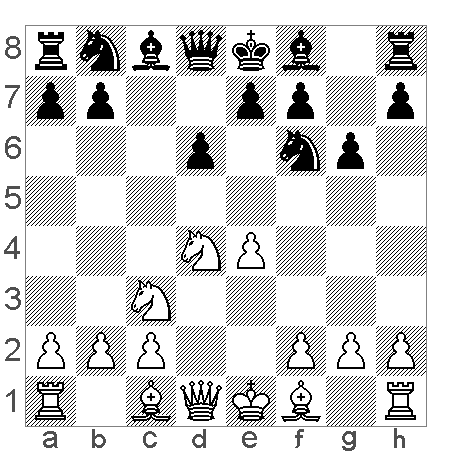
On the other hand, we have the Queen's Gambit. This opening begins with 1.d4 d5 2.c4. White immediately challenges Black's control of the center. Unlike its name suggests, this isn't a true gambit where a pawn is sacrificed for an attack. If Black captures the pawn with 2...dxc4, White can easily regain it and build a strong central presence.
The Queen's Gambit typically leads to more strategic and positional games compared to the Sicilian. Play revolves around long-term plans, pawn structure, and piece placement rather than immediate tactical skirmishes. It's a favorite of players who prefer to slowly build pressure.
A common trap in the Queen's Gambit Declined is the Elephant Trap. After 1.d4 d5 2.c4 e6 3.Nc3 Nf6 4.Bg5 Nbd7, it looks like White can win a pawn with 5.cxd5 exd5 6.Nxd5, since the knight on f6 is pinned. But Black can play 6...Nxd5! 7.Bxd8 Bb4+, forcing White to give up the queen with 8.Qd2, after which Black is winning.
Choosing between an opening like the Sicilian or the Queen's Gambit depends on your style. Experiment with both and see which types of positions you feel more comfortable in. The goal of the opening is to reach a playable middlegame where you understand the strategic goals.
Ready to test your understanding of these advanced concepts?
What is the primary goal of the opening phase in chess?
Which set of concepts best describes the three fundamental principles of a sound opening?
Building a solid opening repertoire is a journey. Focus on understanding the ideas behind your chosen openings, and you'll be well on your way to playing the middlegame with confidence.