Intermediate Carpentry and Woodworking
Precision Joinery Techniques
Beyond the Butt Joint
You've moved beyond simply sticking two pieces of wood together with screws. Now, the goal is craftsmanship: creating connections that are strong, beautiful, and built to last for generations. This requires precision joinery, where wood connects to wood in a mechanical lock. These joints aren't just for show; they accommodate wood's natural expansion and contraction, ensuring a piece of furniture doesn't tear itself apart with the changing seasons.
Mastering these techniques means shifting your focus from rough construction to fine tolerances. It's about thinking in terms of thousandths of an inch, not eighths. This is where tools like marking gauges, sharp chisels, and layout squares become extensions of your hands, allowing you to create joints that fit together with a satisfying, snug click.
The Mortise and Tenon
The is the undisputed workhorse of joinery. Found in everything from ancient timber frames to modern fine furniture, its strength is legendary. The concept is simple: a protruding tongue (the tenon) on one piece fits perfectly into a corresponding hole (the mortise) in another. This design resists racking forces from every direction, and the long-grain to long-grain glue surfaces create an incredibly powerful bond.
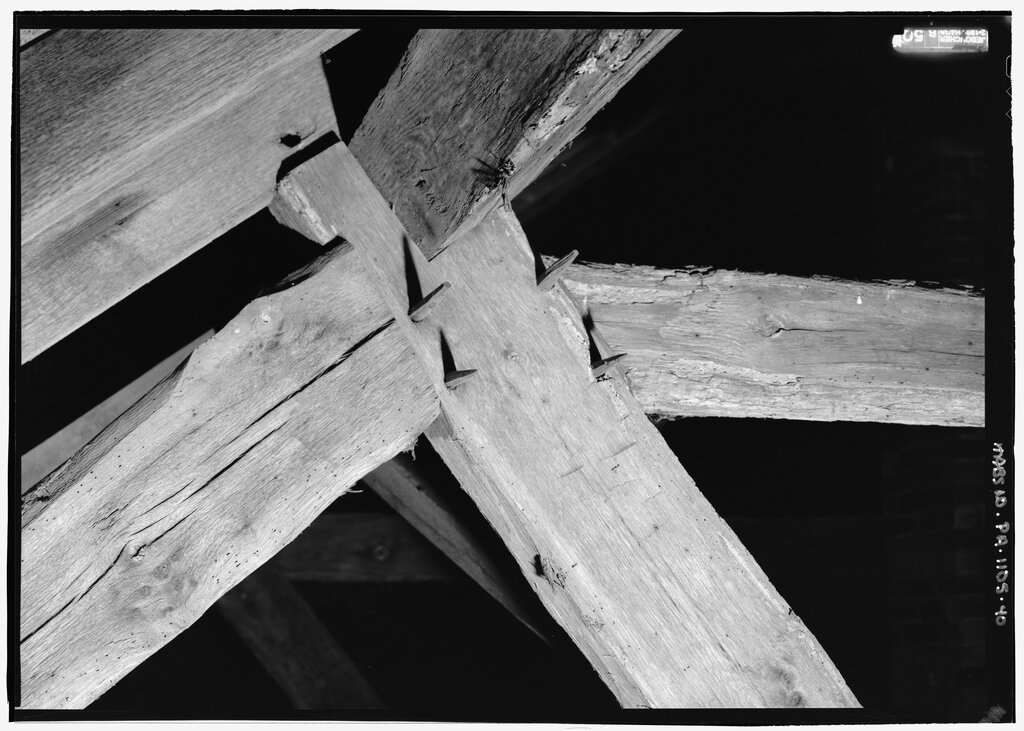
The secret to a great mortise and tenon is the layout. A marking gauge is essential for this. It scribes lines parallel to a reference face, ensuring the mortise and tenon are perfectly aligned. The tenon has 'shoulders'—the faces that sit flush against the mortised piece. These shoulders are critical; they hide the joint, provide a mechanical stop, and prevent twisting. The sides of the tenon are called 'cheeks', and their fit inside the mortise determines the joint's strength. The fit should be snug, allowing assembly by hand or with light taps from a mallet, but not so tight that it starves the joint of glue.
Dovetails and Lap Joints
When building boxes or drawers, the dovetail joint is king. Its series of interlocking pins and tails creates a joint that is mechanically impossible to pull apart in one direction. This makes it perfect for drawer fronts, which endure constant pulling forces. While they look complex, dovetails are a straightforward process of careful layout and precise cutting.
The key is transferring the shape of the first set of cuts (either pins or tails) to the second board with absolute accuracy. A marking knife, not a pencil, is the right tool here. Its thin, sharp line creates a precise guide for your saw and chisel, preventing the wood fibers from tearing out and ensuring a gap-free fit.
For simpler frame constructions or where two pieces cross over each other, the lap joint is an elegant solution. In its most basic form, the half-lap, half the thickness of each board is removed where they overlap. When joined, the faces of the two boards are flush. Variations like the cross-lap, T-lap, and mitered half-lap provide strong, clean-looking connections for different configurations.
Working with the Wood
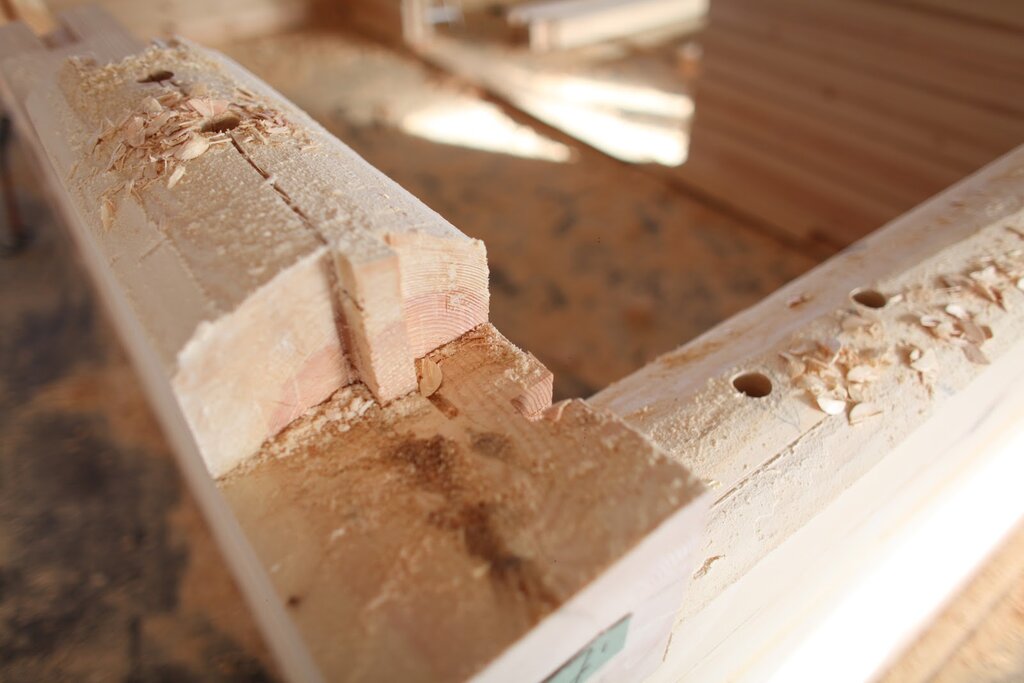
No joint will hold if you ignore the nature of wood itself. is critical for strength. A tenon, for example, is strongest when its grain runs the length of the tenon, not across it. If the grain runs cross-wise (short grain), the tenon can easily snap off. Always orient your parts so the long grain takes the stress.
A common mistake is creating a weak joint by having stress act across the grain. For instance, in a table leg apron, the tenon's grain must run horizontally along with the apron, not vertically.
This is also why we consider wood movement. Wood expands and contracts across its width, but very little along its length. A solid wood tabletop fastened incorrectly to its base will crack as it tries to shrink, but the base won't let it. Good joinery provides strength while giving the wood room to breathe. For example, tabletop fasteners or 'buttons' hold the top securely but can slide in their slots as the wood moves.
Ready to test your knowledge? Let's see what you've learned about these foundational joints.
What is the primary function of the 'shoulders' on a tenon?
When building a drawer box, which joint is mechanically superior for joining the front to the sides to resist pulling forces?
Moving from simple connections to precision joinery is a major step. It requires patience and practice, but the ability to create strong, beautiful, and lasting wooden structures is the true reward of the craft.