Intermediate Calisthenics Mastery
Explosive Vertical Pulling
Beyond the Chin-Up
You've mastered the pull-up. Your chin clears the bar with confidence. But when you try for a muscle-up, you hit an invisible ceiling. The problem isn't just strength; it's power. A standard pull-up is about lifting your body from point A to point B. An explosive pull, the engine of the muscle-up, is about generating enough velocity to blast right through point B.
The goal is no longer just clearing the bar. It's about pulling your center of mass so high that you create a moment of weightlessness, giving you the time and space to transition over the bar. This requires a shift in mindset from a simple vertical pull to a dynamic, arcing movement.
In its most simply described form, a muscle-up is a pull up followed by a dip.
While true, this description hides the most difficult part: the transition. Getting high enough to push down is where pure pulling strength ends and explosive power takes over.
The Mechanics of Explosive Pulling
Forget the straight up-and-down path of a strict pull-up. The key to generating height is the C-curve. Instead of pulling your body directly to the bar, you'll create a slight hollow-body position and pull in an arc. This motion leverages your lats and core to generate momentum, swinging your body up and back rather than just vertically.
Think of it like a high jumper. They don't run straight at the bar and jump vertically. They run in a curve to convert horizontal speed into vertical lift. The C-curve pull does the same, using a slight swing to create upward momentum that propels your chest, not just your chin, towards the bar.
To execute this C-curve, you need a specific grip. The is non-negotiable for muscle-ups on rings and extremely helpful on a bar. Instead of wrapping your hand around the bar with your knuckles on top, you place the heel of your palm on top of the bar. Your wrist should be flexed, creating a stable platform to push from during the transition. It feels awkward and weak at first, but it aligns your forearm to press down once you get over the bar, making the dip portion possible.
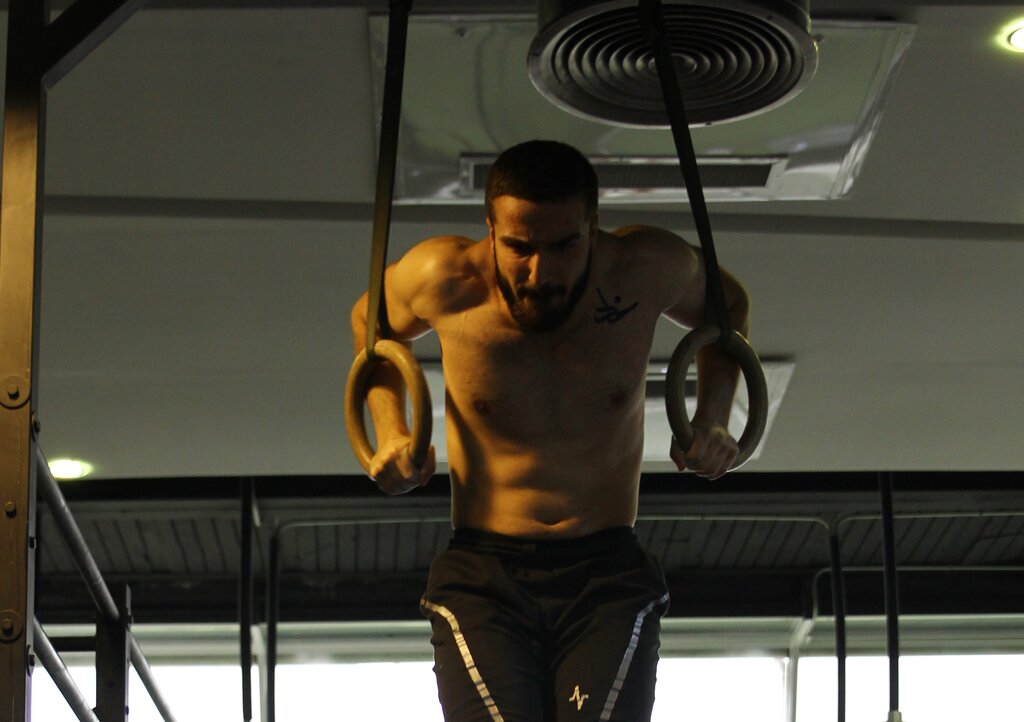
With the C-curve and false grip, you can begin progressing your pull. The goal is no longer just getting your chin over the bar. It's about making contact with the bar as low on your torso as possible.
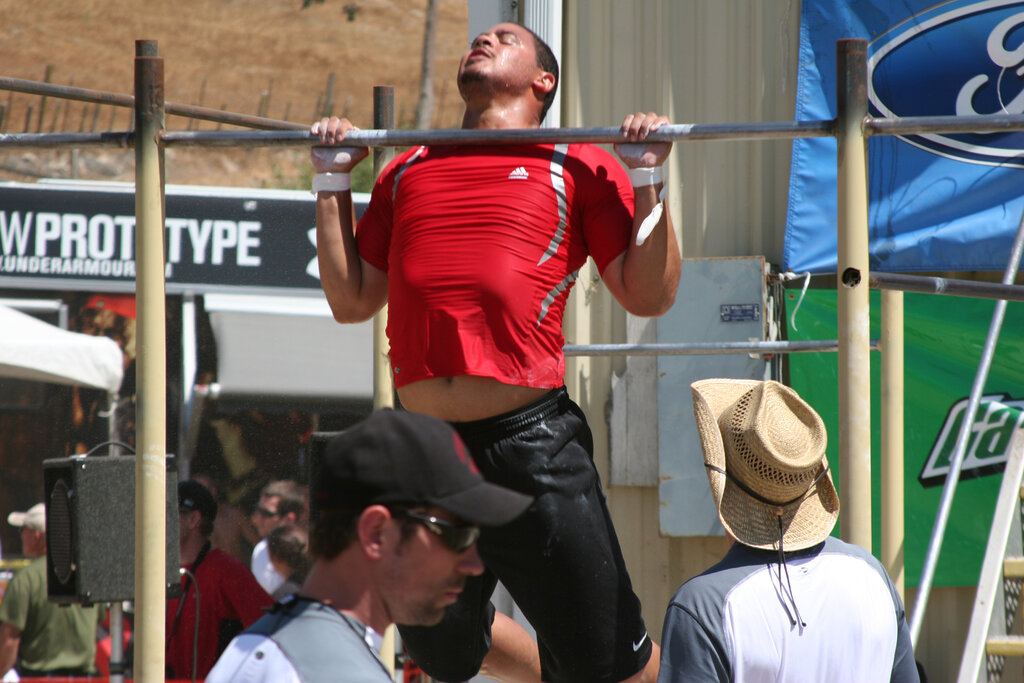
- Chest-to-bar pull-ups: The first step. Focus on explosively pulling the bar to your sternum. This ensures you're generating enough height for a muscle-up transition.
- Belly-to-bar pull-ups: The next level. This requires a powerful hip drive and an aggressive pull. Mastering this means you have a surplus of power, making the muscle-up feel much easier.
Building Raw Power
Progressions are key, but raw power needs to be built. This is where you overload the movement pattern to recruit more —the ones responsible for rapid, forceful contractions.
Weighted pull-ups are the most direct way to do this. Don't just add weight and grind out reps. Use a periodization approach focused on power. For example, for 4 weeks, you might focus on lifting a heavy weight for low reps (e.g., 3-5 sets of 3 reps). The goal is to move the weight as fast as possible on the way up. This trains your nervous system to fire more muscle fibers simultaneously, increasing your explosive potential.
Focus on the speed of the concentric (pulling up) phase. Even with heavy weight, the intent should be to move explosively.
Another powerful tool is plyometric bar work. Think of it as jumping for your upper body. One effective drill is the
Explosive Power: Training movements that mimic wrestling actions (e.g., cleans, snatches, plyometrics)
For pulling, this means exercises like clapping pull-ups or pulls where you release the bar at the top for a split second. These movements force your muscles to contract at maximum velocity, bridging the gap between heavy, slow strength and the lightning-fast pull required for a smooth muscle-up.
What is the primary difference between the pull required for a standard pull-up and the pull needed for a muscle-up?
To generate the height needed for a muscle-up transition, the recommended pulling path is not straight up-and-down but rather a __________.
By combining these technical adjustments and power-building exercises, you will transform your pull-up from a simple lift into a powerful launch.