Intermediate Boxing Tactics and Ring Generalship
Footwork Punching Integration
Putting Punches in Motion
You can have the fastest hands in the world, but if your feet are stuck in the mud, you're a stationary target. Real boxing happens in motion. Integrating your punches with your footwork is what separates novices from fighters. It’s about turning static, predictable attacks into a fluid, dynamic assault.
The core of this integration is the 'step-and-hit' mechanic. For a single punch like a jab, you might step your lead foot forward as you punch. But for combinations, the timing changes. Imagine throwing a 1-2 (jab-cross). As you throw the jab, your lead foot takes a small, controlled step forward. This step does two things: it closes the distance and loads your rear side for the cross. As your lead foot lands, you drive off your back foot, rotating your hips and shoulder to deliver the cross. Your feet stop moving the instant you throw the cross, giving you a solid base for power.
Your feet get you into position. Your body delivers the power. They must work together.
Creating New Angles
Standing directly in front of an opponent is dangerous. The best fighters create angles to hit without being hit. Pivoting is your key tool for this. A simple yet devastating technique is to pivot after a lead hook. After your hook lands, don't just retract your arm. Instead, pivot on your lead foot, swinging your rear foot around 45 or even 90 degrees. Suddenly, you're on your opponent's side, out of the line of fire, and in a perfect position to land more shots while they're still facing forward.
This isn't just for offence. Pivoting can be defensive. If an opponent rushes you, a sharp pivot can make them stumble past you, leaving their back exposed. Remember to keep your weight balanced. A common mistake is leaning too far forward or backward during the pivot, which makes you unstable and unable to follow up.
Utilizing proper footwork techniques, such as pivoting, circling, and angling, allows fighters to control distance, evade strikes, and set up their own attacks.
Controlling the Distance
Controlling the range of the fight is crucial. One of the most effective ways to close the distance safely is with the double jab. Instead of one big step, you take two small, quick steps, one with each jab. The first jab acts as a rangefinder and makes your opponent defensive. The second step and jab gets you fully into striking range, setting up a power punch like a cross or hook.
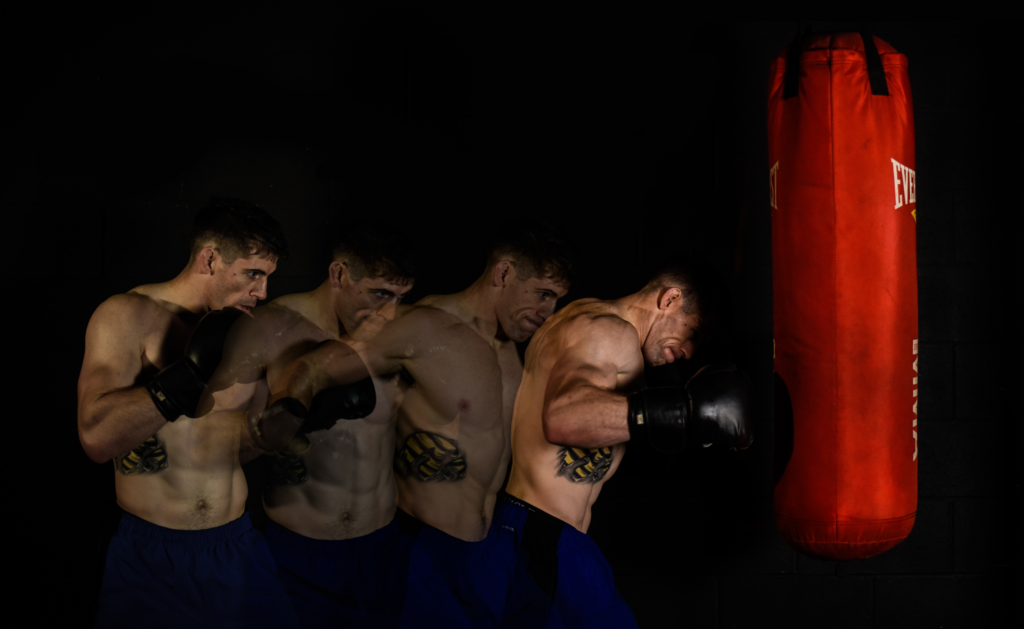
Another key footwork pattern is the pendulum step This is a continuous, rhythmic bouncing motion, shifting your weight from your front foot to your back foot. It's not just for show. The pendulum step keeps you from being a static target and builds momentum for your attacks. From this rhythm, you can explode forward into a combination or push off your back foot to create distance. Think of it as the engine of your movement, always running, ready to shift into gear.
Maintaining balance while moving laterally is just as important. When you move to your left (for an orthodox fighter), your left foot moves first, followed by your right. When moving right, your right foot leads. Your feet should never cross. This keeps your stance wide and stable, ensuring you're always ready to either punch or defend. Practice this by moving around a square, keeping your upper body calm and your guard up.
Ready to test your knowledge?
What is the primary purpose of the 'step-and-hit' mechanic in boxing?
When throwing a 1-2 (jab-cross) combination, when should your feet be stationary?
Drilling these movements until they become second nature is the goal. Your feet should move without conscious thought, always putting you in the best position to succeed.