Intermediate Boxing Strategy and Technique
Biomechanical Power Generation
The Kinetic Power Chain
A powerful punch isn’t about arm strength; it’s a full-body event. The force begins the moment you push off the floor, travelling up your body in a sequence known as the kinetic chain. Think of it like a whip. The handle moves first, and the energy accelerates along its length until the tip cracks. Your body works the same way.
It all starts with ground reaction force — an equal and opposite force from the ground pushing back on your foot. By driving your rear foot into the canvas, you initiate a wave of energy. This force travels up your leg, into your hip, across your core, into your shoulder, and finally, out through your fist. Each link in this chain adds momentum and multiplies the force.
A weak link breaks the chain. If your ankle is unstable, your hips are stiff, or your core is disengaged, energy leaks out. Mastering this sequence is the difference between a push and a punch.
The Engine of Torque
The real engine of your punch is not your shoulder, but your hips. The rotation of your pelvis and torso generates massive rotational force, or torques. Think of it as coiling a spring. As you pivot on your rear foot, your hips and torso twist away from the target, loading tension through your core. When you unleash the punch, that spring uncoils explosively.
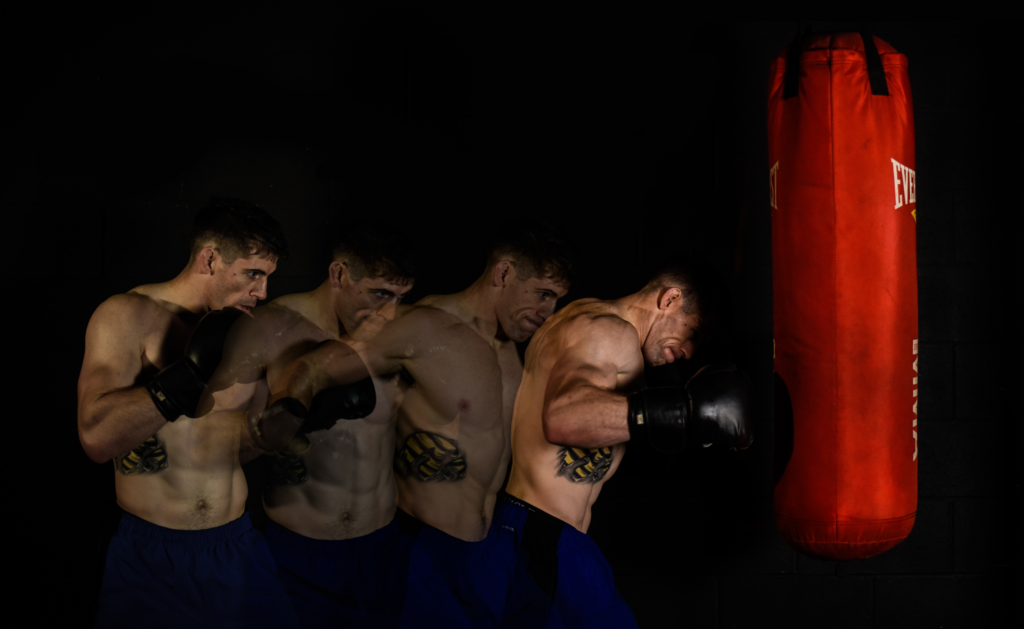
This rotation must be timed perfectly. The hip rotation initiates just after you push from the ground, and it leads the shoulder rotation. The arm and fist are the last parts to move, acting as the tip of the whip. If the arm fires too early, you lose all the power generated by your lower body and core. The arm is simply the delivery system for the force your body creates.
Your feet provide the connection, your hips provide the engine, and your hands just steer.
Dynamic Weight Transfer
In a combination, every punch should set up the next. This is only possible through dynamic weight transfer. When you throw a cross (a punch with your rear hand), your weight shifts from your back foot to your front foot. At the moment of impact, your weight is committed forward, loading your lead leg.
This loaded position is perfect for a follow-up strike, like a lead hook. Instead of resetting, you use the forward momentum. As you throw the hook, you pivot on your lead foot and your weight shifts back towards the centre or to the rear leg. This creates a fluid, powerful rhythm. Your body mass flows from one strike into the next, ensuring that each punch is backed by your full weight, not just your arm.
The power of a punch comes from generating force through your legs, core, and upper body, then efficiently transferring that energy to your fist.
Snap and Recovery
The final element is the 'snap'. The shoulder acts as the final hinge, and the punch should extend and retract with speed. Avoid pushing your punches, which is slow and leaves you exposed. A good punch snaps at the point of impact and immediately retracts along the same path. This is crucial for defence.
Herein lies a key trade-off. A fully committed power punch requires significant weight transfer and rotation. This generates maximum force, but it also takes longer to recover your defensive stance. Throwing a punch at 80% power might allow you to retract it twice as fast, keeping you safer from counter-attacks. Intermediate fighters learn to dial their power up or down based on the situation, balancing offensive output with defensive responsibility. The goal is not just to hit hard, but to hit hard and not get hit back.
Time to test what you've learned about generating power.
According to the kinetic chain principle, where does the force for a powerful punch originate?
What is described as the "real engine" of a punch, responsible for generating massive rotational force (torque)?
Understanding these biomechanics transforms your striking from a simple arm movement into a coordinated, full-body technique that is both powerful and efficient.