Intermediate Basketball Tactics and Skills
Advanced Shooting Mechanics
The Kinetic Chain
You already know how to shoot, but to shoot like an elite player, you need to think about where the power comes from. It isn't just your arm. A great shot is a seamless transfer of energy that starts from the floor. This is the kinetic chain—a sequence of movements where energy flows up from your feet, through your legs and core, into your shoulder, and finally out through your fingertips.
Think of it like cracking a whip. The power originates in the handle, but the speed and force are magnified all the way to the tip.
The engine of this chain is the "dip." This is the slight downward motion of the ball and your body just before you start your upward shooting motion. A consistent dip is crucial. It's not about how low you go, but about doing it the same way every single time. This motion loads your legs and core with potential energy, which you will then transfer into the ball. The timing of your dip and upward explosion is what separates a smooth, effortless shot from a jerky, forced one.
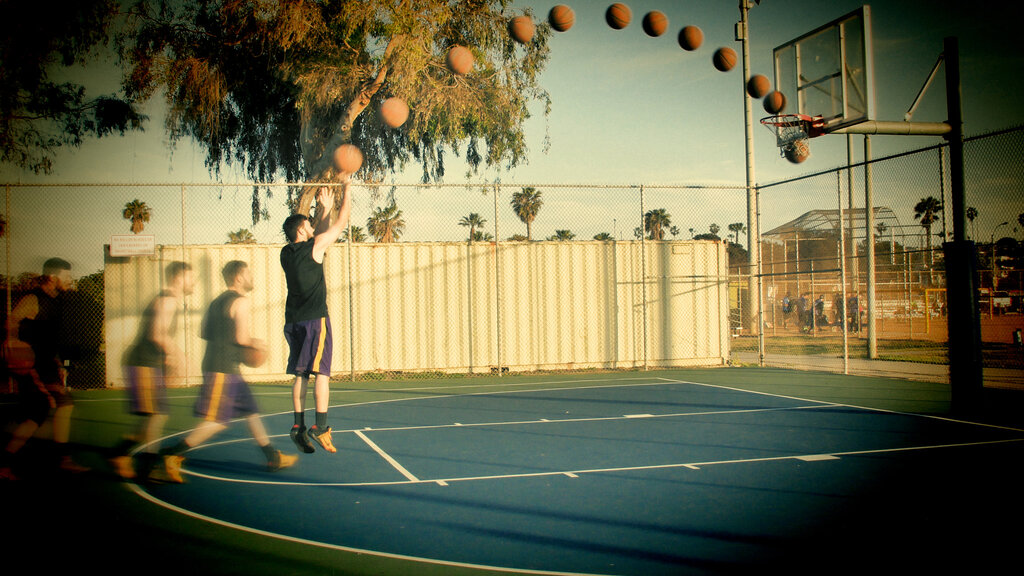
The starting point for this energy transfer is your shot pocket. This is the comfortable, neutral position where you hold the ball before initiating the shot. For most players, this is somewhere between their waist and chest. An optimized shot pocket allows for a smooth, direct path upwards, minimizing wasted motion and ensuring the kinetic chain fires in the correct sequence. If your pocket is too low, the shot can be slow and easy to block. If it's too high, you lose the ability to generate power from your lower body.
One Motion or Two?
Once the energy transfer begins, it can follow one of two main paths: the or the two-motion shot. The difference lies in the flow of the movement. A one-motion shot is a single, fluid movement from the dip to the release, with no pause. The ball travels upward as the shooter's body uncoils.
A two-motion shot, on the other hand, breaks the movement into two distinct phases. The player brings the ball up to a "set point"—usually near the forehead—pauses briefly, and then completes the shot with a second motion. This was more common in previous eras and is often seen in mid-range shooters who prioritize control over speed. There's no single "correct" type; your choice depends on your physical build, shooting range, and game situation. Long-range specialists often prefer one-motion shots, while players who operate in the mid-range might favor the control of a two-motion shot.
Refining the Release
As the ball leaves your shot pocket, your guide hand plays a critical, yet passive, role. Its sole purpose is to balance the ball on its way up. It should come off the ball cleanly without influencing its path or rotation. A common flaw is "thumbing" the ball, where the guide hand's thumb pushes against the ball at the release point. This imparts sidespin and sends the shot offline.
Mastering fundamental skills such as dribbling, shooting, passing, and defense forms the basis for advanced techniques and strategies in basketball.
To develop guide hand discipline, practice shooting one-handed close to the basket. Focus on a clean release where the ball rolls off your fingertips with perfect backspin. When you add your guide hand back, it should feel like it's just along for the ride. Another tip is to finish your follow-through with your guide hand open and facing the ceiling, ensuring it separated cleanly without pushing.
Sweep and Sway
Finally, let's look at what your feet are doing. You might see elite shooters land in a different spot from where they jumped. This is intentional. The sweep and sway is an advanced footwork technique where the shooter jumps slightly forward, sweeping their feet forward while their shoulders and upper body sway backward. It looks a little like they are leaning back in a chair as they land.
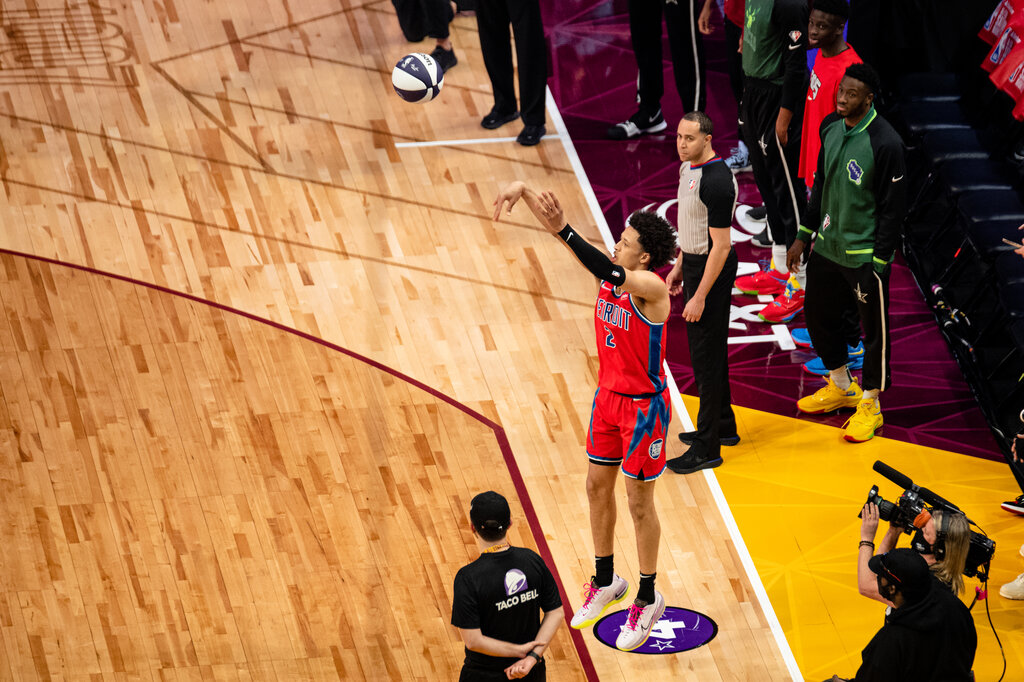
Why do this? The backward sway of the torso helps counterbalance the forward motion of the jump and the force of the shot. This keeps the shooter's center of gravity stable and, most importantly, helps keep the shooting shoulder aligned to the basket. It prevents the shoulder from tensing up and pulling the shot to one side. This technique also creates space from a defender and naturally softens the landing, absorbing impact. It's a subtle but powerful way to maintain balance and accuracy, especially when fatigued or shooting from deep.
Integrating these advanced mechanics requires deliberate practice. Start by filming your shot to diagnose your current habits. Then, break down each component and build it back up, from the dip to the landing. This bridges the gap between static practice and the dynamic, high-pressure environment of a real game.