Intermediate Baking Science and Technique
Gluten Mechanics
The Architecture of Bread
Every great loaf of bread relies on an invisible architecture. This structure isn't made of wood or steel, but of protein. Specifically, two proteins found in wheat flour, glutenin and gliadin, are the engineers of your dough. When you add water, these proteins link up to form gluten, a complex, elastic network that gives dough its signature stretch and strength.
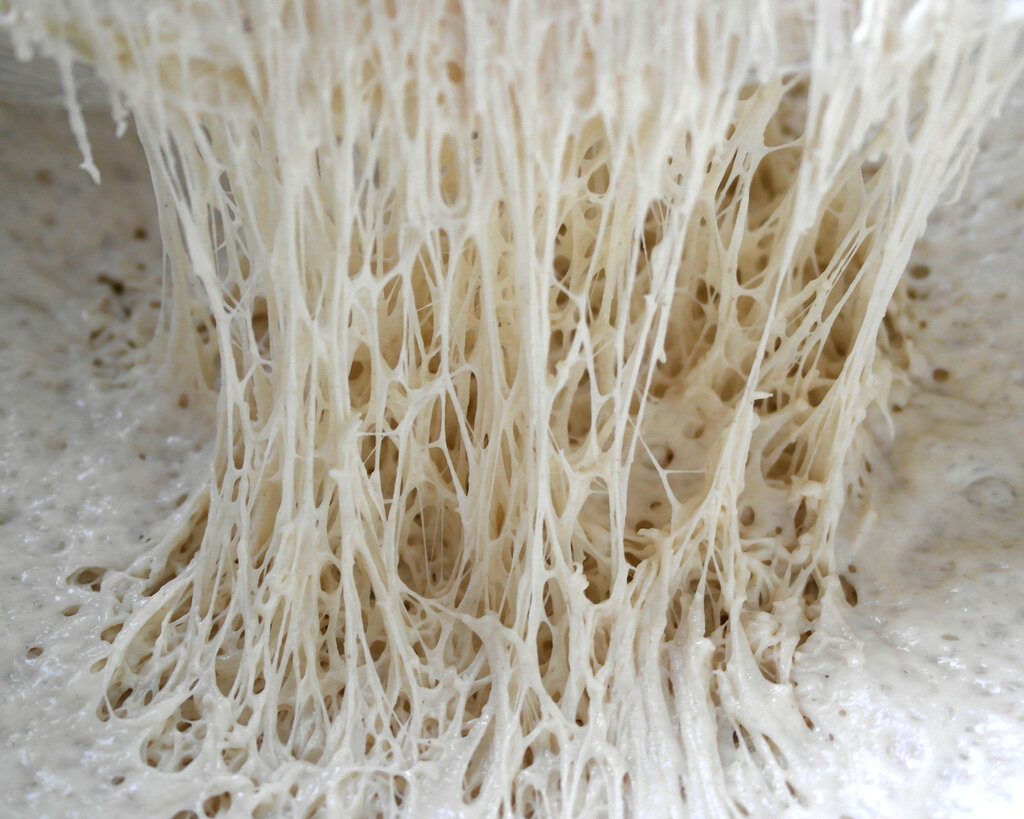
Think of glutenin as providing the dough's strength and elasticity, like the strong vertical threads in a tapestry. Gliadin, on the other hand, provides extensibility, allowing the dough to stretch without breaking, much like the horizontal threads. Together, they create a fabric capable of trapping the carbon dioxide gas produced by yeast during fermentation. It's this gas-trapping ability that allows bread to rise.
The potential strength of this network is determined by the protein content of your flour. Not all flours are created equal in this regard. The percentage of protein dictates how much gluten can be formed, which directly impacts the crumb structure and chewiness of the final product.
| Flour Type | Typical Protein % | Best For |
|---|---|---|
| Cake Flour | 7-9% | Tender cakes, biscuits, delicate pastries |
| All-Purpose Flour | 10-12% | Everyday baking, cookies, muffins, pancakes |
| Bread Flour | 12-14% | Chewy breads, pizza dough, bagels |
| Whole Wheat Flour | ~13-14% | Hearty whole grain breads |
Shaping the Structure
Once you've chosen your flour, the next critical variable is hydration—the amount of water relative to the flour. This is typically expressed as a percentage. A dough with 1000g of flour and 700g of water has a 70% hydration. Wetter doughs, with higher hydration, encourage more gluten development but can be stickier and harder to handle. Drier doughs are stiffer and produce a tighter crumb.
Manipulating the gluten network can be done mechanically, through kneading and folding, or chemically and passively. Mechanical action physically aligns and stretches the glutenin and gliadin proteins, forcing them to form strong, orderly bonds.
A more patient approach involves —a simple rest period after mixing just the flour and water. During this time, the flour fully hydrates, and gluten bonds begin to form on their own, without any kneading. This kick-starts gluten development, making the dough more extensible and reducing the total kneading time required.
Autolyse is a technique that delivers a dough that’s easier to work with and shape, and a loaf with better texture, rise and flavor.
The Role of Time and Enzymes
Once yeast and salt are incorporated, bulk fermentation begins. This is where the magic happens, but it's a delicate balance. As yeast consumes sugars and releases CO₂, the gluten network traps it, causing the dough to rise.
At the same time, two key enzymes are at work. Amylase breaks down complex starches in the flour into simple sugars, providing a steady food source for the yeast. Meanwhile, enzymes begin to break down the protein network itself. A little protease activity is good; it helps make the dough more extensible and contributes to flavor. But too much can be a disaster.
The graph illustrates the life cycle of dough during fermentation. Initially, gluten strength builds as the network develops. It hits a peak, representing the ideal window for shaping. If fermentation continues for too long, protease enzymes will degrade the gluten network faster than it can be strengthened. The dough loses its structure, becoming sticky and slack, and will collapse in the oven, resulting in a dense, flat loaf.
Ready to test your knowledge on gluten mechanics?
What are the two primary proteins in wheat flour that combine to form gluten?
A baker finds their dough has become overly sticky and has lost its structure after a very long fermentation period. What is the most likely enzymatic cause?
Understanding these interactions between protein, water, time, and enzymes is the key to moving beyond simply following recipes and into the realm of truly controlling your bake. It allows you to adapt to different flours, troubleshoot problems, and consistently produce bread with the exact texture you desire.