Interior Design Fundamentals
Introduction to Interior Design
The Building Blocks of Good Design
Ever walk into a room and it just feels right? It’s not magic. Great interior design relies on a few core principles that guide how elements are placed in a space. Think of them as a recipe for a comfortable, functional, and beautiful room. Once you understand them, you'll start to see them everywhere.
These basic interior design rules cover the layer of decoration on the interior of a space within a building, be it residential or commercial, so while most designers and architects will say there are 'no rules to design', there are still some fundamental design decisions we should consider before beginning to decorate and plan our dream home.
Finding Balance
Balance is about distributing the visual weight of objects in a room so it feels stable and pleasing. Imagine a seesaw. You wouldn't put a huge boulder on one end and a tiny pebble on the other. The same idea applies to furniture and decor. There are three main ways to achieve balance.
Symmetrical balance is the simplest. It's like folding a room in half and having a mirror image on both sides. Think of a sofa with identical end tables and lamps on either side. It feels formal, traditional, and orderly.
Asymmetrical balance is more casual and dynamic. Instead of mirroring items, it balances objects of different sizes and shapes that have similar visual weight. For example, you could balance a large sofa on one side of a room with two smaller armchairs on the other. It's harder to pull off, but the result is often more interesting.
Finally, there's radial balance, where everything is arranged around a central point. A round dining table with chairs placed around it is a perfect example. This type of balance draws attention inward and is great for creating a focal point.
Harmony and Rhythm
If balance is about stability, harmony is about unity. Harmony is created when all the pieces in a room feel like they belong together. It’s the sense of cohesion that makes a space feel complete. You can achieve this by using a consistent style of furniture, a related color palette, or similar textures throughout the room.
When every element works together, the room feels calm and resolved.
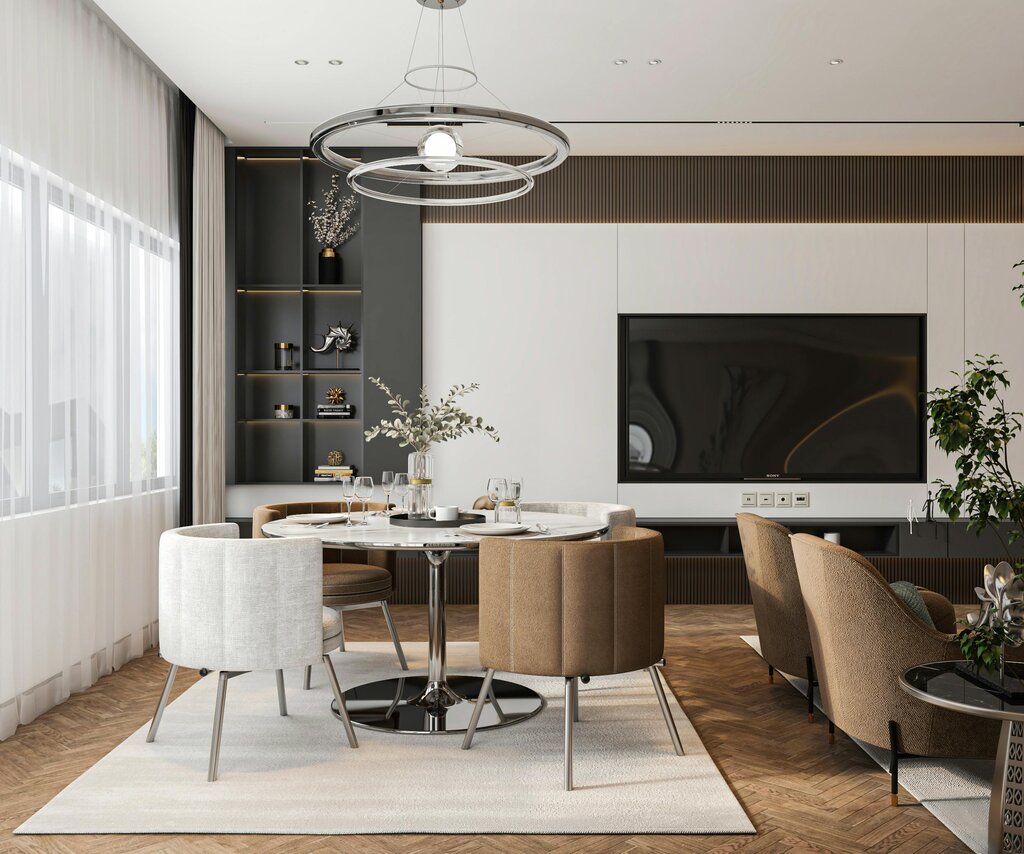
Rhythm is closely related to harmony. It's the principle that helps your eye move smoothly around a room. Think of it as the visual beat or flow of a space. Rhythm is often created through repetition—repeating a color, shape, pattern, or texture at different points in the room.
For instance, the color from a throw pillow might be repeated in a piece of art across the room and again in a vase on a shelf. This repetition creates a visual path, connecting the different parts of the space into a unified whole.
Contrast, Proportion, and Scale
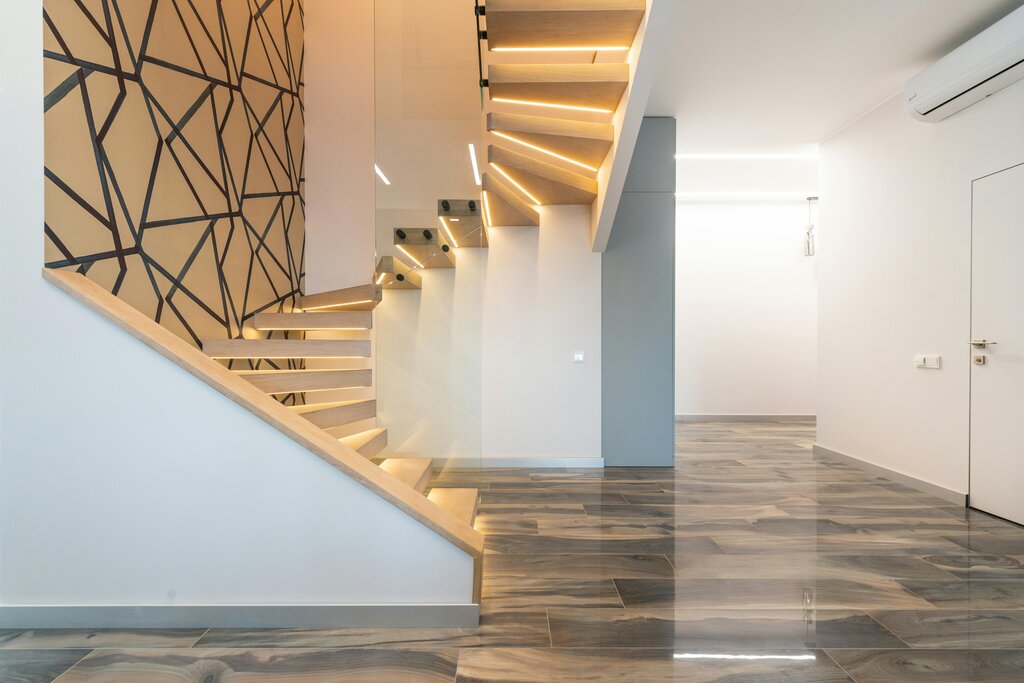
A room with perfect harmony can sometimes feel a bit boring. That's where contrast comes in. Contrast is about creating visual interest by placing opposite elements next to each other. This can be done with color (black and white), shape (a round table with rectangular chairs), or texture (a rough, nubby pillow on a smooth leather sofa).
A little bit of contrast can make a room pop and give it personality. It prevents the design from feeling one-note.
Finally, let's talk about proportion and scale. These two concepts are about how objects relate to each other and to the space they're in.
Proportion refers to the size of one object in relation to another. For example, the proportion of a lampshade should look right compared to the lamp base.
Scale refers to the size of an object in relation to the room itself. A giant, overstuffed sofa would be out of scale in a tiny apartment, just as a small, delicate loveseat would be lost in a massive great room.
Getting the scale and proportion right is crucial. When objects are sized correctly for the room and for each other, the entire space feels comfortable and well-composed.
Now you have the foundational principles to start analyzing and designing spaces. Let's see if you can spot them.
You place a large sofa on one side of your living room and balance it visually with a pair of smaller armchairs and a floor lamp on the opposite side. What type of balance have you created?
Which principle is primarily concerned with the size of an object in relation to the room it occupies?
These principles are the quiet rules that govern good design. By understanding balance, harmony, rhythm, contrast, and scale, you can start creating spaces that don't just look good, but feel good too.