Interest Rates and Fed Policy for Smart Decisions
Federal Reserve Structure
The Fed's Three-Part Structure
The Federal Reserve System is the central bank of the United States, but it doesn't operate like a single, top-down organization. Instead, it's a unique hybrid, blending public government oversight with private-sector operations. This structure was designed to be both centralized and decentralized, balancing national economic goals with the diverse needs of local regions.
It's made up of three key parts that work together: the Board of Governors, twelve regional Federal Reserve Banks, and the Federal Open Market Committee (FOMC).
The Command Center
At the heart of the Federal Reserve is its Board of Governors, a federal government agency based in Washington, D.C. This is the central oversight body of the system.
The Board consists of seven members, known simply as "governors." To ensure they can make decisions free from short-term political pressure, governors are appointed to long, 14-year terms. These terms are staggered so that one governor's term expires every two years. This design fosters independence and stability.
Appointments are a two-step process. First, the President of the United States nominates a candidate. Then, the Senate must confirm the nominee. Once a governor has served a full 14-year term, they cannot be reappointed.
From these seven governors, the President also selects a Chair and a Vice Chair. They are also confirmed by the Senate but serve shorter, renewable four-year terms. The Chair is the public face of the Federal Reserve and its most influential leader.
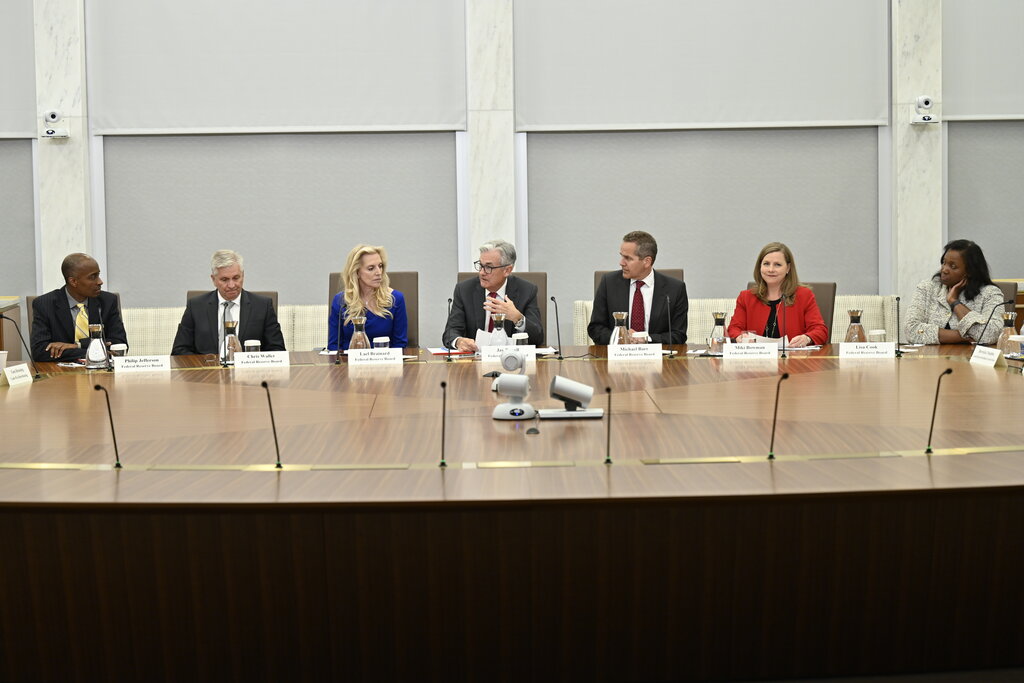
The Board's main job is to guide the entire Federal Reserve System. Its responsibilities include analyzing U.S. and international economic developments, supervising and regulating the operations of the Federal Reserve Banks, and overseeing the nation's largest commercial banks. They also play a critical role in the committee that sets the nation's monetary policy.
The System's Operating Arms
While the Board of Governors provides centralized direction, the twelve Federal Reserve Banks are the system's operational arms. They are spread across the country, each serving a specific geographic region, or "District." You can find them in major cities like New York, Chicago, and San Francisco.
This regional structure ensures that the economic conditions of all parts of the country—from farming communities in the Midwest to tech hubs on the West Coast—are factored into national policy decisions.
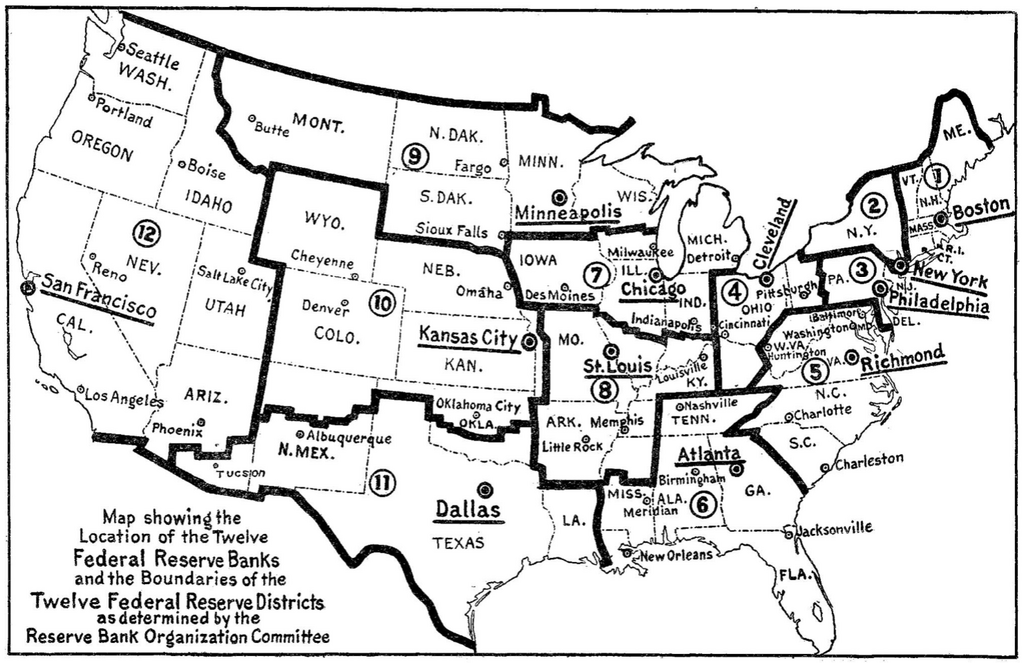
Each Reserve Bank functions like a private corporation in some ways. It has its own board of directors, composed of local citizens representing banking, commercial, agricultural, industrial, and public interests. This board oversees the bank's operations and appoints its president.
These banks are often called the "bankers' banks." They provide financial services to commercial banks and the U.S. government, much like a commercial bank serves its customers. Their duties include distributing currency and coin, processing electronic payments, and supervising the smaller banks within their districts. Reserve Bank presidents also contribute to national monetary policy by bringing their regional economic insights to the table.
Where Decisions Are Made
The Federal Open Market Committee, or FOMC, is the group that actually sets the direction of monetary policy in the United States. This is where the centralized and decentralized parts of the Fed come together to make critical decisions.
The committee is made up of twelve voting members:
- All seven members of the Board of Governors.
- The president of the Federal Reserve Bank of New York.
- The presidents of four other Federal Reserve Banks, who serve one-year terms on a rotating basis.
While only five of the twelve Reserve Bank presidents vote at any given time, all of them attend FOMC meetings. They participate in the discussions, share information about their districts' economies, and contribute to the committee's assessment of the national economy.
The FOMC holds eight regularly scheduled meetings per year in Washington, D.C. At these meetings, members discuss economic forecasts and deliberate on the appropriate course for monetary policy.
The decision-making process is based on consensus. After extensive discussion and analysis, the members vote on a policy directive. This directive informs the public and financial markets about the committee's policy stance. The Chair of the Board of Governors also serves as the Chair of the FOMC, leading the meetings and communicating the committee's decisions.
The FOMC's structure ensures a broad range of viewpoints—national and regional, public and private—are heard before a decision is made.
Now, let's test your understanding of how the Federal Reserve is organized.
The Federal Reserve System has a unique hybrid structure. Which three entities form its core?
What is the primary purpose of appointing members of the Board of Governors to long, 14-year staggered terms?
This unique, hybrid structure allows the Fed to make informed decisions that reflect the complexities of the U.S. economy.