Interest Rates and Fed Policy Explained
Federal Reserve Basics
The Nation's Central Bank
The Federal Reserve System, often just called "the Fed," is the central bank of the United States. Think of it as the bank for banks and the government's bank. Its main job is to keep the U.S. economy running smoothly and stably. It's a balancing act with two primary, and sometimes conflicting, goals.
This is known as the Fed's dual mandate: to promote maximum employment and maintain stable prices.
Maximum employment means as many people as possible have jobs. Stable prices mean preventing the cost of living from rising too quickly, which you know as inflation. The Fed's decisions are aimed at achieving both of these goals to foster a healthy, growing economy.
A Decentralized Structure
The Fed isn't a single entity but a system. This structure was designed to be both public and private, and to represent economic interests from across the country, not just from Washington D.C. or Wall Street.
At the top is the Board of Governors in Washington, D.C. It consists of seven members, known as governors, who are appointed by the President and confirmed by the Senate for 14-year terms. This long term is meant to insulate them from short-term political pressure.
The system also includes twelve regional Federal Reserve Banks located in major cities across the U.S. Each bank serves a specific geographic district. These regional banks are the operating arms of the central bank, providing financial services to commercial banks and the U.S. government in their respective areas.
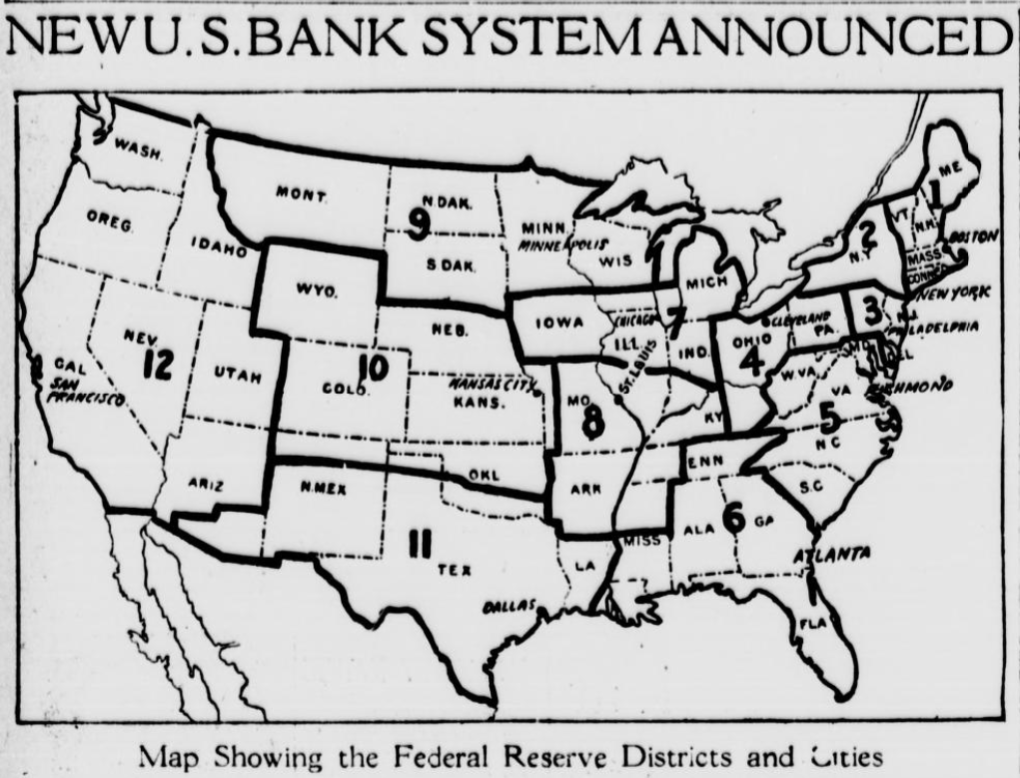
Each regional bank has its own board of directors, chosen from local commercial banks and the public. This unique public-private structure helps the Fed stay informed about economic conditions in all parts of the country.
Who Makes the Decisions
So, who actually makes the big decisions about the economy? That responsibility falls to the Federal Open Market Committee, or FOMC. This is the Fed's main monetary policymaking body.

The FOMC is made up of 12 voting members:
- The seven members of the Board of Governors.
- The president of the Federal Reserve Bank of New York.
- Four of the remaining eleven Reserve Bank presidents, who serve one-year terms on a rotating basis.
The FOMC typically meets eight times a year to review economic and financial conditions. During these meetings, they decide what actions to take to steer the economy toward the Fed's goals of maximum employment and price stability. It's these meetings that are closely watched by markets and the public, as their outcomes have a ripple effect throughout the entire economy.
Ready to test your knowledge?
What are the two primary, sometimes conflicting, goals of the Federal Reserve's monetary policy?
Why are the members of the Federal Reserve's Board of Governors appointed for long, 14-year terms?
Understanding this structure—the Board of Governors, the regional banks, and the FOMC—is the first step to seeing how the Fed influences your financial world.