Interest Rates and Fed Policy Demystified
Federal Reserve Basics
The Nation's Central Bank
The Federal Reserve System, often just called "the Fed," is the central bank of the United States. Think of it as the financial system's caretaker. Its main job is to provide the nation with a safe, flexible, and stable monetary and financial system. Congress created it in 1913 to help prevent the banking panics that had periodically plagued the country.
The Fed's core mission is to foster a healthy economy and a stable financial system.
Who Runs the Fed?
The Federal Reserve isn't a single entity but a network. Its structure is a unique blend of public oversight and private-sector involvement, designed to be independent from short-term political pressures while still being accountable to the public. It has three key parts.
At the top is the Board of Governors in Washington, D.C. This is the main governing body. It consists of seven members, known as "governors," who are nominated by the President of the United States and confirmed by the Senate. They serve staggered 14-year terms to insulate them from political influence.

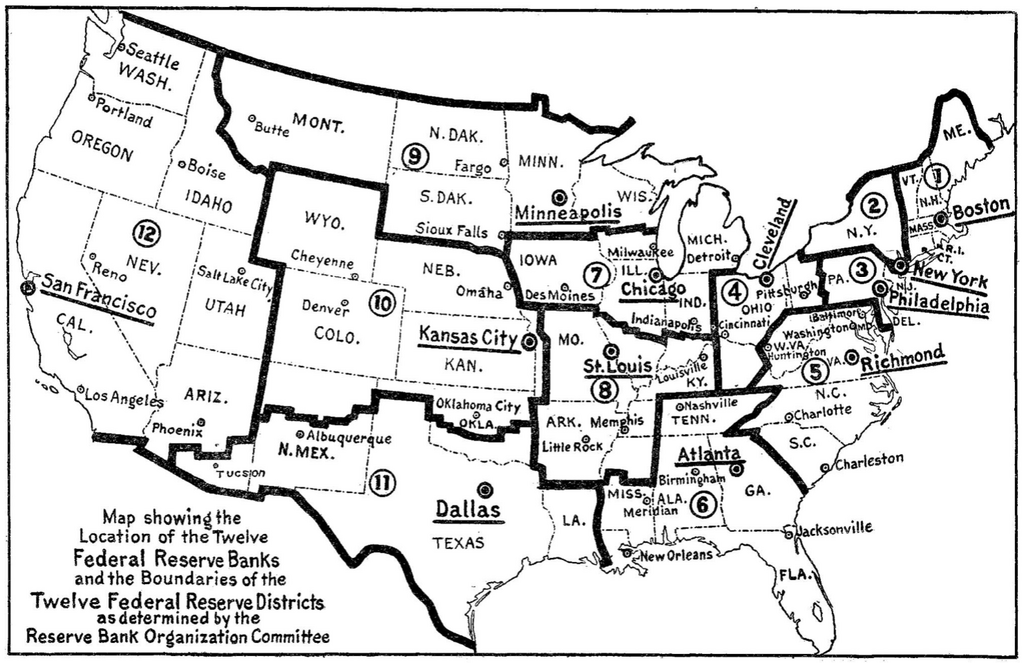
Next are the 12 Federal Reserve Banks, which act as the operational arms of the system. These regional banks are spread across the country in major cities like New York, Chicago, and San Francisco. Each bank serves a specific geographic district, acting as a banker for the commercial banks in its region and helping to implement the Fed's policies on the ground.
Finally, there's the Federal Open Market Committee (FOMC). This is the Fed's primary monetary policymaking body. It decides on the direction of interest rates and the money supply. The FOMC is made up of the seven governors from the Board, the president of the Federal Reserve Bank of New York, and the presidents of four other Reserve Banks on a rotating basis.
The Fed's Four Key Jobs
The Federal Reserve performs four main functions to carry out its mission.
| Function | Description |
|---|---|
| Conducting Monetary Policy | The Fed manages the nation's money supply to promote maximum employment and stable prices. This is its most well-known and impactful role. |
| Supervising Banks | It supervises and regulates many of the nation's banks to ensure they operate safely and fairly, protecting consumers' credit rights. |
| Maintaining Financial Stability | The Fed works to contain risks that could disrupt the financial system. It acts as a lender of last resort to banks during crises. |
| Providing Financial Services | It provides banking services to the U.S. government and commercial banks, including processing checks and electronic payments. |
The most visible of these jobs is conducting monetary policy. When you hear news about the Fed raising or lowering interest rates, that's the FOMC in action. These decisions ripple through the entire economy, affecting the cost of borrowing for everything from car loans and mortgages to business expansions.
The Federal Reserve’s interest-rate decisions have a wide-ranging influence on your personal finances, affecting more than just your financing costs but also your job security and purchasing power.
By understanding this basic structure and the Fed's core responsibilities, you can better grasp how this powerful institution influences the economy and your own financial life.