Intelligent Oncology Dashboards in US Healthcare
Data Integration Architecture
Unifying Fragmented Data
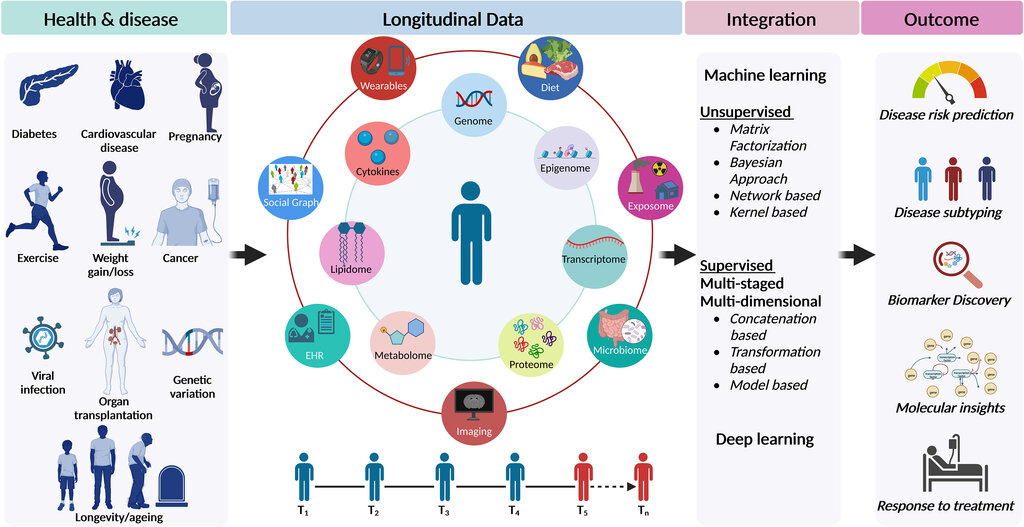
In oncology, a patient's story is told across multiple, disconnected systems. The Electronic Health Record (EHR) holds clinical notes and treatment history. A separate Laboratory Information System (LIS) manages genomic sequencing results. The pharmacy system tracks medications, and a clinical pathway engine recommends next steps. An intelligent dashboard can't just display one of these streams; it must weave them together into a single, coherent view.
This integration is the central challenge. We need a common language for these systems to communicate. For decades, the standard was Health Level Seven, or HL7. It's a messaging protocol that allows different healthcare applications to exchange information. Think of it as a set of digital envelopes, each formatted for a specific purpose like admitting a patient or sending a lab result. It's reliable but can be rigid.
Unlike older standards like HL7 v2 and CDA (Clinical Document Architecture), FHIR is designed to be web-based, modular, and flexible, making it ideal for modern healthcare systems that require fast, real-time data exchanges.
The modern solution is (Fast Healthcare Interoperability Resources). Instead of rigid messages, FHIR uses a web-based approach with APIs, much like the services that power modern apps on your phone. Each piece of health information—a patient, an allergy, a lab result, a genomic variant—is treated as a distinct 'resource.' A dashboard can then request specific resources from the EHR, LIS, or other systems and assemble them on the fly. This is far more flexible and efficient than parsing dense, all-in-one messages.
Architecture and Infrastructure
Once you have a standard for communication, you need to decide where the integration happens. The choice between an on-premise and a cloud-native architecture has major implications for performance and scalability.
An 'on-premise' architecture means the servers and software that run the dashboard live within the hospital's own data center. This gives the IT department full control over security and infrastructure. However, it can be expensive to maintain, slow to scale, and can create data silos that are hard to connect with external systems.
A 'cloud-native' approach uses services from providers like AWS, Google Cloud, or Microsoft Azure. This offers massive scalability and access to powerful tools for data processing and machine learning. For a dashboard that needs to crunch genomic data and provide real-time treatment alerts, the computing power of the cloud is a huge advantage. It also improves 'data liquidity'—the ease with which data can be securely moved and combined. The main trade-offs involve navigating data privacy regulations in the cloud and managing potential network latency between the hospital and the cloud provider.
Handling Specialized Oncology Data
Beyond standard clinical data, oncology dashboards must handle highly specialized information streams. Genomic data is a prime example. The raw output from a sequencing machine is often a , which lists all the genetic variations found in a tumor sample. The dashboard's data pipeline must be able to ingest this file, identify clinically significant mutations, and cross-reference them with databases of targeted therapies and clinical trials.
Another key integration is with clinical pathway engines. These are systems that codify evidence-based treatment guidelines. A smart dashboard doesn't just show that a patient has a specific mutation; it pulls in the relevant clinical pathway and highlights the recommended first-line therapy, along with criteria for moving to a second-line treatment. This transforms the dashboard from a passive data viewer into an active decision support tool.
Finally, all this disparate data must be normalized. One lab might report a value in mg/dL while another uses mmol/L. The integration architecture is responsible for converting all incoming data to a standard format, ensuring that comparisons and analyses are accurate and meaningful.
What is the central challenge in creating a comprehensive oncology dashboard, as described in the text?
How does the FHIR standard fundamentally differ from the older HL7 messaging protocol?
A robust integration architecture is the invisible engine that powers an effective oncology dashboard, turning a flood of disconnected data points into a clear, actionable picture of a patient's journey.