Intelligent Agents Explained
Introduction to Intelligent Agents
What Is an Intelligent Agent?
Think of an intelligent agent as an automated helper. It’s a system that can observe its surroundings, make a decision, and then take an action to accomplish a goal. The “surroundings” could be a digital space like a website, a physical room, or even a complex system like a stock market.
An AI agent is a system that can perceive its environment through sensors, process this information, and act upon the environment through actuators to achieve specific goals.
Let's break that down. Agents use sensors to perceive their environment. For a self-driving car, sensors might include cameras, GPS, and radar. For a chatbot, the sensor is the text input field where you type your questions.
After perceiving, the agent acts on its environment using actuators. The self-driving car’s actuators are its steering wheel, accelerator, and brakes. A chatbot's actuator is the mechanism that displays its text response on your screen. This continuous loop of perceiving, thinking, and acting is the core of every intelligent agent.
The Core Traits of an Agent
Not every program that automates a task is an intelligent agent. To qualify, a system needs to exhibit a few key characteristics. These traits allow agents to operate effectively and independently.
Autonomy
noun
The ability to operate without direct human control.
An autonomous agent can make its own choices to achieve its goals. A robot vacuum cleaner doesn't need you to steer it around furniture. It decides on its own path based on its programming and what its sensors tell it about the room. This independence is what makes agents so powerful.
Reactivity
noun
The ability to perceive the environment and respond to changes in a timely manner.
The world is unpredictable. A reactive agent can handle surprises. If you drop a bag in front of that robot vacuum, it will sense the new obstacle and navigate around it. It doesn't just freeze or crash; it reacts to what's happening.
Proactivity
noun
The ability to take initiative to achieve goals, rather than just reacting to the environment.
Proactive agents don't just wait for something to happen. They are goal-driven. The robot vacuum might be programmed to start cleaning every day at 10 AM. It's not reacting to a mess, it's proactively working to keep the house clean. It takes the initiative.
Social Ability
noun
The ability to communicate and interact with other agents or humans.
Many agents don't work in isolation. Social ability allows them to coordinate. For example, multiple warehouse robots might communicate to avoid collisions and optimize routes for fetching packages. A smart assistant like Alexa or Siri demonstrates social ability by communicating with you to answer questions or control other smart devices.
Agents in the Real World
Intelligent agents are the workhorses of modern AI, playing a crucial role in countless applications. They are what transform abstract AI models into practical tools that can perform tasks in the real world.
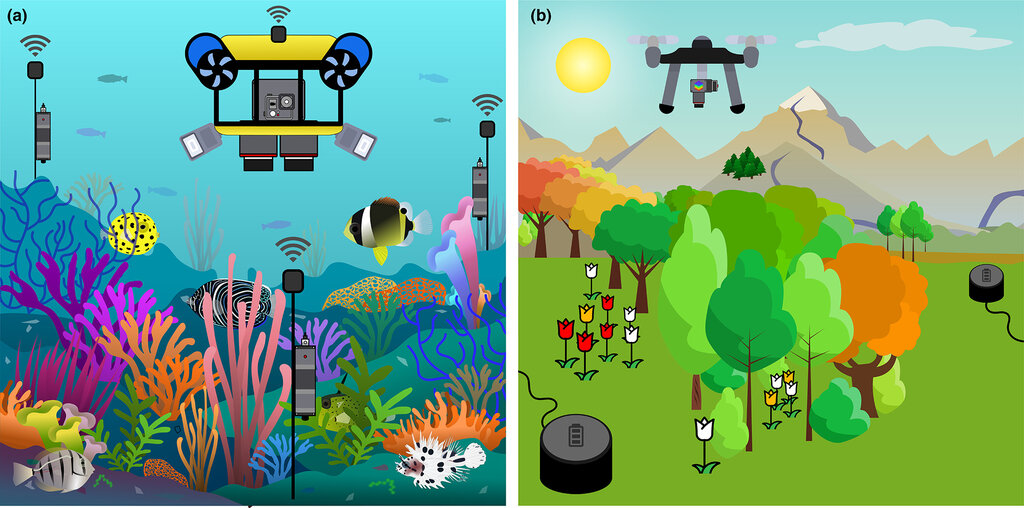
Their applications span across many fields:
- E-commerce: Recommendation agents suggest products you might like based on your browsing history.
- Finance: Automated trading agents monitor market data and execute trades faster than any human could.
- Healthcare: Diagnostic agents can analyze medical images to help doctors spot signs of disease.
- Gaming: Non-player characters (NPCs) in video games are agents that react to the player's actions to create a more immersive world.
- Smart Homes: Virtual assistants manage your lights, thermostat, and security systems, all while responding to your voice commands.
Now that you understand the fundamentals of intelligent agents, let's test your knowledge.
What is the fundamental cycle of operation for an intelligent agent?
For a self-driving car, the steering wheel, accelerator, and brakes are examples of its...
By combining autonomy, reactivity, proactivity, and social ability, intelligent agents are able to tackle complex tasks and are becoming an increasingly essential part of our digital lives.