Integrating CRM Data in MMM
Data Harmonization
Forging a Single Source of Truth
To accurately measure marketing impact, data from your Customer Relationship Management (CRM) system and your Marketing Mix Modeling (MMM) must be combined. This isn't a simple copy-paste job. It requires data harmonization, a process of creating a single, consistent, and clean dataset from multiple, disparate sources. Think of it as getting different departments to speak the same language.
Your CRM tracks customer interactions daily, while your media spend data might be logged weekly. Your sales team might use different product names than your marketing platform. These inconsistencies, if not resolved, will lead to flawed analysis. The goal is to build a 'Single Source of Truth' where every data point is aligned and comparable.
Synchronizing Time
One of the first hurdles is aligning different time granularities. A CRM might record a 'demo request' on a specific day, but your advertising spend is tracked on a weekly basis. To make these datasets compatible, you must aggregate the daily CRM events into weekly totals. This process is often called day-to-week aggregation.
Beyond aggregation, you must correctly reconcile CRM event timestamps with media flighting. An ad campaign might run from Monday to Sunday. A customer who saw an ad on Tuesday might not sign up until Friday. It's crucial to attribute that Friday conversion back to the correct weekly campaign window. Failing to do so can introduce temporal bias, misrepresenting which marketing efforts are truly effective.
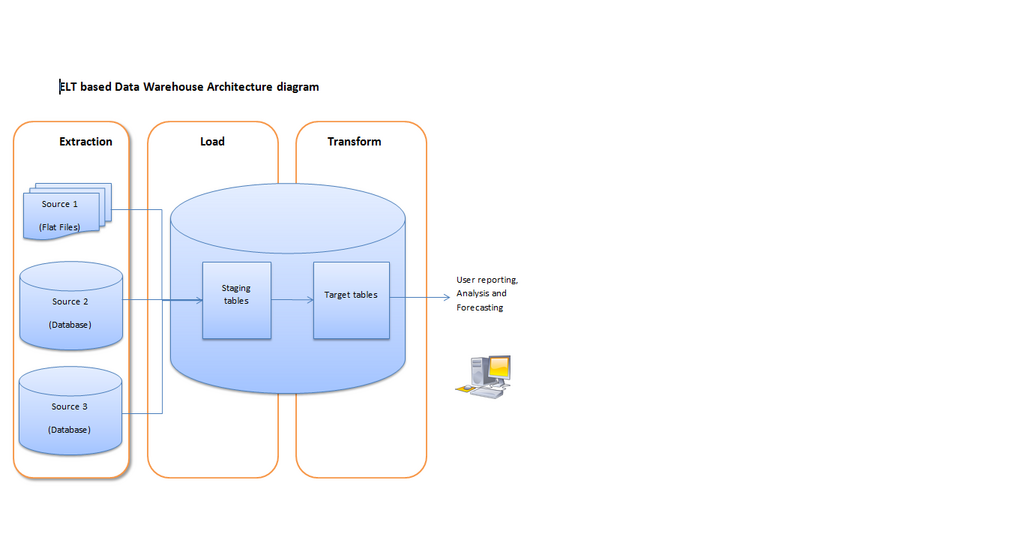
This is where ETL/ELT pipelines become essential. They automate the process of extracting data from various sources, transforming it into a consistent format, and loading it into a central repository like a data warehouse.
Creating a Common Language
Data from different systems often uses different naming conventions. The sales CRM might log a customer from the 'USA', while a digital ad platform reports a click from the 'United States'. For a computer, these are two different places. (MDM) is the discipline of creating one master reference source for all critical business data, establishing a 'golden record' that ensures consistency.
This extends to product catalogs. An internal system might use a detailed SKU (Stock Keeping Unit), while a marketing platform uses a more general product name. MDM involves creating a mapping between these different hierarchies so that 'SKU-102-A' and 'Blue V-Neck T-Shirt' are understood as the same item.
Finally, all financial data must be normalized. If you have marketing spend in Euros (EUR) and sales data in US Dollars (USD), you must convert everything to a single currency using historical exchange rates. This ensures you're comparing apples to apples.
Mapping Conversions to KPIs
The final step in harmonization is to connect granular, bottom-of-the-funnel CRM events to the high-level Key Performance Indicators (KPIs) or dependent variables used in your MMM. An MMM might be built to predict 'New Customer Sign-ups', but your CRM captures more specific actions that lead to this outcome.
For example, CRM events like 'Free Trial Started', 'Demo Requested', or 'Contact Form Submitted' can all be mapped to an MMM dependent variable such as 'New Qualified Leads'.
This mapping is crucial. It translates low-level operational data into the strategic metrics that the business uses to measure success. A clear mapping ensures that the signals from your CRM are accurately reflected in your marketing mix model's evaluation of channel performance.
| CRM Event | Description | Mapped MMM KPI |
|---|---|---|
free_trial_start | User begins a 14-day free trial. | New Qualified Lead |
demo_requested | User fills out a form to schedule a product demo. | New Qualified Lead |
initial_purchase | A new customer makes their first purchase. | New Customer Acquisition |
subscription_upgrade | An existing customer moves to a higher-priced plan. | Expansion Revenue |
With a fully harmonized dataset, you have a solid foundation. Time is synchronized, naming conventions are consistent, and operational events are tied to strategic KPIs. Now, you can confidently proceed with econometric modeling, knowing your data is clean, reliable, and ready to yield meaningful insights.
What is the primary goal of data harmonization when combining CRM and MMM data?
A marketing team tracks ad spend weekly, but their CRM records new leads daily. What specific process is required to make these two datasets compatible?