Integrated Information Theory Explained
Introduction to Consciousness
What Is Consciousness?
Consciousness is the awareness of your own existence and the world around you. It’s the feeling of being you. It's the taste of coffee, the warmth of the sun on your skin, the sting of a sad memory, and the internal monologue running through your head right now. Philosophers and scientists often call these subjective, qualitative experiences “qualia.”
qualia
noun
The individual, subjective qualities of experience. For instance, the redness of red or the painfulness of pain.
While we all know what consciousness feels like from the inside, defining it precisely is famously difficult. There's no single definition everyone agrees on. Is a dreaming person conscious? What about an infant or a cat? The lack of a clear, shared definition is one of the biggest hurdles in studying it.
A Quick Trip Through Time
For centuries, thinking about consciousness was mostly left to philosophers. In the 17th century, René Descartes famously declared, "I think, therefore I am." He argued that the mind (the thinking, conscious part of us) was a non-physical substance, entirely separate from the physical body. This idea, called dualism, created what's known as the mind-body problem: if the mind and body are separate, how do they interact?
For much of the 20th century, psychology tried to ignore consciousness. The dominant school of thought, behaviorism, argued that science should only study observable behaviors, not invisible mental states.
It wasn't until the cognitive revolution in the 1950s and 60s that scientists began to seriously study the mind again. With the rise of computers as a metaphor for the brain, researchers started exploring mental processes like memory, attention, and language. This opened the door for consciousness to re-enter the realm of scientific inquiry.
The Hard Problem
Studying consciousness isn't just difficult, it's uniquely challenging. Philosopher David Chalmers framed this challenge by distinguishing between the “easy problems” and the “hard problem” of consciousness.
The so-called easy problems are about how the brain functions. How does it process sensory information? How do we focus our attention? How do we control our behavior? These questions are incredibly complex, but scientists have clear methods for tackling them by mapping brain activity and observing responses.
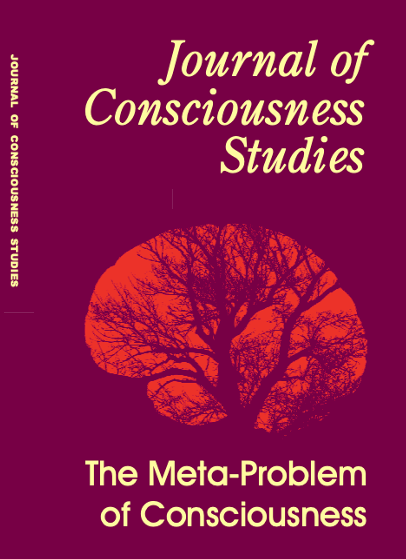
The hard problem is different. It's the question of why and how any of that brain activity is accompanied by subjective experience. Why does the brain's processing of light waves at 650 nanometers feel like the color red? Why isn't it all just information processing happening in the dark, without any inner experience?
This is the core challenge: consciousness is subjective. We can only directly access our own. We can't climb inside someone else's head to see if their experience of red is the same as ours. We rely on self-reports, but how can we be sure what people say matches their inner world?
Mapping the Mind
Despite the challenges, scientists are developing theories to explain where consciousness comes from. These theories try to connect the subjective feeling of awareness to objective, measurable processes in the brain. They generally fall into a few broad camps.
Most modern theories are physicalist, meaning they assume consciousness arises from physical processes in the brain, rather than from a non-physical soul.
One popular idea is the Global Workspace Theory (GWT). It suggests that consciousness is like a theater stage. Unconscious processes happen backstage, but when information is broadcast to a central "global workspace," it becomes conscious. This broadcast allows different specialized brain regions to access and act on the information.
Another approach focuses on higher-order thinking. Higher-Order Theories (HOTs) propose that a mental state becomes conscious when we have another mental state about it. You aren't just seeing red; you are aware that you are seeing red. Consciousness is a form of self-monitoring.
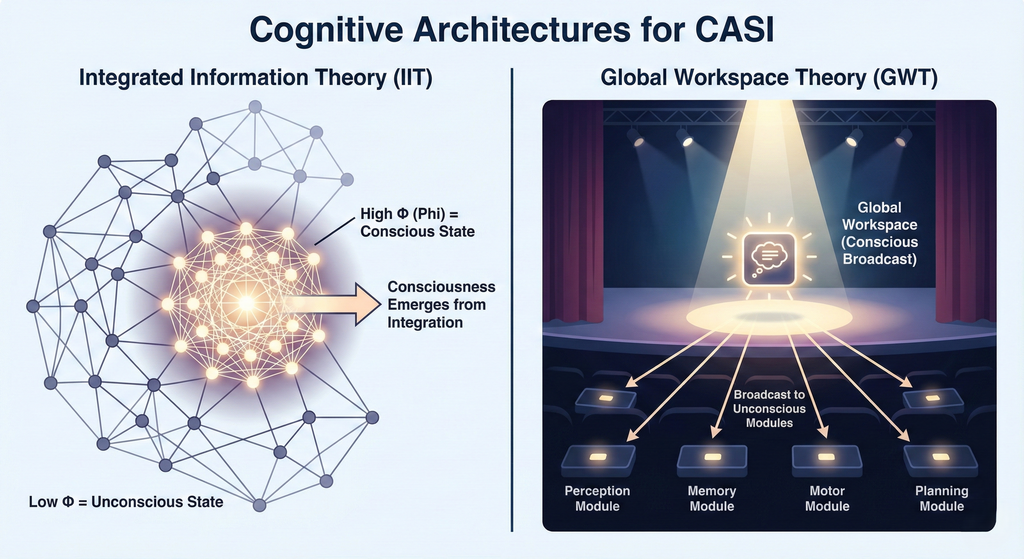
These are just two examples of the many ideas being explored. Each attempts to bridge the gap between our inner world of experience and the physical workings of the brain. The quest to understand consciousness is one of the most profound and exciting frontiers in science.
What is the philosophical term for the subjective, qualitative experiences that make up consciousness, like the taste of coffee or the feeling of warmth?
According to David Chalmers, which of the following is an example of the 'hard problem' of consciousness?