Integrated Human Physiology and System Dynamics
Advanced Cellular Signaling
The Cellular Conversation
Every action in your body, from a thought firing in your brain to your stomach digesting a meal, is coordinated by a constant, complex conversation between trillions of cells. This isn't just random chatter; it's a precise system of signals and responses called cell signaling. A signaling cell produces a specific type of molecule, a ligand, which is then detected by a target cell. The target cell has a receptor protein that recognises and responds specifically to the signal molecule.
This process of converting an extracellular signal into an intracellular response is known as signal transduction.
Think of it like a radio broadcast. A radio station (the signaling cell) sends out a specific frequency (the signal). Only radios tuned to that exact frequency (the target cells with the right receptors) can pick up the broadcast and convert it into music (the cellular response). Cells that don't have the right receptor are deaf to that particular signal.
Signaling Over Distances
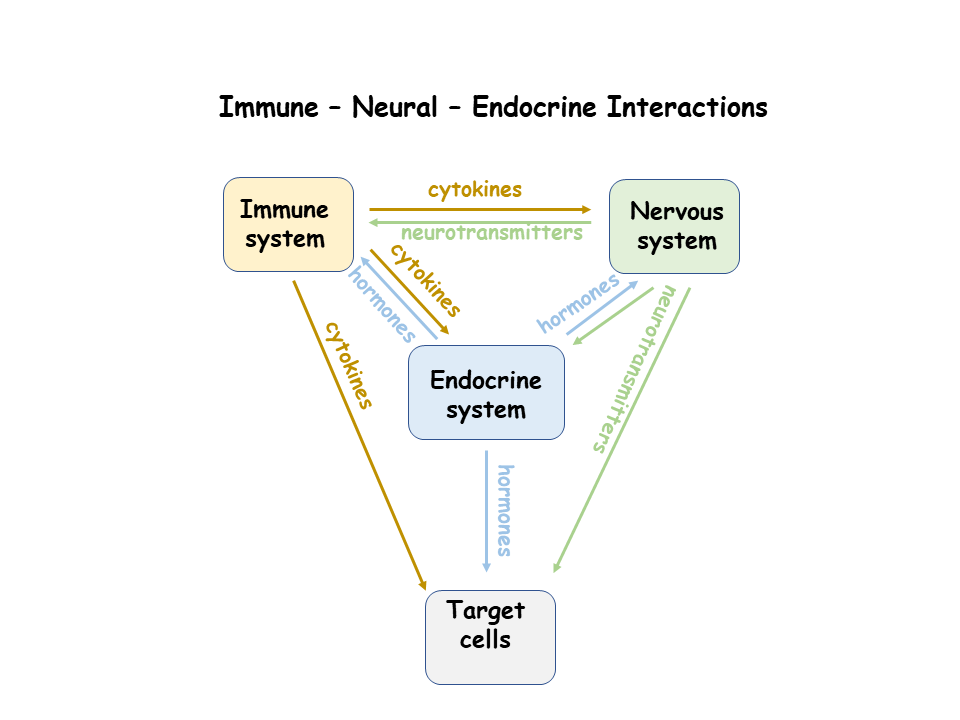
Not all cellular messages are shouted across the entire body. The distance the signal needs to travel determines the type of signaling used. Two major mechanisms are endocrine and paracrine signaling.
Endocrine signaling is for long-distance communication. Specialized endocrine cells, like those in the pituitary or thyroid glands, secrete hormones into the bloodstream. These hormones travel throughout the body, acting on target cells that can be far from the origin.
In contrast, is a more local affair. A cell releases a signal that diffuses through the extracellular fluid to act on nearby cells. It's like having a quiet conversation with your neighbours rather than broadcasting on national television. This is crucial for processes like wound healing, where cells need to coordinate with their immediate surroundings.
Cellular Doorkeepers
For a signal to be heard, it must bind to a receptor. Most signal molecules are water-soluble and can't pass through the cell's fatty membrane on their own. They rely on receptor proteins on the cell surface to relay the message inside. We'll focus on three main classes of these surface receptors: ion channel-linked, enzyme-linked, and G-protein coupled receptors.
By activating receptors, extrinsic signals trigger events that relay information within cells and ultimately cause cells to change their behaviour.
Let's start with (GPCRs), a vast and versatile family of proteins. When a ligand binds to a GPCR, the receptor changes shape and activates a G-protein on the inner side of the membrane. This activated G-protein then detaches and moves along the membrane to activate another protein, usually an enzyme, kick-starting a cascade of further signals inside the cell.
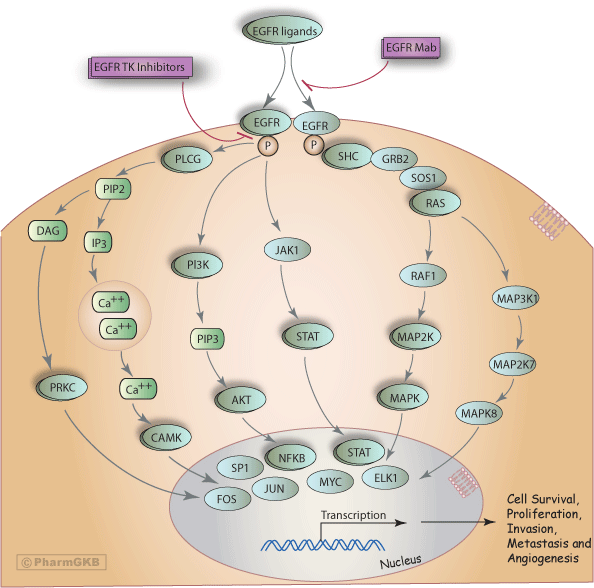
Next up are enzyme-linked receptors, which have enzymatic activity themselves or are directly associated with an enzyme. The most common type are (RTKs). When signals bind, two RTK molecules typically come together to form a dimer. This pairing activates their kinase function, and they begin to phosphorylate each other on specific tyrosine amino acids. These newly phosphorylated tyrosines serve as docking sites for other intracellular signaling proteins, which then become activated themselves and pass the signal on.
Finally, ion channel-linked receptors are essentially gates that open or close in response to a signal. When a ligand binds, the channel changes conformation, allowing specific ions like Na⁺, K⁺, or Ca²⁺ to pass through. The resulting change in ion concentration inside the cell triggers a response. This type of signaling is extremely fast and is central to communication between nerve cells.
The Inner Messengers
Once a signal is received at the surface, the message is often amplified and spread throughout the cell by small, non-protein molecules called second messengers. They are the next link in the chain of signal transduction. Two of the most important second messenger systems involve cyclic AMP (cAMP) and inositol triphosphate (IP₃).
The IP₃ pathway also starts with a G-protein activating an enzyme, in this case, phospholipase C. This enzyme cleaves a specific membrane lipid (PIP₂) into two second messengers: inositol triphosphate (IP₃) and diacylglycerol (DAG). IP₃ diffuses into the cytoplasm and binds to channels on the endoplasmic reticulum, causing them to release stored calcium ions (Ca²⁺) into the cytosol. Calcium itself acts as a powerful second messenger, triggering a wide range of cellular processes.
Controlling the Conversation
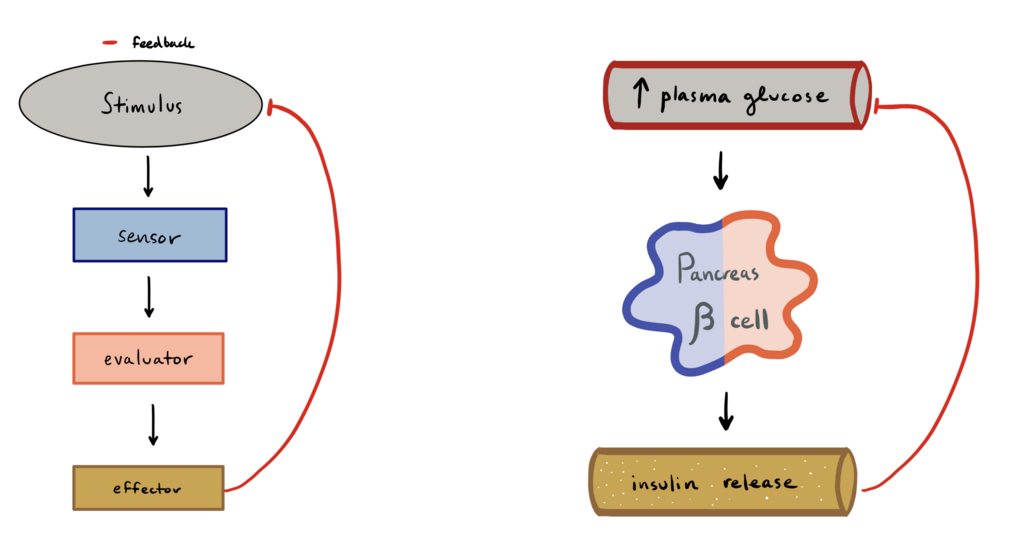
A signal that never ends would be as useless as no signal at all. Cells must have ways to turn these pathways off. Cellular feedback loops are essential for this regulation. In a negative feedback loop, a downstream product of a pathway inhibits an earlier step, automatically shutting down the signal when its concentration gets high enough. This prevents the cell from overreacting and helps maintain homeostasis.
Understanding these signaling pathways is fundamental to biology. They are the mechanisms that allow individual cells to work together, forming functional tissues, organs, and ultimately, a complete organism. When these pathways go wrong, it can lead to diseases like cancer, diabetes, and autoimmune disorders.
Time to test your knowledge on these cellular communication networks.
In the context of cell signaling, what is the specific role of a ligand?
Which type of signaling involves hormones being secreted into the bloodstream to act on distant target cells?