Integers for Grade 5
Understanding Integers
Beyond Counting Numbers
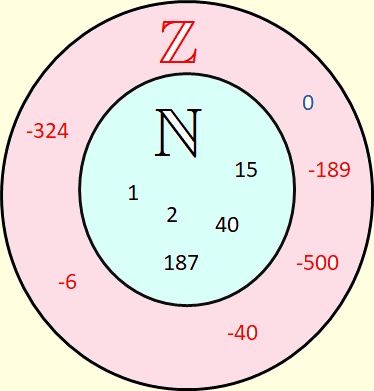
So far, we've worked with natural numbers, which are the basic counting numbers: 1, 2, 3, and so on. They're great for counting apples or friends, but they don't cover every situation. What happens when the temperature drops below freezing, or you owe someone money? For that, we need a bigger set of numbers.
Integers include all the natural numbers, their negative counterparts, and the number zero.
Think of it this way: for every positive number, there's a corresponding negative number that's its exact opposite. The opposite of 3 is -3. The opposite of 50 is -50. And right in the middle, balancing everything out, is zero. Zero is neither positive nor negative.
The Number Line
The best way to visualize integers is with a number line. It’s a straight line with zero at the center. Positive numbers stretch out to the right, getting larger as they go. Negative numbers stretch out to the left, getting smaller.
This layout shows us the order of integers. Any number to the right is greater than any number to its left. So, 2 is greater than -1, and -5 is less than -2. This might seem strange at first, but think about temperature. A day that is -5 degrees is colder, or lower, than a day that is -2 degrees.
Absolute Value
Sometimes, we don't care about whether a number is positive or negative. We just want to know its distance from zero. This concept is called absolute value.
The absolute value of a number is how many steps it is away from zero on the number line. Since distance can't be negative, the absolute value is always positive or zero.
For example, both 4 and -4 are four steps away from 0. So, the absolute value of both numbers is 4.
We use two vertical bars to show that we're taking the absolute value of a number.
The absolute value of zero is just zero, because it has no distance from itself.
Let's test your understanding of these new concepts.
Which of the following best describes the set of integers?
Which of the following statements is true when comparing numbers on a number line?