Insulation Fundamentals and Applications
Heat Transfer Basics
How Heat Moves
Heat is a form of energy, and it's always on the move. Its one simple rule is to travel from a warmer place to a cooler one. This transfer of thermal energy is what we feel as heat. It happens in three distinct ways: conduction, convection, and radiation.
Conduction
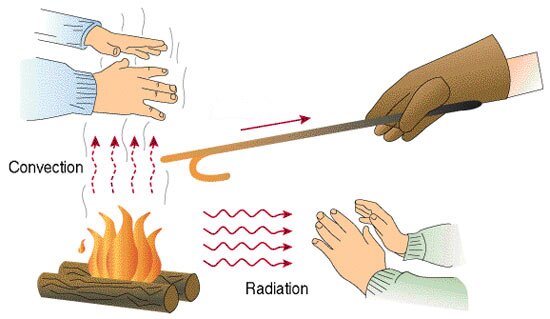
Conduction is heat transfer through direct contact. When you touch something hot, the heat moves directly from the object into your hand. Think of it like a line of dominoes. The heat energizes the first particle, which bumps into the next, which bumps into the next, passing the energy down the line. This is why a metal spoon in a hot cup of tea quickly becomes hot to the touch.
Materials where this happens easily, like metals, are called conductors. Solids are generally better at conduction than liquids or gases because their particles are packed tightly together, making it easier to pass the energy along.
If you grab the handle of a hot cast-iron skillet, you're experiencing conduction. The heat from the pan transfers directly to your hand.
Convection
Convection is heat transfer through the movement of fluids, which includes liquids and gases. When a fluid is heated, it expands, becomes less dense, and rises. The cooler, denser fluid then sinks to take its place, gets heated, and rises in turn. This continuous circulation is called a convection current.
This is how a radiator heats a room. The radiator heats the air next to it, which rises. Cool air from across the room sinks to fill the space, gets heated, and the cycle continues until the whole room is warm. Boiling a pot of water is another perfect example. The water at the bottom gets hot, rises, and the cooler water from the top sinks to be heated.
Radiation
Radiation is the transfer of heat through electromagnetic waves, primarily in the infrared part of the spectrum. Unlike conduction and convection, radiation doesn't need any matter to travel through. It can move through the vacuum of space.
This is how we feel the heat from the sun, even though it's 93 million miles away. It's also the warmth you feel on your face when you stand near a campfire, even without touching the flames or being directly in the path of the rising hot air.
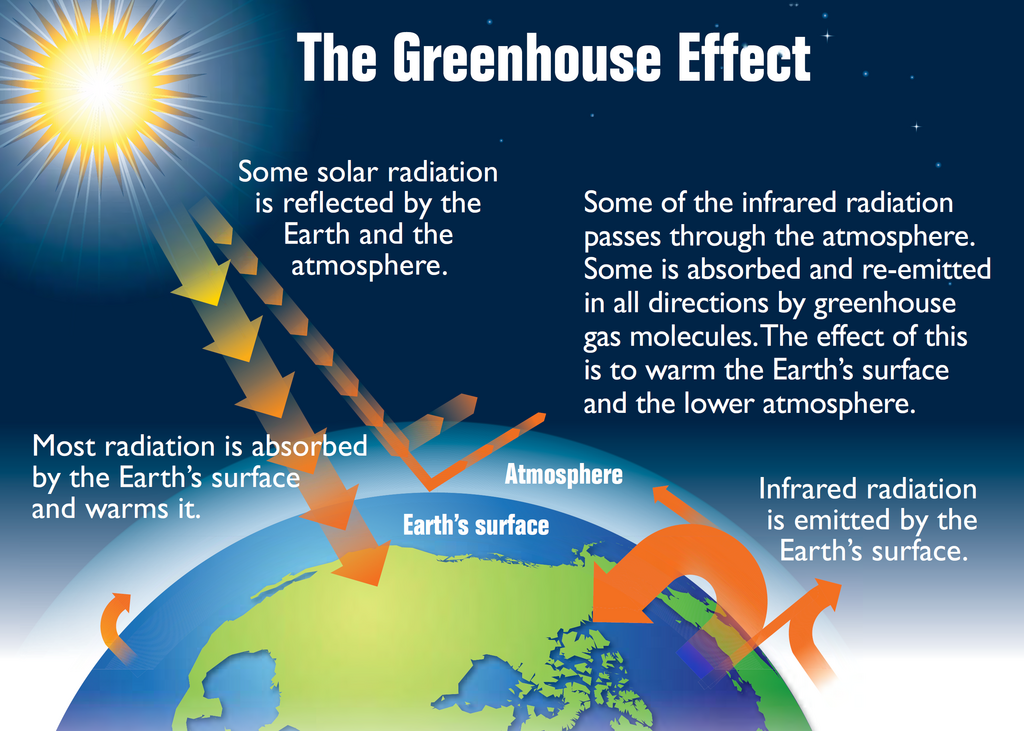
Every object with a temperature above absolute zero emits thermal radiation. The hotter the object, the more radiation it emits.
| Transfer Mode | How it Works | Example |
|---|---|---|
| Conduction | Direct contact | A hot pan handle burning your hand |
| Convection | Fluid movement | Boiling water circulating in a pot |
| Radiation | Electromagnetic waves | The sun warming your skin |
Now, let's test your knowledge.
Why does a metal spoon left in a cup of hot soup quickly become hot to the touch?
The circular movement of hot air rising and cool air sinking that distributes heat throughout a room is an example of what?
Understanding these three methods is the first step in learning how to control heat flow, whether for keeping a house warm in winter or designing a system to cool a spacecraft.