Inside the GPON Modem
GPON Basics
The Heart of Fiber Internet
Most modern, high-speed internet connections rely on fiber optic cables. But how does the data actually travel from the internet provider to your home? One of the most common technologies that manages this process is called GPON, which stands for Gigabit Passive Optical Network.
GPON
noun
A telecommunications technology that uses fiber optic cables to deliver high-speed internet, TV, and phone services from a single point to multiple homes or businesses.
Think of GPON as the traffic management system for a fiber-optic highway. It's a key part of what makes Fiber-to-the-Home (FTTH) networks possible. Instead of old copper wires that were designed for telephone calls, GPON uses light traveling through glass fibers, which allows for vastly more data to be sent at much higher speeds.
Compared to traditional broadband like DSL or cable, GPON offers significantly higher bandwidth. This means faster downloads, smoother streaming, and better performance for multiple devices at once.
How It Works
The magic of GPON lies in its point-to-multipoint architecture. A single fiber optic line runs from the provider's central office to a neighborhood. From there, the signal is split and distributed to many individual customers. This is much more efficient than running a separate, dedicated fiber line to every single house.
This system relies on three key pieces of hardware.
-
Optical Line Terminal (OLT): This is the starting point. The OLT is a piece of equipment in the service provider's central office. It converts electrical signals into light signals to be sent out over the fiber network.
-
Passive Optical Splitter: These are simple, unpowered devices that do exactly what their name implies. A splitter takes the single light signal coming from the OLT and divides it, sending identical copies down separate fibers to individual customers. Because they are "passive," they don't require electricity, making the network simpler and more reliable.
-
Optical Network Terminal (ONT): This device is located at the customer's home or office. You might know it as the "fiber box" installed on your wall. The ONT's job is to convert the incoming light signals back into electrical signals that your router and other devices can understand.
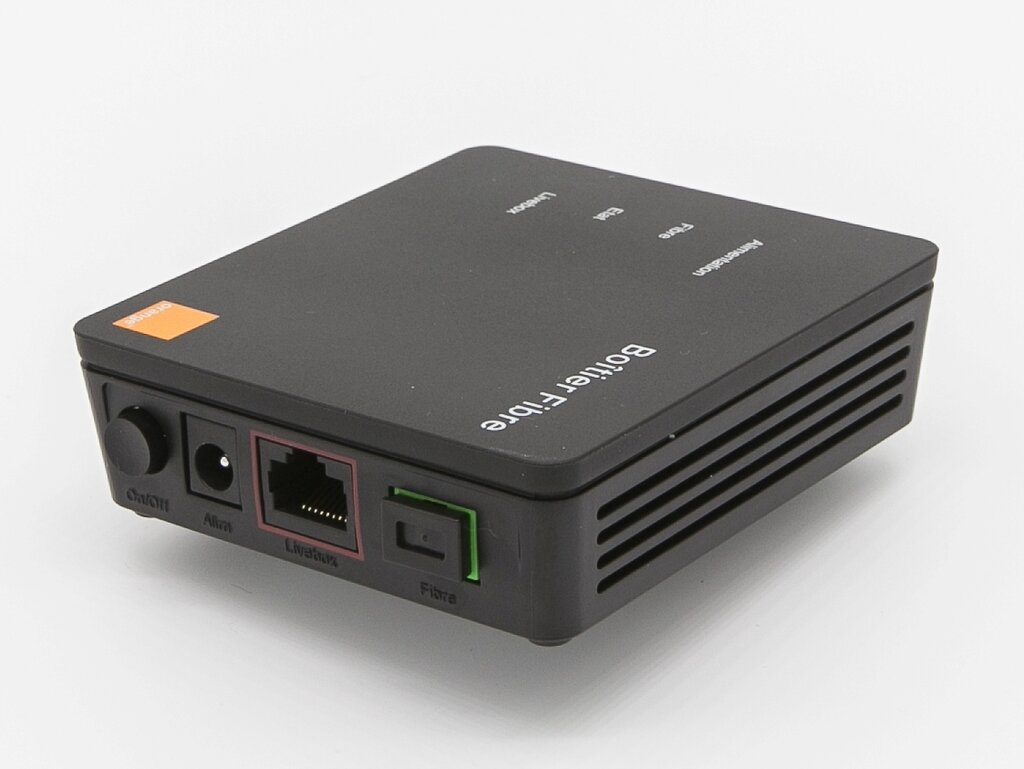
Data flowing back from your computer to the internet travels the reverse path. The ONT converts your data into light signals, which travel back to the splitter and then to the OLT. The GPON system manages all this traffic, ensuring that data packets get to and from the right place without interfering with other users on the same fiber line.
Now, let's test your understanding of these core concepts.
In a GPON network, what is the primary role of the Optical Line Terminal (OLT)?
What does the "P" in GPON stand for, and why is it significant?
By using a smart point-to-multipoint system with these key components, GPON delivers the speed and reliability that powers modern digital life, all through a single, efficient fiber optic line.