Inside the Game Boy Pokémon Engine
Game Boy Hardware Overview
Inside the Gray Box
The original Game Boy wasn't the most powerful handheld device of its time, but it became the most successful. Its magic came from a smart balance of capable hardware that was also affordable and easy on batteries. To understand how games like Tetris and Pokémon worked, we need to look at the specific chips and components that brought them to life.
The Brains of the Operation
At the heart of the Game Boy is a custom processor, the Sharp LR35902. Think of it as the system's brain, running all the game's logic and calculations. This chip is a unique hybrid, blending features from two popular processors of the era: the Intel 8080 and the Zilog Z80. This gave developers a flexible and efficient toolset to work with.
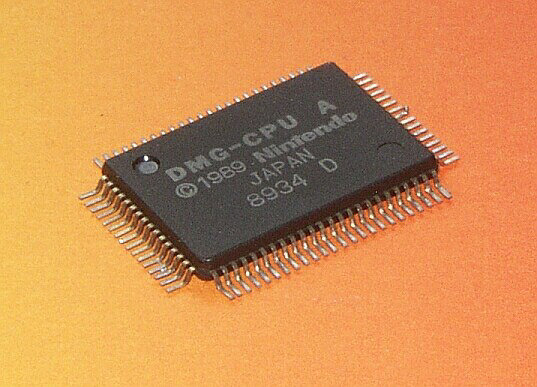
It's an 8-bit processor, which means it handles data in chunks of 8 bits at a time. It runs at a clock speed of 4.19 MHz. By today's standards, that's incredibly slow—your smartphone is thousands of times faster. But for the simple, compelling games the Game Boy was designed for, it was more than enough power.
CPU
noun
The Central Processing Unit is the primary component of a computer that executes instructions. It performs most of the processing inside the device.
Memory and Graphics
The Game Boy's brain needs a place to store information and do its work. It has two small pools of memory to work with: 8 KB of RAM and 8 KB of Video RAM (VRAM).
RAM, or Random Access Memory, is the system's short-term memory. It's where the game keeps track of things like your score, the player's position, and the number of lives you have left. VRAM is dedicated solely to graphics. It holds the data for all the background tiles and sprites (the movable characters and objects) that are drawn on the screen.
The final image is displayed on a 2.6-inch STN LCD screen. Its resolution is 160 pixels wide by 144 pixels tall. The screen couldn't display color, but it could show four different shades of a greenish-gray, giving graphics a surprising amount of depth. If you ever noticed a slight blur when objects moved quickly on screen, that was a characteristic of the STN (Super-twisted Nematic) display technology, which was chosen for its low power consumption.
Inputs and Outputs
Of course, a game console is useless without a way to control it. The Game Boy's iconic layout includes a cross-shaped directional pad (D-pad), two action buttons (A and B), and Start and Select buttons. This simple setup became the standard for handheld gaming for decades.
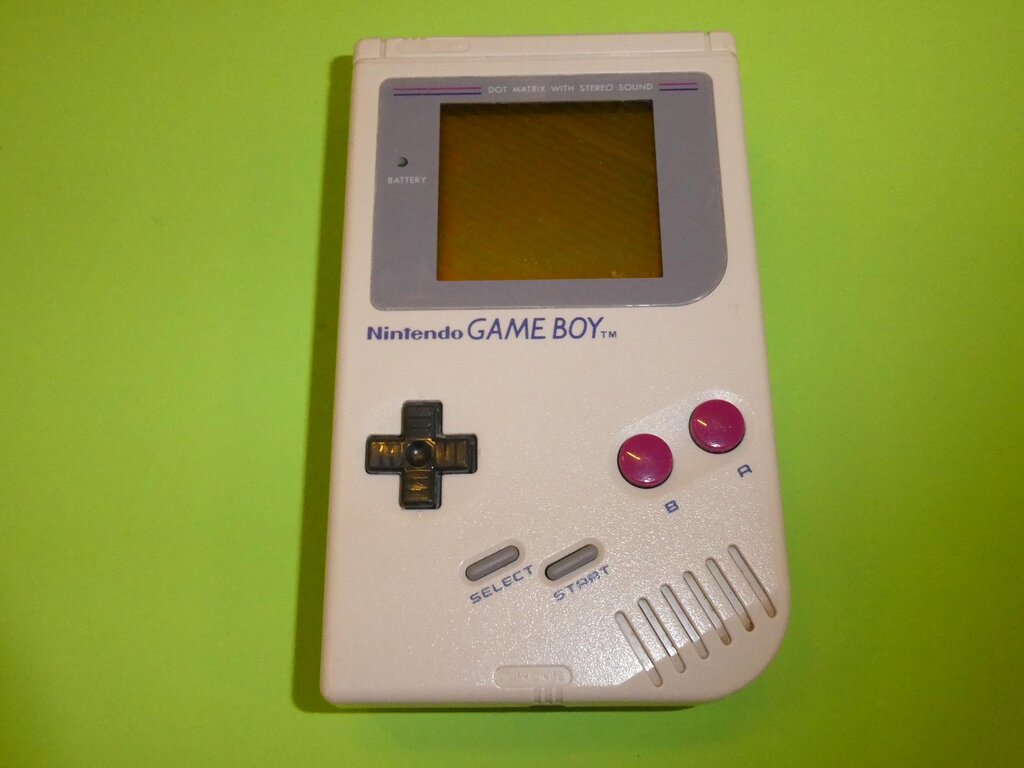
For audio, the Game Boy had a small mono speaker, but the real magic happened when you plugged headphones into the 3.5mm jack for stereo sound. This was a big deal for portable immersion.
Perhaps most important was the port on the side for the Game Link Cable. This allowed two Game Boys to connect, enabling head-to-head multiplayer in games like Tetris or, most famously, trading Pokémon with friends. It transformed gaming from a solitary hobby into a social one.
Ready to test your knowledge of the Game Boy's inner workings?
What is the name of the custom processor that powers the original Game Boy?
The Game Boy's screen was capable of displaying four shades of a single color.
These components—the custom CPU, the distinct memory types, and the simple I/O—formed the foundation of the Game Boy platform. Understanding them is the first step to understanding how its software was built.