Inline-6 Engine Mechanics
Internal Combustion Engine Basics
How an Engine Makes Power
An internal combustion engine (ICE) does one main job: it converts the chemical energy stored in fuel into mechanical energy, or motion. It achieves this through a series of small, controlled explosions happening thousands of times per minute.
Specifically, an internal-combustion engine is a heat engine in that it converts energy from the heat of burning gasoline into mechanical work, or torque.
These explosions push components inside the engine, and that movement is eventually transferred to the wheels of a vehicle, making it go. To understand how this works, we first need to meet the key players inside the engine.
The Core Components
While an engine has hundreds of parts, four are essential to its basic operation. They work together in a beautifully timed mechanical dance.
At the heart of it all is the piston, a cylindrical piece of metal that moves up and down inside a hollow tube called a cylinder. Think of it as the engine's powerhouse. Most cars have multiple pistons, each in its own cylinder.
The up-and-down motion of the piston needs to be converted into the spinning motion that turns the wheels. This is the job of the crankshaft. The piston is attached to the crankshaft via a connecting rod. As the piston is pushed down, it turns the crankshaft, much like your leg pushes a pedal to turn the crank on a bicycle.
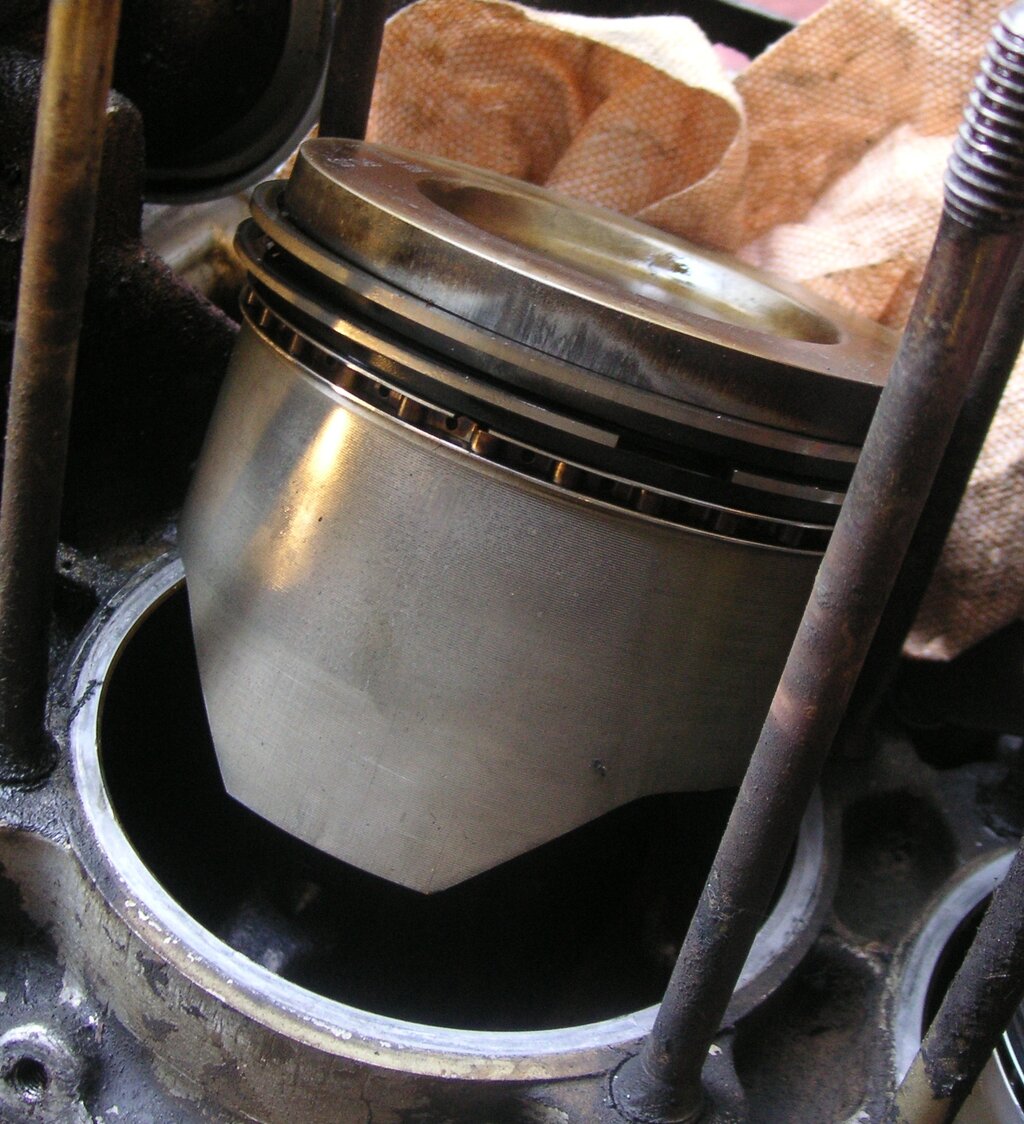
For the explosion to happen, the engine needs to breathe. Two valves for each cylinder act as doors. The intake valve opens to let a mixture of air and fuel in, and the exhaust valve opens to let the burnt gases out.
Finally, something needs to control when these valves open and close. That's the camshaft, a rod with egg-shaped lobes, or cams. As the camshaft spins, its lobes push the valves open at precisely the right moments and then let them close. The camshaft is connected to the crankshaft, ensuring all the parts move in perfect synchronization.
The Four-Stroke Cycle
The process of turning fuel into motion happens in a continuous, four-step cycle. This is often called the Otto cycle, named after Nikolaus Otto, who perfected it in 1876. These four steps, or strokes, happen in each cylinder, for every single explosion.
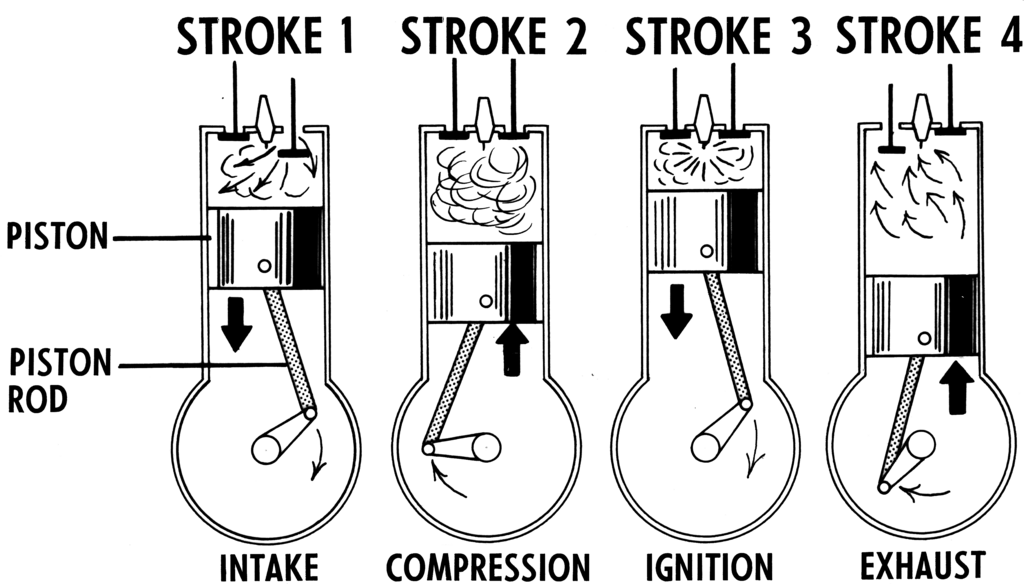
1. Intake Stroke The piston starts at the top of the cylinder. The intake valve opens, and the piston moves down, creating a vacuum. This sucks a mixture of air and vaporized fuel into the cylinder, like a syringe drawing in liquid.
2. Compression Stroke Once the cylinder is full, the intake valve closes. The piston moves back up the cylinder, squeezing the air-fuel mixture into a much smaller space. Compressing the mixture makes its eventual explosion much more powerful.
3. Power Stroke With the piston at the top and the mixture tightly compressed, a spark plug emits a spark, igniting the mixture. The resulting explosion creates immense pressure, forcing the piston down with great force. This is the stroke that produces the engine's power, pushing on the crankshaft and turning it.
4. Exhaust Stroke After the explosion, the cylinder is filled with burnt gases. The exhaust valve opens, and the piston moves back up, pushing the waste gases out of the cylinder and into the exhaust system. Once the piston reaches the top, the cycle is complete and ready to begin again with a new intake stroke.
This four-stroke cycle happens incredibly fast, repeating hundreds or even thousands of times every minute in each cylinder. The combined force from all the cylinders' power strokes creates a smooth, continuous rotation of the crankshaft, which ultimately powers the vehicle.
What is the primary function of an internal combustion engine?
Which component is responsible for converting the linear, up-and-down movement of the pistons into spinning motion?
Understanding this fundamental cycle is the key to knowing how nearly every gasoline-powered car on the road works.