Inhalational Anesthetic Agents Explained
Introduction to Inhalational Anesthetics
Breathing in Oblivion
Inhalational anesthetics are a cornerstone of modern surgery. They are special substances that exist as gases or can be easily turned into vapor. Patients breathe them in to enter a state of general anesthesia, a carefully controlled and reversible loss of consciousness. This ensures they feel no pain, are unaware of the procedure, and have no memory of it afterward.
Think of it as temporarily turning off the brain's awareness centers. The anesthetic is delivered directly to the lungs, where it quickly passes into the bloodstream and travels to the brain. The process is reversed just as efficiently. When the anesthetic is stopped, it moves from the brain back into the blood, then to the lungs to be exhaled, and the patient wakes up.
A Historical Journey
The path to today's safe anesthetics was long and experimental. For centuries, surgery was a brutal, conscious ordeal. The breakthrough came in the 19th century with the discovery of agents like nitrous oxide, ether, and chloroform. Initially, substances like ether were used recreationally at gatherings called "ether frolics."
It was at one such event that a young dentist named William T.G. Morton noticed that people under the influence of ether didn't seem to feel pain. On October 16, 1846, he gave the first successful public demonstration of ether as a surgical anesthetic at Massachusetts General Hospital. It was a revolutionary moment that changed medicine forever.
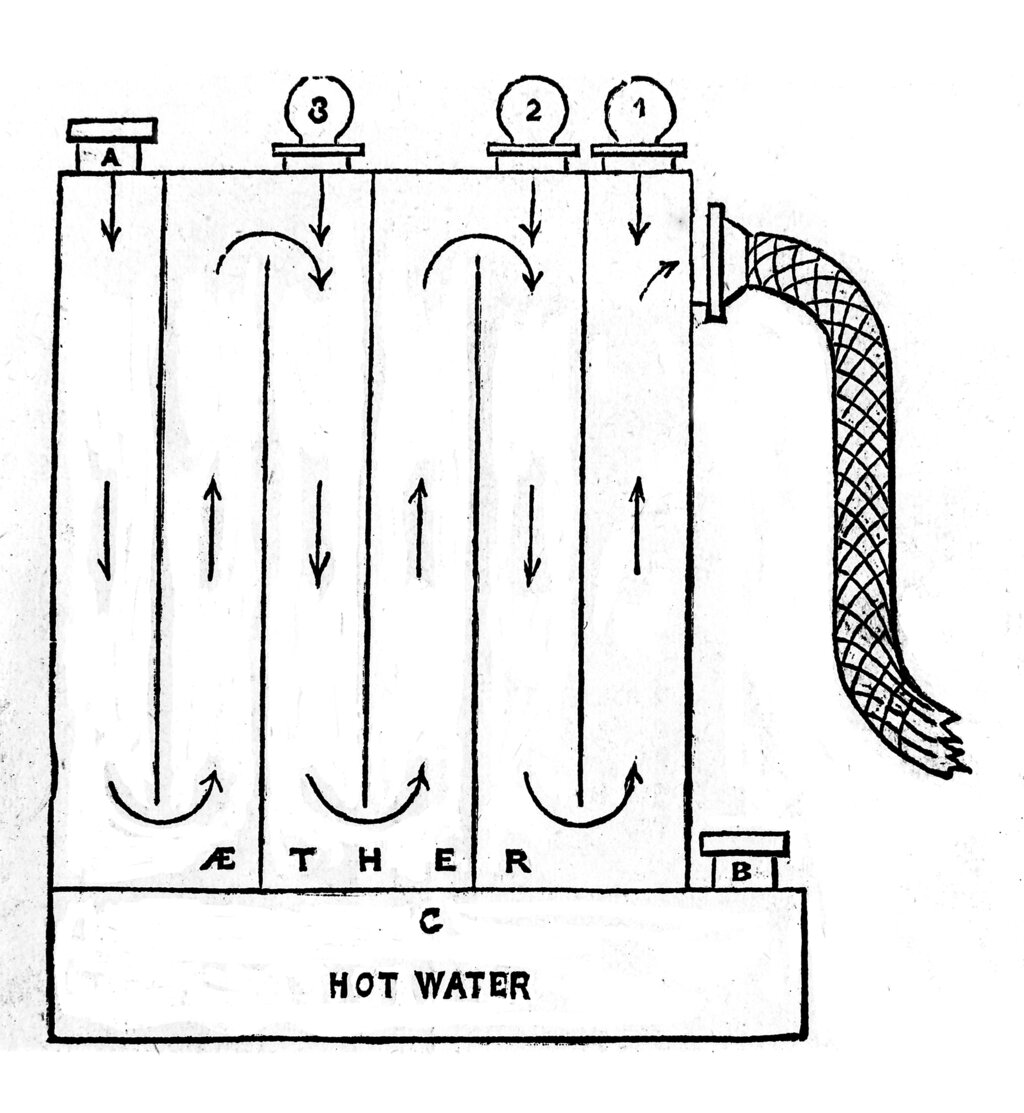
But these early agents were far from perfect. Ether was highly flammable, posing a significant fire risk in operating rooms. Chloroform, while effective, was later found to be toxic to the liver and could cause dangerous heart rhythm problems. The search was on for safer, more stable alternatives.
The mid-20th century marked a turning point. Chemists began synthesizing new compounds, leading to the development of non-flammable agents. By modifying the chemical structure of ether, they created a new family of anesthetics that were much safer and more predictable.
The Modern Anesthetic Family
Today's inhalational anesthetics are primarily divided into two main categories based on their chemical structure and physical state.
The two main classes of inhalational anesthetics are:
- Volatile Halogenated Ethers
- Anesthetic Gases
The term "volatile" means these substances are liquids at room temperature but evaporate very easily into a breathable vapor. This is the largest and most common group. The term "halogenated" means their chemical structure includes halogen atoms like fluorine, chlorine, or bromine. This modification is key to their modern properties: it makes them non-flammable and enhances their anesthetic effects.
Anesthetic gases, on the other hand, exist purely as a gas at room temperature and do not need to be vaporized. There are very few of these in clinical use.
| Category | Physical State at Room Temp. | Key Feature | Example |
|---|---|---|---|
| Volatile Halogenated Ethers | Liquid | Evaporate easily into a vapor | Sevoflurane |
| Anesthetic Gases | Gas | Always in a gaseous state | Nitrous Oxide |
In clinical practice, a specialized device called a vaporizer turns the liquid volatile anesthetics into a precise concentration of vapor, which is then mixed with oxygen and delivered to the patient through a breathing circuit.