Infrared Light Therapy Explained
Infrared Light Basics
Beyond the Rainbow
You're already familiar with the idea that light is a form of energy that travels in waves. The visible light we see is just a tiny slice of a much broader range of radiation called the —a continuous spectrum from high-energy gamma rays to low-energy radio waves. Infrared (IR) radiation sits right next to the red light we can see, occupying the wavelength range from about 700 nanometers (nm) to 1 millimeter (mm). It's the invisible warmth you feel from the sun or a fire, discovered by astronomer in 1800 when he measured the temperature of different colours of light split by a prism.
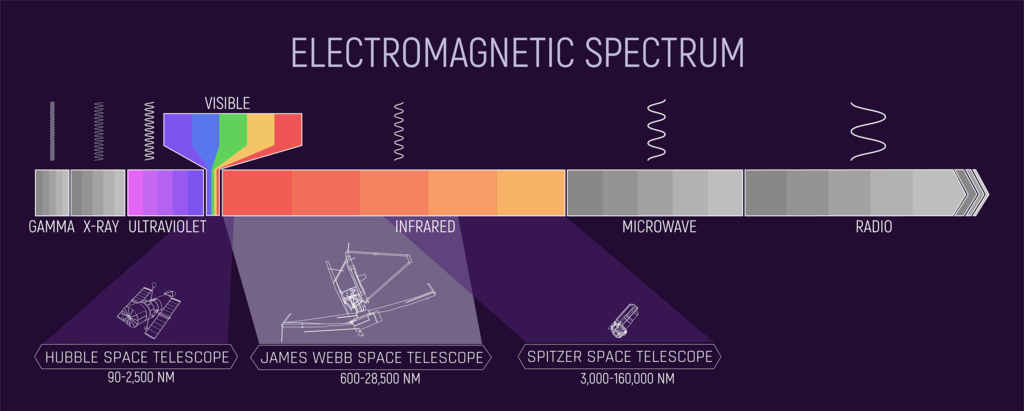
A Tale of Two Infrareds
Saying something uses "infrared light" is a bit like saying you're eating "fruit." It's true, but it's not specific. Is it an apple or a grape? In the world of infrared, the crucial distinction is between near-infrared (NIR) and far-infrared (FIR). This isn't just a technical detail; their properties are different enough that they have entirely distinct applications, especially in therapy.
| Feature | Near-Infrared (NIR) | Far-Infrared (FIR) |
|---|---|---|
| Wavelength | 700 nm - 1,400 nm | 3,000 nm - 1 mm |
| Frequency | Higher | Lower |
| Energy | Higher | Lower |
| Primary Effect | Photochemical | Thermal (Heat) |
The key takeaway is that their wavelengths dictate how they interact with the body. Near-infrared has shorter wavelengths and higher energy. This allows it to penetrate deeper into biological tissues without creating significant heat, influencing cellular processes directly. This property is leveraged in technologies like Near-Infrared Spectroscopy to monitor brain activity.
Far-infrared, with its longer wavelengths and lower energy, is mostly absorbed by the water in our skin. This energy is converted into heat, which is why FIR is the basis for things like infrared saunas. It warms the body's surface, which can then lead to physiological responses like increased circulation.
Absorption and Penetration
When light hits a surface like your skin, three things can happen: it can be reflected, scattered, or absorbed. For light to have any biological effect, it must be absorbed. The molecules in our tissues that absorb light are called chromophores.
In the near-infrared range, a key chromophore is an enzyme within our mitochondria called cytochrome c oxidase. By absorbing NIR light, this enzyme can become more efficient, boosting cellular energy production. This is a photochemical effect, meaning it's driven by the light's energy itself, not by heat.
In the far-infrared range, the primary chromophore is water. Since our bodies are about 70% water, FIR is readily absorbed, and its energy is converted into vibrations—what we feel as heat. This thermal effect is what drives the benefits associated with FIR therapies.
Understanding the difference between near- and far-infrared light is the first step. It's the foundation for exploring how these invisible rays can be used for very different therapeutic goals, from enhancing cell function to providing gentle, warming relief.
What is the primary difference between near-infrared (NIR) and far-infrared (FIR) that determines their distinct biological effects?
An infrared sauna primarily works by warming the surface of the skin. Which type of infrared radiation is used for this application?