Information Technology Fundamentals
Introduction to IT
What Is Information Technology?
Information Technology, or IT, is the use of computers to store, retrieve, transmit, and manipulate data. Think of it as the central nervous system of any modern organization. It's the infrastructure that allows information to flow where it's needed, when it's needed.
Without IT, a company would struggle to pay its employees, track sales, or communicate with customers. Every time you use an ATM, stream a movie, or check inventory at a store, you're interacting with an IT system. It’s the combination of technology and process that makes modern business possible, turning raw data into useful information.
IT is the engine that drives communication, manages information, and automates tasks in nearly every industry.
The Core Components
At its heart, IT is built on three fundamental pillars: hardware, software, and networks. These three elements work together to create functional systems. You can't have one without the others. Let’s break them down.
Hardware
noun
The physical components of a computer system.
Hardware is anything you can physically touch. This includes the computer on your desk, the phone in your pocket, and all the parts inside them like the processor, memory, and storage drive. It also includes peripherals like keyboards, mice, and printers. In a larger business context, hardware includes the massive servers that store company data and the routers that direct web traffic.
Software
noun
A set of instructions, data, or programs used to operate computers and execute specific tasks.
If hardware is the body, software is the mind. It tells the hardware what to do. Software comes in two main flavors. The first is system software, like Windows, macOS, or Linux, which manages all the hardware and provides a platform for other programs to run. The second is application software, which performs specific tasks. This includes everything from the web browser you're using to read this, to a video game, to the complex database systems that manage a company's customer information.
The third component, networks, connects everything. A network is what allows different pieces of hardware to communicate and share data. This can be a small local network (like your home Wi-Fi connecting your laptop and phone) or a massive global one like the internet. Networks are the highways of the digital world, carrying information between computers, servers, and devices across the globe.
The Role of Data
Hardware, software, and networks are the machinery of IT, but data is the resource they manage. Data is simply raw, unorganized facts and figures. Information is what you get when you process, organize, and structure that data to make it useful.
A grocery store's IT system collects data on every item sold. This data includes the product, the price, and the time of sale. On its own, a single sale isn't very useful. But by using software (a database application) running on hardware (a server), the store can analyze thousands of sales. It can then turn that raw data into valuable information, like identifying the most popular products, the busiest shopping hours, or when to reorder milk. This information allows managers to make smarter decisions.
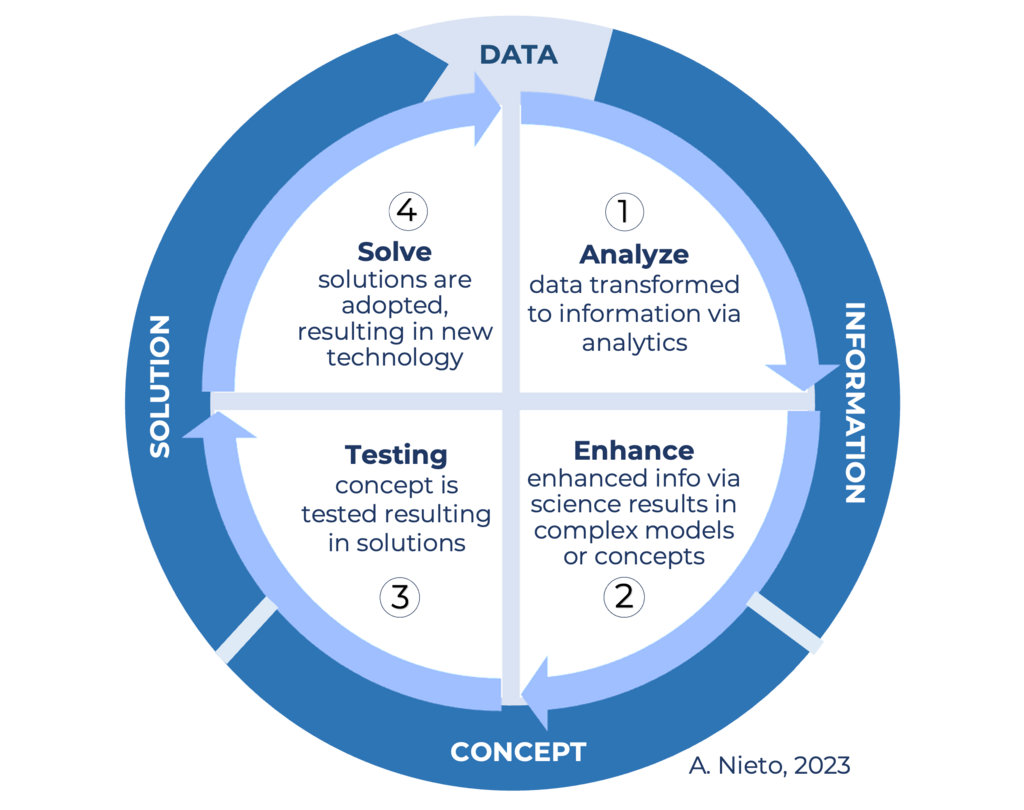
This transformation from data to information is the ultimate goal of most IT systems. By managing this process efficiently, IT helps organizations operate more effectively, understand their customers better, and gain a competitive edge.
Ready to check your understanding?
What is the primary function of Information Technology (IT) in an organization?
Which of the following is the best example of turning data into information?