Information Systems for Sports Facilities
Information Systems Basics
What Is an Information System?
At its core, an information system (IS) is a setup designed to collect, process, store, and distribute information. It’s more than just computers and code. A true information system is a blend of five key components working together to achieve a goal.
Information Systems (IS), on the other hand, encompass more than just technology.
Let's break down the five components:
- Hardware: These are the physical parts you can touch. Think computers, cash registers at the concession stand, ticket scanners, and the servers that store all the data.
- Software: These are the programs and applications that tell the hardware what to do. This includes the ticketing software, the point-of-sale system for merchandise, and the operating systems that run the computers.
- Data: This is the raw information the system collects. For a sports facility, data could be ticket sales numbers, fan attendance records, or how many hot dogs were sold during the last game.
- People: These are the users who interact with the system. This includes the ticket agent selling seats, the manager reviewing sales reports, and even the fans using an app to find their seats.
- Processes: These are the steps and rules that govern how the system operates. It's the defined procedure for selling a ticket, refunding a purchase, or running an end-of-day sales report.
When all five elements work in harmony, an organization can turn simple data into valuable insights that drive better decisions.
Types of Information Systems
Information systems aren't one-size-fits-all. Different systems serve different purposes within an organization, often building on top of one another. Think of them as layers in a pyramid, with each level serving a different group of people.
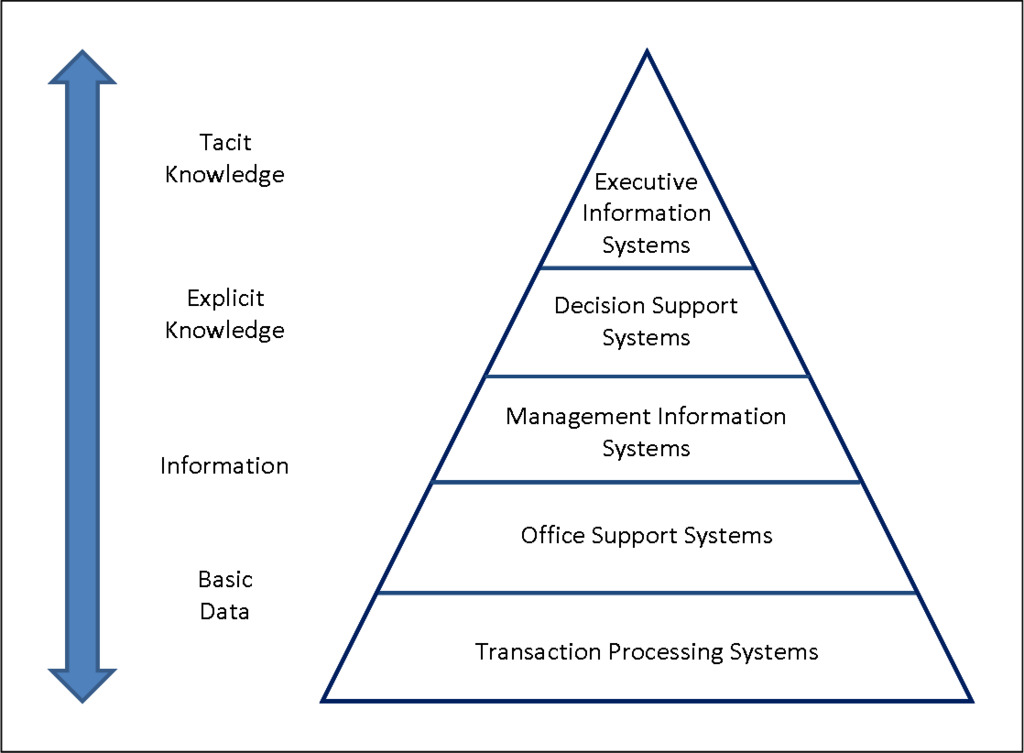
Transaction Processing Systems (TPS)
This is the foundation. A TPS handles the day-to-day, routine transactions. It's all about capturing data. At a stadium, the TPS is at work every time a ticket is scanned, a jersey is purchased, or a parking pass is sold. It answers questions like, "How many tickets did we sell today?"
Management Information Systems (MIS)
The next level up is the MIS. It takes the raw data from the TPS and turns it into summary reports for managers. An MIS helps middle management monitor the organization's performance. For example, a stadium's general manager might get a weekly report from the MIS that summarizes ticket sales by section, revenue from concessions, and merchandise sales figures. This helps them track performance against goals.
Decision Support Systems (DSS)
Moving higher, a DSS helps senior managers make complex, non-routine decisions. It uses data, often from both the TPS and MIS, along with external information, to model different scenarios. For example, a DSS could help a team's front office decide on ticket prices for the next season by analyzing past sales data, opponent popularity, and economic trends to predict how different price points might affect attendance and revenue.
Enterprise Resource Planning (ERP) Systems
An ERP system is the great integrator. Instead of having separate systems for ticketing, finance, human resources, and merchandise, an ERP combines them all into one massive, unified system. This provides a single source of truth for the entire organization. A large sports and entertainment complex could use an ERP to manage everything from concert bookings and staffing schedules to ticket sales and financial reporting, ensuring all departments are working with the same, up-to-the-minute information.
Why Sports Facilities Need Them
In the early days, managing a sports facility might have involved paper ledgers and manual ticket counts. As operations grew more complex, these manual methods became slow and prone to error. The evolution of information systems changed everything.
Today, information systems are the backbone of any modern sports facility. They streamline operations, making everything from selling a ticket to managing inventory faster and more efficient. They provide managers with the data needed to make informed, strategic decisions instead of relying on gut feelings.
An effective information system turns raw data from daily operations into a competitive advantage.
By tracking fan data, a facility can create targeted marketing campaigns and loyalty programs. By analyzing sales data, managers can optimize concession stand inventory to reduce waste and increase profits. By integrating scheduling and payroll, they ensure events are staffed correctly. Ultimately, these systems help create a better experience for the fans and a more profitable operation for the organization.
Now, let's test your understanding of these fundamental concepts.
Which of the following is NOT considered one of the five core components of an information system?
A stadium's box office uses a system to sell tickets and record each individual sale as it happens. What type of information system is this?
Understanding these core components and types of systems is the first step in seeing how technology helps manage the complex world of sports facilities.