Information Security and Privacy Management
Information Security Basics
The Three Pillars of Security
Information security can feel like a vast, complex field. But at its heart, it's built on three simple, powerful principles. These principles help us think clearly about what we're trying to protect and why.
At its core, cybersecurity aims to protect the Confidentiality, Integrity, and Availability of information, a concept often referred to as the CIA Triad.
Think of these three pillars—Confidentiality, Integrity, and Availability—as the legs of a stool. If any one of them is compromised, the entire system becomes unstable.
Confidentiality is about keeping secrets. It ensures that data is accessible only to authorized users. Think of it like a sealed envelope. Only the intended recipient should be able to open it and read the contents. Encryption is a common tool used to maintain confidentiality.
Integrity means keeping data accurate and trustworthy. It ensures that information has not been altered or tampered with by unauthorized people. Imagine a legal contract. Its integrity is crucial; if someone could secretly change the terms, the contract would be useless.
Availability is about ensuring that information and systems are up and running when they need to be. When you go to an ATM, you expect it to be working so you can withdraw cash. If it's out of service, its availability is compromised. In the digital world, this means preventing system crashes or attacks that deny service to legitimate users.
Common Threats
Understanding the CIA triad helps us recognize what we need to protect. Now, let's look at some of the common threats that target these principles.
Malware
noun
Malicious software designed to disrupt computer operations, gather sensitive information, or gain access to private computer systems.
Malware is a catch-all term for any software with malicious intent. This includes viruses that spread from computer to computer, spyware that secretly records your activity, and ransomware that locks up your files and demands a payment for their release. Malware can violate all three principles of the CIA triad: it can steal confidential data, alter files to compromise integrity, and crash systems to deny availability.
Phishing
noun
The fraudulent practice of sending emails or other messages purporting to be from reputable companies in order to induce individuals to reveal personal information, such as passwords and credit card numbers.
Phishing attacks are a form of social engineering. They trick you into giving away sensitive information. You might get an email that looks like it's from your bank, asking you to click a link and "verify" your account details. The link leads to a fake website that looks real, and any information you enter goes straight to the attacker. This is a direct attack on confidentiality.
A third major threat comes not from outside, but from within: insider threats. This refers to a current or former employee, contractor, or business partner who has or had authorized access to an organization's network, systems, or data and intentionally or unintentionally misuses that access.
An insider threat might be a disgruntled employee who intentionally steals company secrets (a confidentiality breach) or deletes important files (an integrity and availability breach). It could also be a well-meaning but careless employee who accidentally clicks on a phishing link, letting malware into the system. Because these individuals already have legitimate access, detecting and preventing these threats can be particularly challenging.
Managing the Risk
It’s impossible to eliminate all threats. The goal of information security isn't to build an impenetrable fortress, but to manage risk effectively. Risk management is the process of identifying, assessing, and controlling threats to an organization's capital and earnings. It's a continuous balancing act.
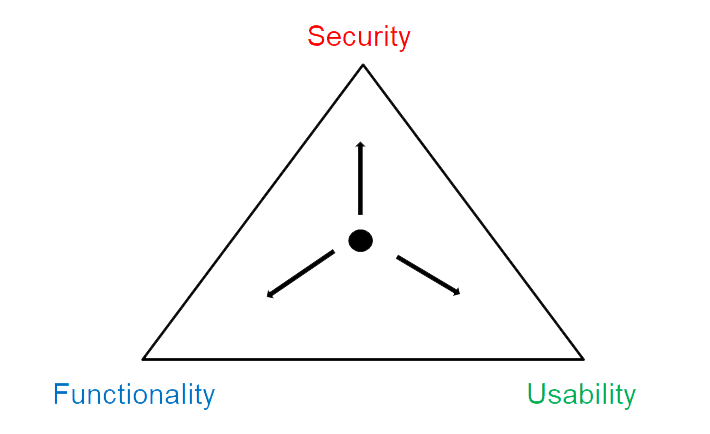
A basic risk management strategy involves a few key steps:
- Identify Risks: What are the potential threats? What vulnerabilities do we have? This could be anything from unpatched software to employees who haven't been trained to spot phishing emails.
- Assess Risks: How likely is each threat to occur, and what would the impact be? A data breach that exposes customer credit card numbers is a high-impact event. An office printer being unavailable for an hour is likely low-impact.
- Treat the Risk: Once you've identified and assessed the risks, you decide what to do. You can accept the risk (if it's low), avoid it (by stopping the risky activity), transfer it (through insurance), or mitigate it (by implementing security controls).
Security controls are the measures you put in place to reduce risk, such as installing antivirus software, using firewalls, and training employees. The goal is to reduce risk to an acceptable level, not to eliminate it entirely.
A hospital's electronic health record system is hit by a ransomware attack, making patient files inaccessible to doctors. Which principle of the CIA triad is most directly compromised?
Which of the following is an example of an attack on data integrity?
These core concepts form the foundation of information security. By understanding the principles of confidentiality, integrity, and availability, recognizing common threats, and adopting a risk-based approach, you can make more informed decisions about protecting valuable information.