Inflation Metrics for Household Budgets
Understanding Inflation
The Slow Leak in Your Wallet
Have you ever heard an older relative talk about how a movie ticket used to cost a quarter? It sounds like a fantasy, but it’s a real memory for many. The reason that quarter can’t buy you a movie ticket today is because of inflation.
inflation
noun
The rate at which the general level of prices for goods and services is rising, and subsequently, purchasing power is falling.
At its core, inflation means your money buys less than it did before. Imagine you have $100. This year, you can buy 20 pizzas at $5 each. If inflation is 10% next year, the price of each pizza might rise to $5.50. Now your $100 only buys you about 18 pizzas. You have the same amount of money, but its purchasing power has decreased.
Inflation is the gradual loss of purchasing power. A dollar today is worth more than a dollar tomorrow.
Why Prices Rise
Inflation isn't a mysterious force. It’s driven by economic factors we can understand. The two most common causes are strong consumer demand and rising production costs.
- Demand-Pull Inflation: This happens when demand for goods and services outstrips the economy's ability to produce them. Think of it as "too much money chasing too few goods." When everyone wants to buy the latest smartphone but there aren't enough to go around, sellers can raise prices.
A booming economy often fuels this. When people are confident about their jobs and income, they spend more freely. This widespread spending pushes prices up across the board.
- Cost-Push Inflation: This occurs when the cost to produce goods and services rises. Businesses pass these higher costs on to consumers in the form of higher prices to protect their profit margins. For example, if a natural disaster disrupts oil supply, the price of gasoline goes up. This increases shipping costs for nearly every product, leading to widespread price hikes.
Another factor is the amount of money in circulation. If a central bank prints a lot more money, the value of each individual dollar can decrease, leading to higher prices for the same goods.
The Ripple Effects
Inflation has wide-ranging effects on the economy. A small, predictable amount of inflation is generally considered healthy. It encourages people to spend or invest their money rather than hoarding cash that will lose value over time. This keeps money flowing through the economy.
However, high or unpredictable inflation creates problems. It makes it harder for businesses to plan for the future. They don't know what their costs will be or what prices they can charge, which can discourage investment and slow economic growth.
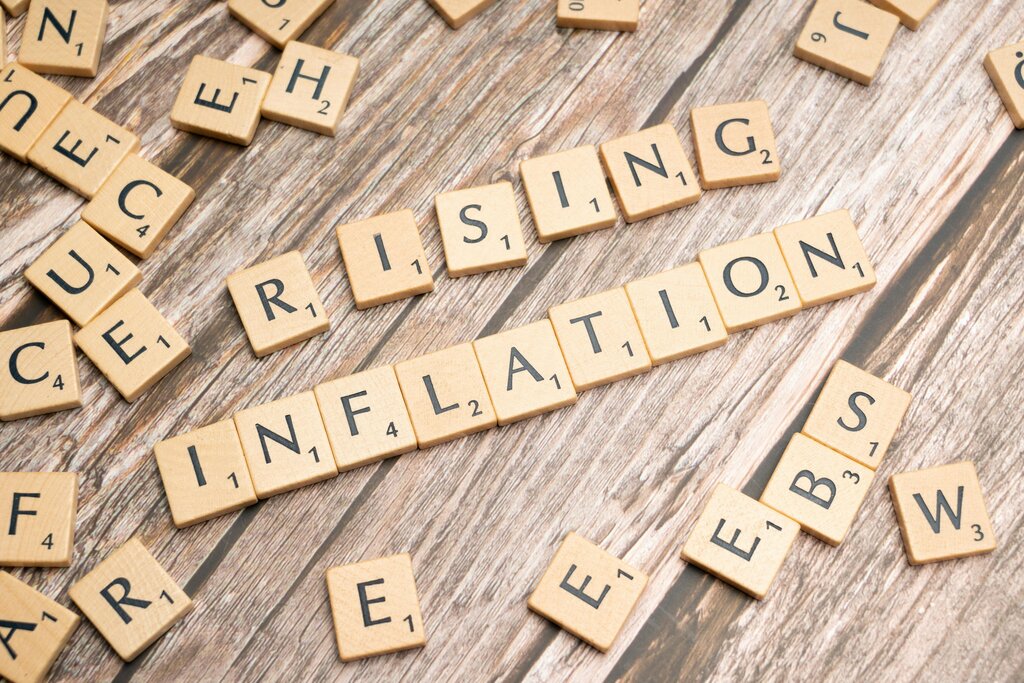
Inflation also impacts borrowing and lending. If you lend someone $100 at 5% interest for a year, you expect to get back $105. But if inflation is 7% that year, the $105 you get back actually buys less than the $100 you originally lent. In this case, the lender loses purchasing power. On the flip side, the borrower repays the loan with money that is worth less than when they borrowed it, which can be an advantage.
For savers, inflation is a silent enemy. Money sitting in a low-interest savings account may actually be losing value over time if the inflation rate is higher than the interest rate.
Now that you understand the what and why of inflation, let's test your knowledge.
What is the primary effect of inflation on your money?
Which of the following is described as a common cause of inflation?
Understanding these core concepts is the first step in navigating the economic landscape. Inflation is a constant presence, and knowing how it works is crucial for making smart financial decisions.