Inflation Metrics for Household Budgeting
Understanding Inflation
What Is Inflation?
Inflation is the gradual increase in the prices of goods and services across an entire economy. As prices rise, the purchasing power of money falls. This means that each dollar you have buys a smaller percentage of a good or service.
Simply put, your money doesn't stretch as far as it used to.
Think about it this way. Your grandparents might tell you stories about buying a candy bar for a nickel. Today, that same candy bar might cost over a dollar. It’s not that the candy bar itself has changed dramatically; it's that the value of the nickel has decreased over time due to inflation. This erosion of purchasing power is the primary effect of inflation on everyday life.
inflation
noun
The rate at which the general level of prices for goods and services is rising, and subsequently, purchasing power is falling.
Why Do Prices Rise?
Inflation doesn't just happen out of nowhere. It's typically driven by one of two main forces: demand-pull or cost-push.
Demand-Pull Inflation occurs when there's more money chasing the same amount of goods. Imagine a new video game console is released, but the company can only produce a limited number. If everyone wants one, buyers are willing to pay more, and prices get pushed up. On a larger scale, this happens when an entire economy is growing quickly and consumers are spending freely, but the supply of goods and services can't keep up with the high demand.
Cost-Push Inflation happens when the cost of producing goods and services increases. If a natural disaster disrupts the supply of oil, for example, the price of gasoline will rise. This higher fuel cost makes it more expensive to transport everything from groceries to electronics, so businesses pass those increased costs on to consumers in the form of higher prices. It's a ripple effect that starts with the supply chain.
Managing the Economy's Temperature
So, if inflation gets too high, what can be done? This is where monetary policy comes in. In most countries, a central bank is responsible for keeping inflation in check. In the United States, this job falls to the Federal Reserve, often called "the Fed."
The Fed's main tool for fighting inflation is adjusting interest rates. When inflation is high, the Fed raises interest rates. This makes it more expensive for people and businesses to borrow money for things like cars, homes, or new equipment. As borrowing and spending slow down, the demand for goods and services decreases, which helps bring prices back under control. It's like turning down the heat on an economy that's running too hot.
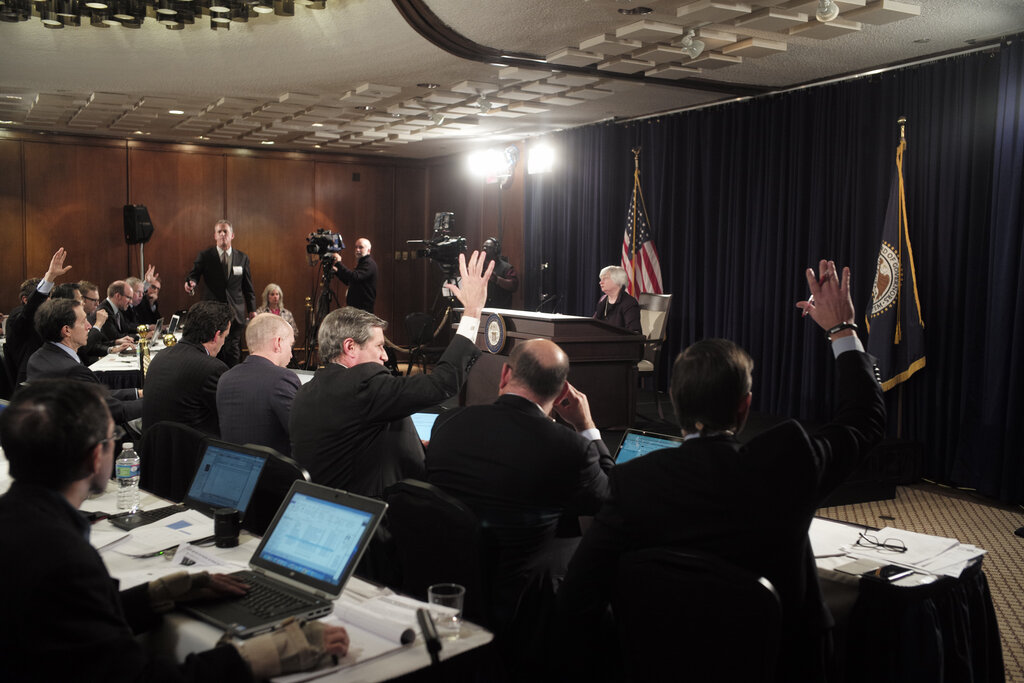
Conversely, if the economy is sluggish and inflation is too low, the Fed can lower interest rates to encourage borrowing and spending, giving the economy a boost. The goal is to find a balance, keeping the economy growing at a steady pace without letting inflation get out of hand.
How Is Inflation Measured?
To know how much prices are changing, government agencies track the cost of a "basket of goods and services." This isn't a literal basket, but a representative collection of items that the average household buys. It includes everything from groceries and gasoline to haircuts and movie tickets.
Economists at agencies like the Bureau of Labor Statistics survey thousands of households and businesses to see what people are buying and how much they're paying. By comparing the total cost of this basket from one month or year to the next, they can calculate the inflation rate.
A news report that cites the inflation rate is referring to the annual percent change in the consumer price index.
This percentage tells us how much more expensive it has become to maintain a certain standard of living. It's a vital piece of information for policymakers, businesses, and individuals trying to make sense of the economy.
What is the primary effect of inflation on consumers?
After a major hurricane disrupts oil refining, the price of gasoline rises, leading to higher transportation costs and increased prices for many goods. What type of inflation does this scenario describe?