Inflation Metrics for Household Budgeting
Understanding Inflation
The Ever-Shrinking Dollar
Ever hear an older relative talk about how a movie ticket used to cost a quarter? That's inflation in a nutshell. It’s the gradual increase in the prices of goods and services across the entire economy, which means your money buys a little less than it used to.
Inflation
noun
The rate at which the general level of prices for goods and services is rising, and subsequently, purchasing power of currency is falling.
Inflation doesn't happen for just one reason. It's often a mix of a few key factors. One major cause is an increase in demand. If everyone suddenly wants to buy the same product, but there isn't enough of it to go around, sellers can raise the price. This is often called "demand-pull" inflation.
Another cause is a rise in production costs. If the raw materials or labor needed to make a product become more expensive, companies pass those higher costs on to consumers in the form of higher prices. This is known as "cost-push" inflation. Think about what happens to gas prices when the cost of crude oil spikes.
Measuring Price Changes
Economists don't just guess that prices are going up. They measure it meticulously using something called a price index. The most well-known measure is the Consumer Price Index, or CPI.
The Consumer Price Index “is a measure of the average change over time in the prices paid by urban consumers for a market basket of consumer goods and services,” according to the Bureau of Labor Statistics (BLS), which issues the monthly report.
Imagine a shopping cart filled with a specific set of items that an average family buys: groceries, gasoline, clothing, housing costs, medical care, and so on. The government tracks the total cost of this "market basket" month after month. The percentage change in that total cost is the inflation rate. If the CPI goes up by 3%, it means you'd need $103 to buy the same goods and services that cost you $100 a year ago.
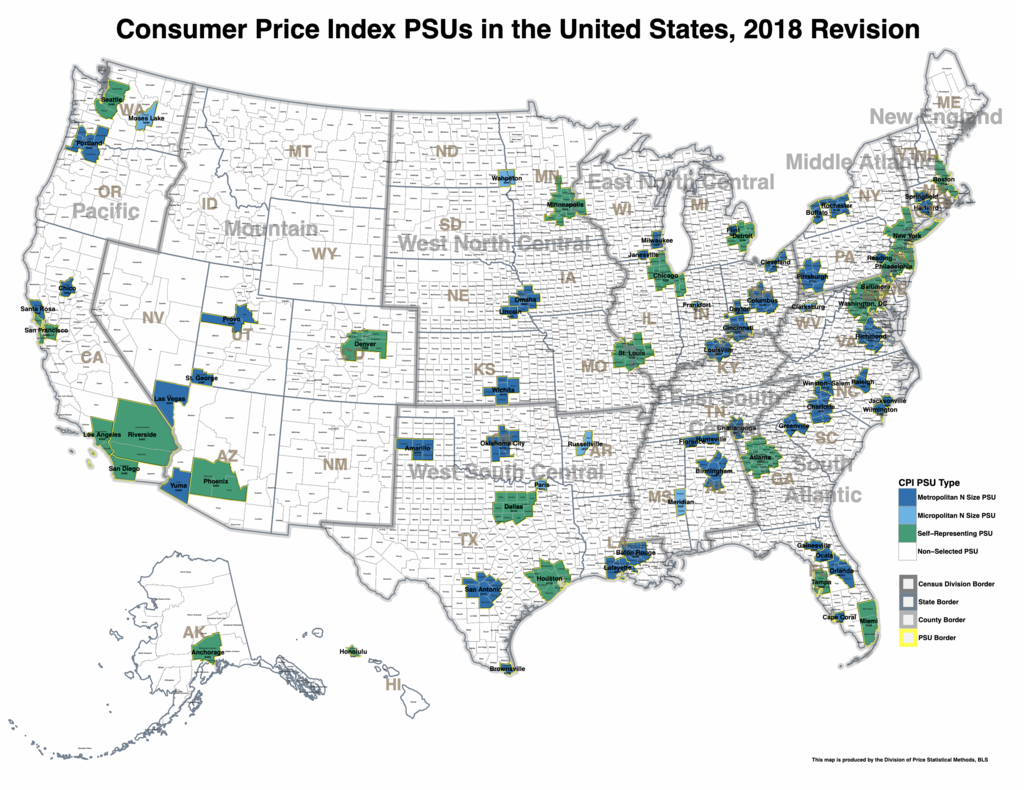
The CPI is a powerful tool, but it has limitations. It assumes people keep buying the exact same things, even when prices change. In reality, if the price of beef goes up, you might buy more chicken instead. To account for this substitution, economists developed another measure: the Chained Consumer Price Index (C-CPI-U).
The C-CPI-U adjusts the items in the market basket more frequently to reflect changes in consumer behavior. It captures how people shift their spending to less expensive alternatives, often resulting in a slightly lower inflation reading than the standard CPI.
| Feature | Consumer Price Index (CPI) | Chained CPI (C-CPI-U) |
|---|---|---|
| Basket Composition | Fixed for a period (e.g., two years) | Updated monthly |
| Consumer Behavior | Assumes no substitution | Accounts for substitution |
| Inflation Reading | Tends to be slightly higher | Tends to be slightly lower |
Your Purchasing Power
The most direct way inflation affects you is by reducing your purchasing power. This is just a formal way of saying your money doesn't stretch as far as it used to. If your income stays the same but prices for everything else go up, your standard of living can decline. What once felt like a comfortable salary might start to feel tight.
This erosion of value is constant, even at low inflation rates. A 2% annual inflation rate might not seem like much, but over time, it adds up. It means the cash you have saved in a low-interest account is slowly losing its ability to buy things.
Understanding inflation isn't just for economists. It's a fundamental concept that influences your daily financial life, from grocery shopping to saving for the future. By knowing how it's measured and how it affects your money, you're better equipped to make informed financial decisions.
Let's check your understanding of these core ideas.
What is the primary effect of inflation on your money?
A sudden surge in consumer spending after a period of economic growth leads to shortages of popular products, causing sellers to raise prices. This scenario is a classic example of: