Industrial Revolution's Design Impact
Machine Manufacturing Shift
From Workshop to Factory Floor
Before the rise of factories, most goods were made in homes or small workshops. An artisan, perhaps a shoemaker or a cabinetmaker, would own their tools and work at their own pace. This was known as the domestic system, or cottage industry. Production was scattered across countless small-scale operations.
The steam engine changed everything. Its immense power couldn't be installed in a living room. It required a large, dedicated building and a significant investment. This forced a shift: workers now had to travel to the machine, rather than working from home. Production became centralized in factories, often built near water sources for power and transportation.
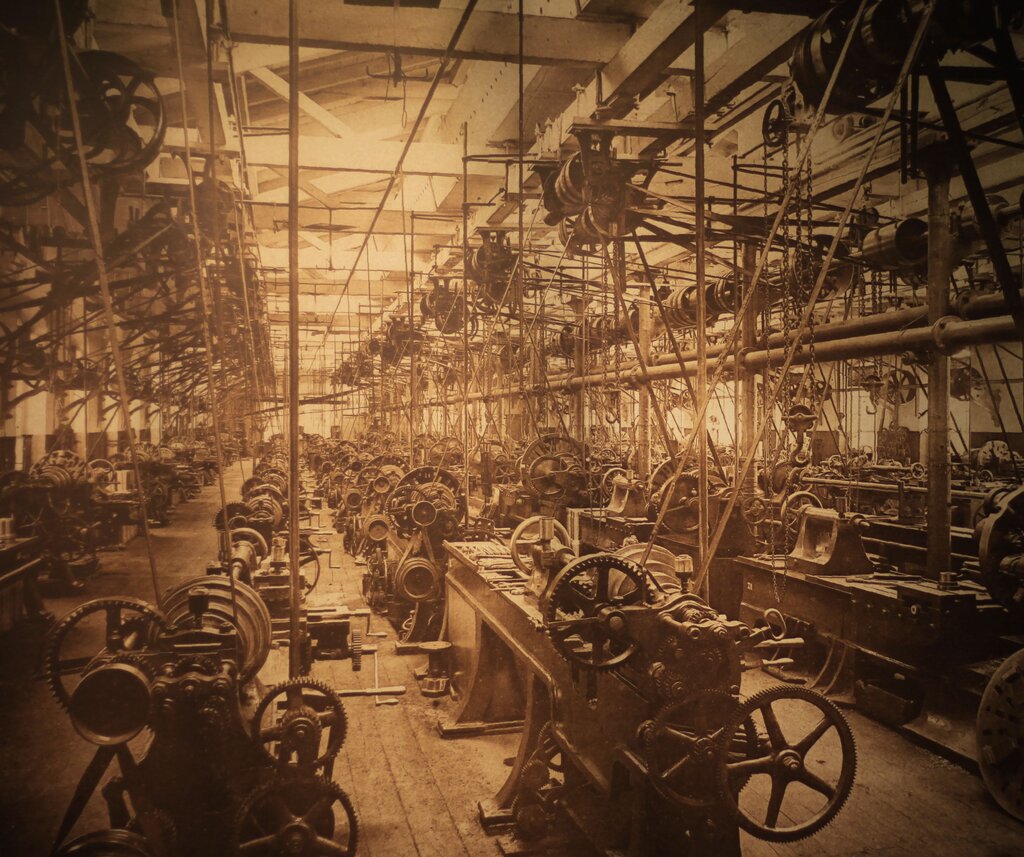
This new environment wasn't just a change of location; it fundamentally altered the nature of work itself.
A New Way of Working
In the old system, a single craftsman was responsible for a product from start to finish. A watchmaker, for example, would create every gear, spring, and casing by hand, assembling the final timepiece themselves. They possessed a wide range of skills and a deep understanding of the entire process.
Factories replaced this holistic approach with the division of labor. Instead of one person making a whole watch, the process was broken into dozens of simple, repetitive steps. One worker might only cut metal discs for gears, another would only polish casings, and a third would only attach the hands. Each person became highly specialized in a single, narrow task, repeating it all day long. This greatly increased the speed and volume of production.
This specialization meant the person designing the object was no longer the one building it. A new role emerged: the [{
}], who created blueprints and models for others to execute.
Iron Parts and Interchangeability
The machines that enabled this new scale of production were themselves a revolution. Early machinery, like that in windmills or water mills, often used wooden gears. While functional, wood was inconsistent. It would swell in humidity, shrink when dry, and wear down unevenly. Each gear had to be hand-carved and fitted to its neighbors.
The Industrial Revolution was built on iron. Using new machine tools like lathes and planers, manufacturers could create iron components with unprecedented precision. Iron was stable, strong, and could be cast into identical shapes.
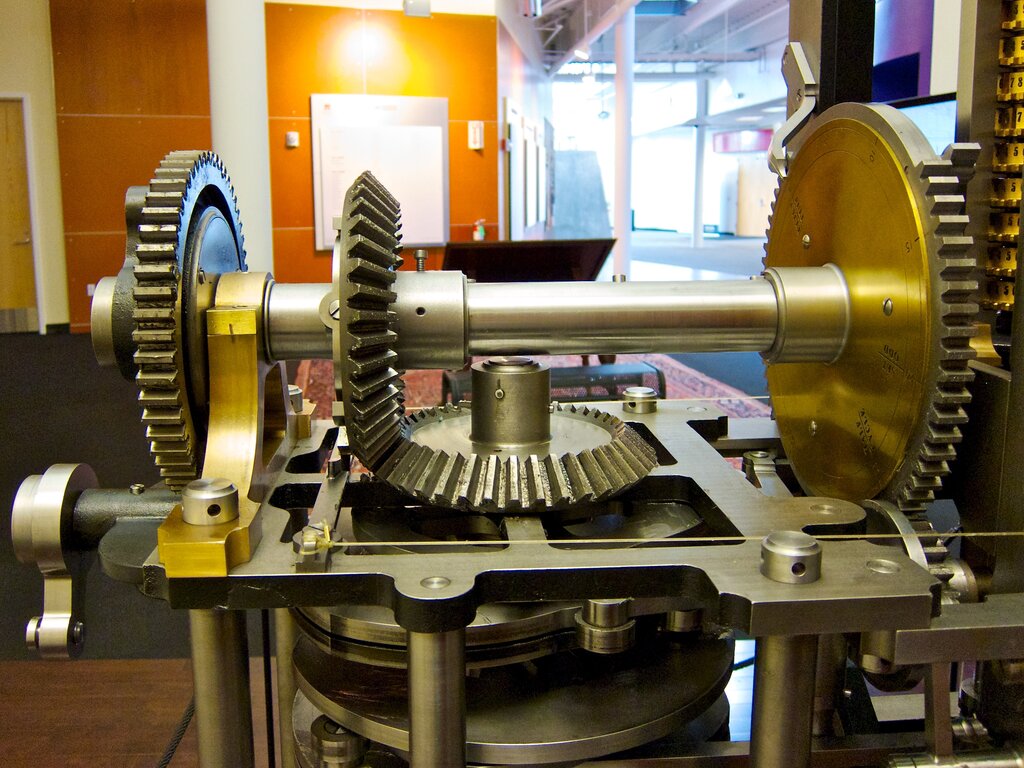
This precision unlocked a concept that is now fundamental to our world: . Before, if a part on a musket broke, a gunsmith had to custom-make a replacement to fit that specific weapon. It was a slow and expensive process. With machine-tooling, a factory could produce thousands of triggers, barrels, or stocks that were, for all practical purposes, identical. A broken part could be quickly and easily swapped for a new one off the shelf.
This principle of interchangeable parts not only sped up manufacturing but also revolutionized repair and maintenance. The world of unique, handcrafted objects began to give way to one of mass-produced, uniform goods.
Let's review the key ideas and see how they connect.
What was the system of production called where goods were made in homes or small workshops by artisans before the rise of factories?
What was the primary reason production shifted from small workshops to large, centralized factories?
The move to the factory system, powered by steam and built on the principles of divided labor and standardization, laid the groundwork for the modern industrial world.