Industrial IoT for Water Treatment Plant Optimization
Industrial IoT Basics
What Is the Industrial IoT?
The Industrial Internet of Things, or IIoT, connects industrial machines and devices to the internet. Think of it as giving a voice and a nervous system to the equipment in factories, power plants, and other industrial settings. Instead of being isolated, machines can share data, report their status, and even receive commands from afar.
Essentially, IIoT is about gathering data from machines and using that data to make smarter, faster decisions.
This network of connected devices allows for a constant flow of information. A pump can report its pressure levels, a motor can signal its temperature, and a conveyor belt can track its speed, all in real time. This data is the foundation of a smarter, more responsive industrial environment.
The Building Blocks of IIoT
An IIoT system has three core components that work together: sensors, actuators, and communication protocols. Each plays a distinct and vital role.
Sensor
noun
A device that detects and responds to some type of input from the physical environment. The specific input could be light, heat, motion, moisture, pressure, or any one of a great number of other environmental phenomena.
Sensors are the 'senses' of the industrial world. They are small devices attached to machinery that collect specific data. One sensor might measure temperature, another might track vibration, and a third could monitor fluid levels. They convert a physical property into a digital signal that can be read and analyzed.
Actuators are the 'muscles'. While sensors gather information, actuators take action.
An actuator is a component that is responsible for moving or controlling a mechanism. Based on the data received from sensors, an actuator might open a valve, turn a motor on or off, or adjust a robotic arm. It translates digital commands back into physical action.
Finally, communication protocols are the 'language' that allows all these devices to talk to each other. In an industrial setting, standard Wi-Fi isn't always reliable enough. IIoT systems use robust protocols designed to work in harsh environments with a lot of electronic 'noise'. They ensure that data from sensors and commands to actuators are sent and received without interruption.
Why Use IIoT?
Connecting industrial equipment opens up powerful new ways to improve operations. The two biggest benefits are greater efficiency and the ability to predict problems before they happen.
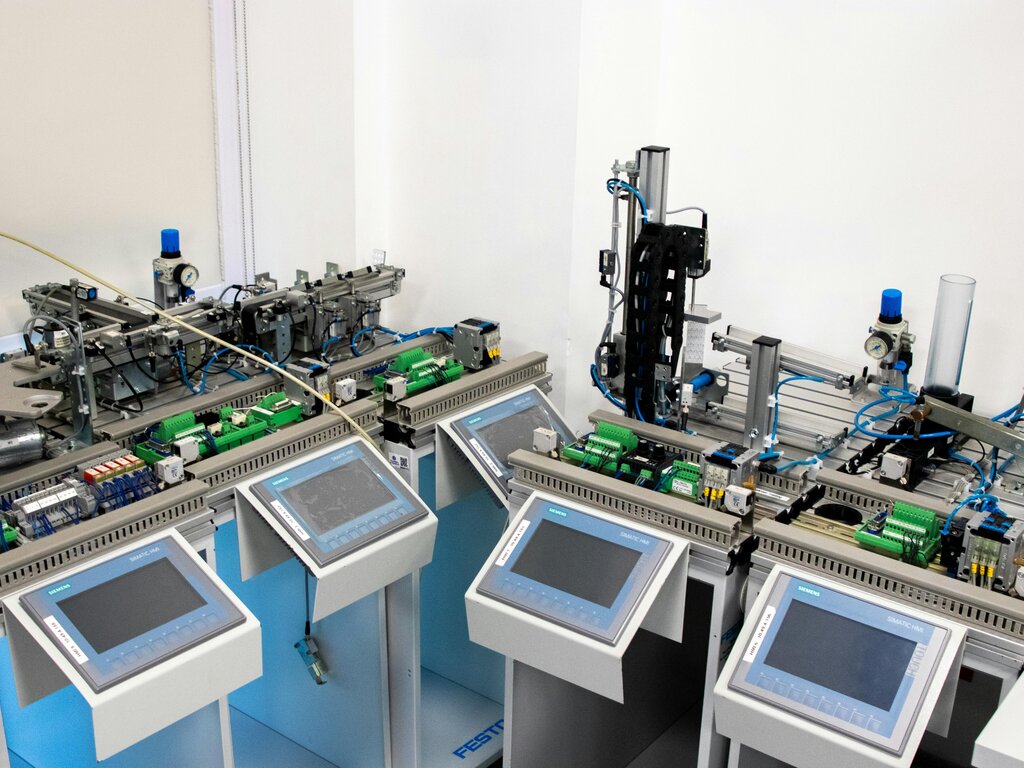
With a constant stream of real-time data from sensors, operators can see exactly how their systems are performing. This visibility allows them to fine-tune processes, reduce waste, and optimize energy consumption. Small adjustments, guided by data, can lead to significant gains in operational efficiency and productivity.
Perhaps the most transformative benefit is predictive maintenance. Traditionally, maintenance is either reactive (fixing something after it breaks) or preventative (servicing equipment on a fixed schedule, whether it needs it or not). Both are inefficient.
IIoT enables manufacturers to transition from traditional reactive maintenance to predictive and preventive maintenance, leading to substantial cost savings and improved productivity.
IIoT changes the game. By analyzing data trends from sensors—like a gradual increase in vibration or temperature—the system can predict when a component is likely to fail. Maintenance can then be scheduled precisely when it's needed, preventing unexpected downtime and extending the life of the equipment.
What is the primary purpose of the Industrial Internet of Things (IIoT)?
In an IIoT system, which component is responsible for converting a physical property, like temperature or vibration, into a digital signal?
By bringing connectivity and data to the industrial floor, IIoT makes processes smarter, more reliable, and vastly more efficient.