Industrial Electrical Systems and Control
3-Phase Power Distribution
Beyond Household Power
The power that comes into your home is typically single-phase. It's simple, reliable, and perfectly adequate for running lights, laptops, and refrigerators. But when you scale up to industrial settings with heavy machinery and massive motors, single-phase power just doesn't cut it. The power delivery is uneven, peaking and dipping in a sine wave. This is inefficient for large motors that need a constant, smooth supply of energy.
The solution is three-phase power. Instead of one alternating current, it uses three, all perfectly synchronized but offset from each other by 120 degrees. This arrangement ensures that the total power delivered is always constant, never dropping to zero. It's like having three people pushing a crankshaft instead of one; the rotation is smoother and much more powerful.
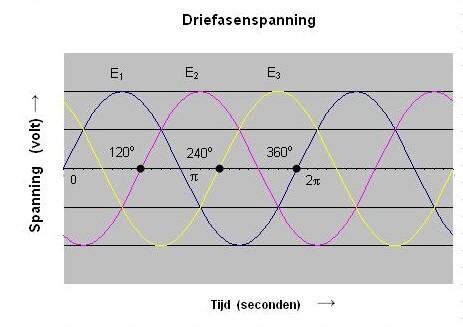
This efficiency is why industrial facilities, data centers, and commercial buildings rely on it. A three-phase system can deliver more power with smaller, less expensive wiring than a single-phase system carrying the same voltage. It's the backbone of the modern industrial world.
Wye and Delta Connections
Three-phase systems aren't just about having three wires. The way those phases are connected at the source (like a transformer) and at the load (like a motor) is critical. There are two primary configurations: Wye (also called Star) and Delta.
A gets its name from its shape, which looks like the letter 'Y'. The three phases connect at a common central point called the neutral. This configuration is very common in commercial and industrial distribution because it provides two different voltage levels. You can get a higher voltage by connecting between two phases (line-to-line) or a lower voltage by connecting between one phase and the neutral (line-to-neutral).
The joins the three phases in a triangle, like the Greek letter 'Δ'. There is no neutral point. This setup is often used for high-power transmission and for running large motors that don't require a neutral connection. The choice between Wye and Delta depends on the application's voltage requirements and load characteristics.
The distinction between line and phase values is crucial.
- Phase Voltage () is the voltage across a single component (one winding in a motor or transformer).
- Line Voltage () is the voltage between two power lines (e.g., Line 1 and Line 2).
- Phase Current () is the current through a single component.
- Line Current () is the current in one power line.
Their relationships change depending on the configuration.
In a Wye system, the line current is equal to the phase current, but the line voltage is higher than the phase voltage by a factor of the square root of 3 (approximately 1.732).
In a Delta system, the line voltage is equal to the phase voltage, but the line current is higher than the phase current by a factor of the square root of 3.
The Power Triangle
In DC circuits, power is simple: . In AC circuits, especially with industrial loads like motors, it's more complex. The current and voltage are not always perfectly in sync. This phase difference gives rise to three types of power, often visualized as the 'Power Triangle'.
- Real Power (P): The power that actually does work, like turning a motor shaft or lighting a lamp. It's measured in watts (W) or kilowatts (kW).
- Reactive Power (Q): The power required to create and sustain magnetic fields in inductive loads (like motors and transformers). It doesn't do any real work, but it's necessary for the equipment to function. It's measured in volt-amperes reactive (VAR) or kilovars (kVAR).
- Apparent Power (S): The vector sum of real and reactive power. It's what the utility company must supply to the facility. It's measured in volt-amperes (VA) or kilovolt-amperes (kVA).
Think of it like a mug of beer. The beer itself is the Real Power (what you want), the foam is the Reactive Power (necessary, but not the main point), and the entire contents of the mug is the Apparent Power (what you paid for).
The ratio of Real Power to Apparent Power is called the (PF), which is equal to the cosine of the angle . An ideal power factor is 1.0 (or 100%), meaning all supplied power is doing useful work. Industrial facilities with many motors often have a 'lagging' power factor (less than 1.0) because the inductive loads cause the current to lag behind the voltage. Utility companies often penalize customers with low power factors because it means they have to supply more current (and thus have larger equipment and more line losses) to deliver the same amount of useful work.
Putting It All Together
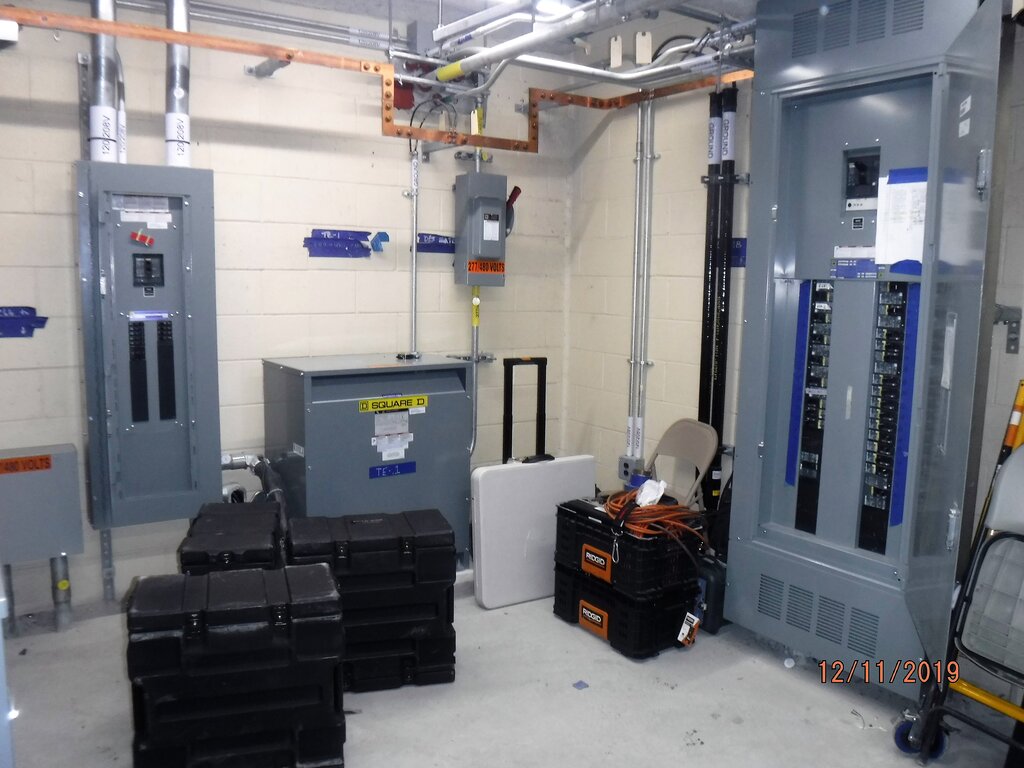
When utility power enters a factory, it first goes through a main transformer to step the voltage down to a usable level (e.g., from 13.8 kV down to 480V). These transformers can be connected in different Wye and Delta combinations, like Delta-Wye or Delta-Delta, to achieve specific voltage and grounding characteristics.
From the transformer, power flows to the main switchgear, which is a collection of circuit breakers, fuses, and switches that protect and distribute power throughout the facility. From there, it might travel down large bus ducts or through thick cables to power individual machines.
One final, critical detail is the phase rotation or sequence. For a three-phase motor to spin in the correct direction, the phases (A, B, C) must be connected in the right order. If you swap any two phases, the motor will run backwards, which can be catastrophic for equipment like pumps and compressors. Electricians use a special tool called a to verify the rotation before connecting a new piece of equipment. It’s a simple check that prevents very expensive mistakes.
Understanding how these systems are configured and how to calculate the different types of power is fundamental to managing industrial electrical systems safely and efficiently.
Time to check your understanding of these industrial power concepts.
Why is three-phase power generally preferred over single-phase power for large industrial motors?
What is a key advantage of a Wye (Star) electrical connection compared to a Delta connection for power distribution within a commercial building?
With these principles, you can begin to analyze how large-scale facilities are powered.