Indonesian Philosophies and Origins
Indonesian Philosophical Foundations
The Unwritten Philosophy
Before formal philosophies arrived from distant lands, the islands of Indonesia were already rich with their own ways of understanding the world. This wisdom wasn't written in dense books; it was lived, spoken, and passed down through generations. It's a philosophy found in community rules, short sayings, and ancient stories about the origins of everything.
These indigenous belief systems are the bedrock of Indonesian thought. They reveal a deep connection between people, nature, and the spiritual world, shaping everything from farming practices to family relationships. To understand Indonesia, you have to start here, with the unwritten rules and stories that guide daily life.
Living by Adat
At the heart of community life across the archipelago is the concept of adat. It’s often translated as “customary law,” but it’s much more than a set of rules. Adat is a comprehensive social code that governs everything from marriage ceremonies and land inheritance to resolving disputes and performing rituals. It's a living framework for maintaining social harmony and balance.
Adat
noun
A set of customary laws, traditions, and social norms that govern community life in many Indonesian ethnic groups. It encompasses legal, social, and spiritual dimensions.
Each ethnic group has its own unique adat, tailored to its specific environment and history. In a Minangkabau village in West Sumatra, for example, adat dictates a matrilineal system where property is passed down from mother to daughter. In Bali, adat is intertwined with a complex system of community-managed irrigation called subak. These aren't just practical rules; they reflect a core philosophical belief that individual well-being is inseparable from the well-being of the community and the environment.
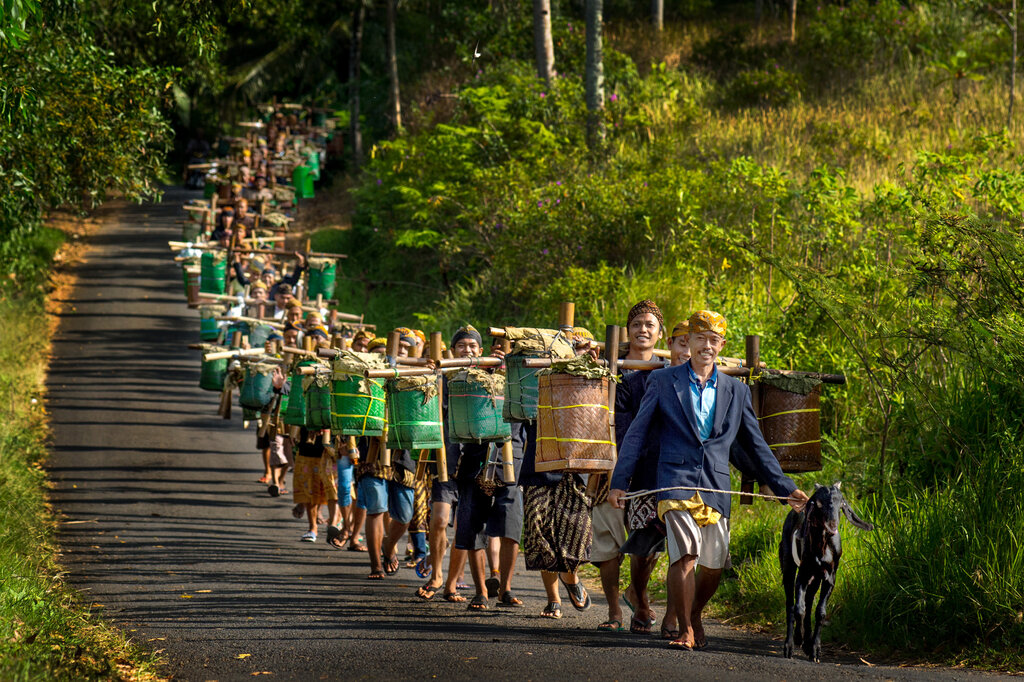
Adat provides a sense of identity and continuity, connecting the present generation to their ancestors and ensuring that society functions smoothly. It’s a philosophy of collective responsibility, where every person has a role to play in maintaining the cosmic balance.
Spirits, Ancestors, and the Natural World
Early Indonesian philosophy was also deeply shaped by animism, the belief that spirits inhabit not just people, but also animals, plants, rocks, and rivers. This worldview doesn't see a sharp divide between the physical and the spiritual. A massive banyan tree isn't just wood and leaves; it might be home to a powerful guardian spirit. A volcano's eruption isn't just a geological event; it could be a sign of displeasure from the spirits of the mountain.
This belief fosters a profound respect for nature. If the natural world is alive with spiritual energy, then you must live in harmony with it. This animistic view is closely linked with ancestral worship. The spirits of the ancestors are believed to remain active in the lives of their descendants, offering guidance and protection. Rituals, offerings, and ceremonies are essential for maintaining a good relationship with these spirits, ensuring their favor for the community.
This spiritual ecosystem forms a complete worldview, where humans are not masters of nature, but participants in a larger, interconnected web of life.
Creation myths further illustrate this connection. The Dayak people of Kalimantan tell stories of a cosmic battle between a hornbill and a water serpent, whose union created the world. In the Toraja highlands of Sulawesi, myths describe ancestors descending from the heavens on a staircase. These stories aren't just fanciful tales; they are philosophical maps that explain a group's origins, their relationship with the divine, and their place in the universe.
Wisdom in a Nutshell
How were these complex ideas about community, spirits, and respect passed on? Often, it was through pepatah, or proverbs. These short, memorable sayings are vessels of traditional wisdom, teaching ethics and practical advice in a way that's easy to remember and share.
Air beriak tanda tak dalam. (Rippling water is a sign it’s not deep.)
This proverb suggests that people who talk a lot or are boastful often lack real knowledge or substance, much like how shallow water is easily disturbed.
Another common proverb teaches adaptability and respect for local customs:
Di mana bumi dipijak, di situ langit dijunjung. (Where the earth is stepped on, there the sky is held up.)
This is the Indonesian equivalent of “When in Rome, do as the Romans do.” It emphasizes the importance of respecting the local adat and traditions wherever you may be.
Through these proverbs, children learn the values of their culture: humility, respect, cooperation, and the importance of looking before you leap. They are a form of oral philosophy, distilling complex ideas into bite-sized truths for everyday life. Together, adat, spiritual beliefs, and pepatah form the rich, indigenous foundation of Indonesian philosophical thought.
Ready to check your understanding of these foundational concepts?
What is the best definition of adat in the context of Indonesian indigenous philosophy?
The indigenous belief that spirits inhabit animals, plants, rocks, and rivers is known as __________.
These indigenous systems of thought provided a stable, resilient framework for communities across the archipelago long before other influences arrived, and they continue to shape Indonesian culture today.