Indie Rock Vocal Technique
Diaphragmatic Breathing
Meet Your Diaphragm
Your voice is powered by air. The way you manage that air makes all the difference in your singing. The key to powerful, controlled singing isn't in your throat or even your chest—it's a little lower, in a large, dome-shaped muscle called the diaphragm.
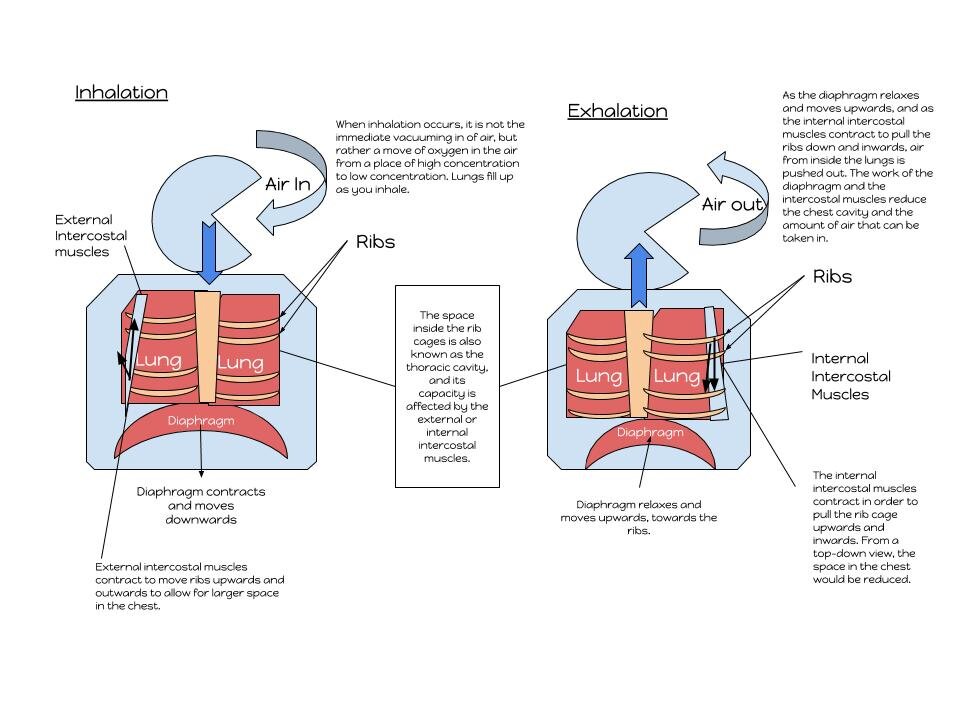
The diaphragm sits right below your lungs, separating your chest from your abdomen. Think of it as the engine for your breath. When you inhale, your diaphragm contracts and moves downward. This creates more space in your chest cavity, allowing your lungs to expand fully and take in a deep, satisfying breath. When you exhale, the diaphragm relaxes, moves upward, and helps push the air out of your lungs.
Many of us get into the habit of shallow
chest breathing
noun
A shallow breathing pattern that primarily uses the muscles in the upper chest and neck, leading to less air intake and more tension.
, where we only use the top part of our lungs. You can spot it easily: the shoulders and chest rise and fall noticeably. This kind of breath is quick and inefficient. For singing, it’s like trying to run a marathon on a single tic-tac. Diaphragmatic breathing, on the other hand, is deep, efficient, and relaxed.
How to Breathe with Your Diaphragm
Learning to control your diaphragm takes practice, but it's a physical skill anyone can learn. The first step is to feel what it's doing. Here’s a simple exercise to get you started:
- Lie on your back with your knees bent and feet flat on the floor.
- Place one hand on your upper chest and the other on your belly, just below your rib cage.
- Breathe in slowly through your nose. Focus on letting your belly rise as the air fills your lungs. The hand on your chest should stay relatively still.
- Exhale slowly through your mouth. Feel your belly fall as you gently push the air out. The hand on your stomach should move down.
Do this for a few minutes each day. The goal is to make this deep, belly-focused breath your natural way of breathing. At first, it might feel strange, especially if you're used to chest breathing. But with repetition, your body will learn this more efficient pattern.

As you get comfortable with it lying down, try it while sitting up straight in a chair, and then while standing. The feeling is the same: your belly expands outward on the inhale, and gently contracts on the exhale. Your shoulders and chest should remain relaxed and still.
Why It Matters for Singers
So, how does this all connect to singing? A steady, controlled stream of air is the foundation of a good vocal tone. Diaphragmatic breathing gives you that control. When you breathe from your diaphragm, you take in more air and can release it more consistently.
This is what singers call
support
noun
The use of the body's respiratory muscles to manage airflow for phonation, providing a stable and controlled sound.
. With proper support, you can hold notes longer, sing phrases without gasping for air, and maintain a consistent tone and volume. It takes the strain off the small, delicate muscles in your throat, reducing the risk of vocal fatigue and injury.
Diaphragmatic breathing strengthens your airflow, giving you power and stability.
Think of your breath as the fuel for your voice. Chest breathing provides just a little puff of fuel, making your voice weak and unsteady. Diaphragmatic breathing gives you a deep, full tank. It allows you to deliver a powerful, confident sound without pushing or straining.
Mastering this technique is a game-changer. It’s the difference between merely making a sound and truly singing with your whole body.