India's Global Impact Past and Present
Ancient Scientific Leadership
Architects of the Number System
Before modern computing, before calculus, even before simple algebra, the world needed a better way to count. The Roman numeral system, with its clumsy letters, made large calculations a nightmare. The breakthrough came from ancient India: the decimal system. This system, based on ten symbols (1-9 and 0), allowed for the representation of any number, no matter how large, using place value. It was elegant, efficient, and revolutionary.
The most critical component of this system was the concept of shunya, or zero. It wasn't just a placeholder; it was a number in its own right. This conceptual leap is what separates simple counting from true mathematics. The astronomer and mathematician used zero in his positional system, and a few centuries later, established the rules for using it in arithmetic, such as 1 + 0 = 1 and 1 - 0 = 1. He even tackled the tricky concept of division by zero. These ideas provided the very foundation for the digital world we live in today.
The decimal system and zero weren't just inventions; they were a new language for describing the universe.
The Science of Life
India's scientific inquiry also extended deep into the human body. Ayurveda, which translates to "the science of life," is one of the world's oldest holistic healing systems. It's based on the idea that health and wellness depend on a delicate balance between the mind, body, and spirit. The foundational texts of Ayurveda, like the Charaka Samhita, provided a vast encyclopedia of diseases and medicinal plants, classifying hundreds of substances based on their therapeutic properties.
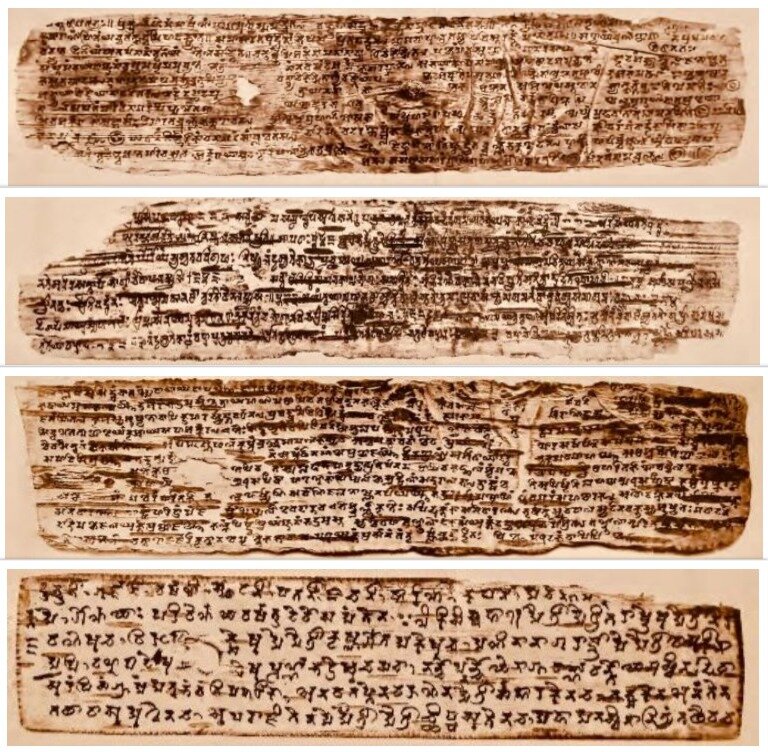
Even more remarkable were the advances in surgery. The physician Sushruta, often called the "father of surgery," compiled his knowledge in the around 600 BCE. This text is a detailed surgical guide, describing over 120 surgical instruments and 300 surgical procedures. It provides shockingly modern instructions for rhinoplasty (nose reconstruction), cataract surgery, and the removal of bladder stones. Sushruta emphasized meticulous technique, hygiene, and a deep understanding of human anatomy, setting a standard for medicine that was unparalleled for over a thousand years.
Masters of Metal
Ancient India's technical prowess wasn't limited to abstract concepts or medicine. It was forged in fire. Indian metallurgists were masters of their craft, producing high-quality iron and steel long before others. The most famous example is , a high-carbon crucible steel that was legendary across the ancient world. Produced in South India, it was exported as ingots and became the raw material for the famed Damascus blades of the Middle East, known for their sharpness and distinctive wavy patterns. The technology to create steel of this quality was a closely guarded secret and was not replicated in Europe until the Industrial Revolution.
The Flow of Knowledge
These innovations did not remain isolated. They spread across the globe, enriching other cultures and catalysing further discovery. The primary conduits for this exchange were the bustling trade networks of the ancient world. Merchants and scholars travelling the Silk Road carried not just goods but also ideas.
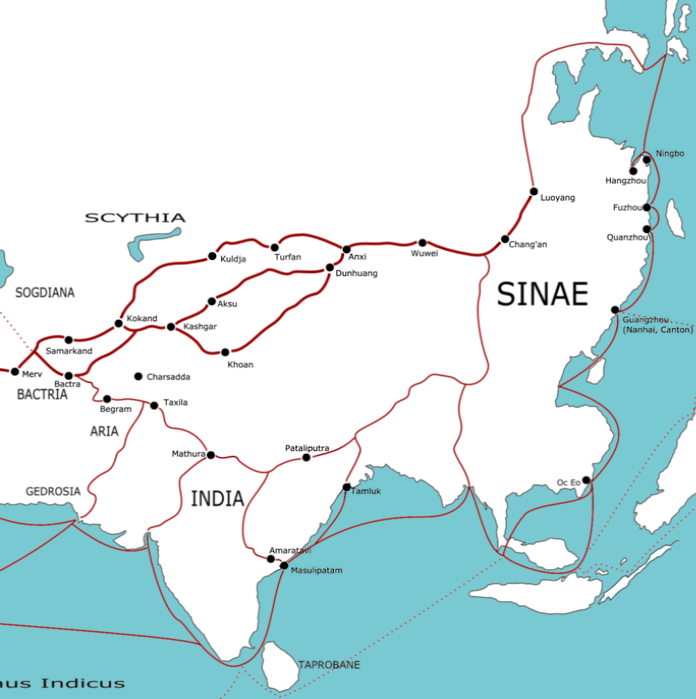
The Arab world, in particular, became a crucial bridge between India and Europe. During the Islamic Golden Age, scholars in centres of learning like Baghdad actively sought out and translated Indian texts on mathematics, astronomy, and medicine. The Indian number system was adopted and became known as the "Hindu-Arabic numerals." The mathematical works of Aryabhata and Brahmagupta were studied and expanded upon, and Ayurvedic medical knowledge was integrated into Islamic medicine. Through this transmission, Indian knowledge laid the groundwork for the European Renaissance and the scientific revolution that followed.
Ready to test your knowledge?
What was the most revolutionary component of the decimal system developed in ancient India?
Who is known as the 'father of surgery' for compiling the Sushruta Samhita, a detailed guide to surgical procedures, around 600 BCE?
These foundational contributions in mathematics, medicine, and metallurgy show that ancient India was a primary architect of early global intellectual advancement. Its discoveries provided the essential tools that would drive scientific progress for centuries to come.