India's Climate Seasons Explained
Introduction to India's Climate
A Land of Many Climates
India's climate is as diverse as its culture. You can find everything from snow-capped mountains to scorching deserts and humid tropical coastlines, sometimes all within a few hundred miles of each other. This incredible variety isn't random; it's a direct result of the country's unique and dramatic geography.
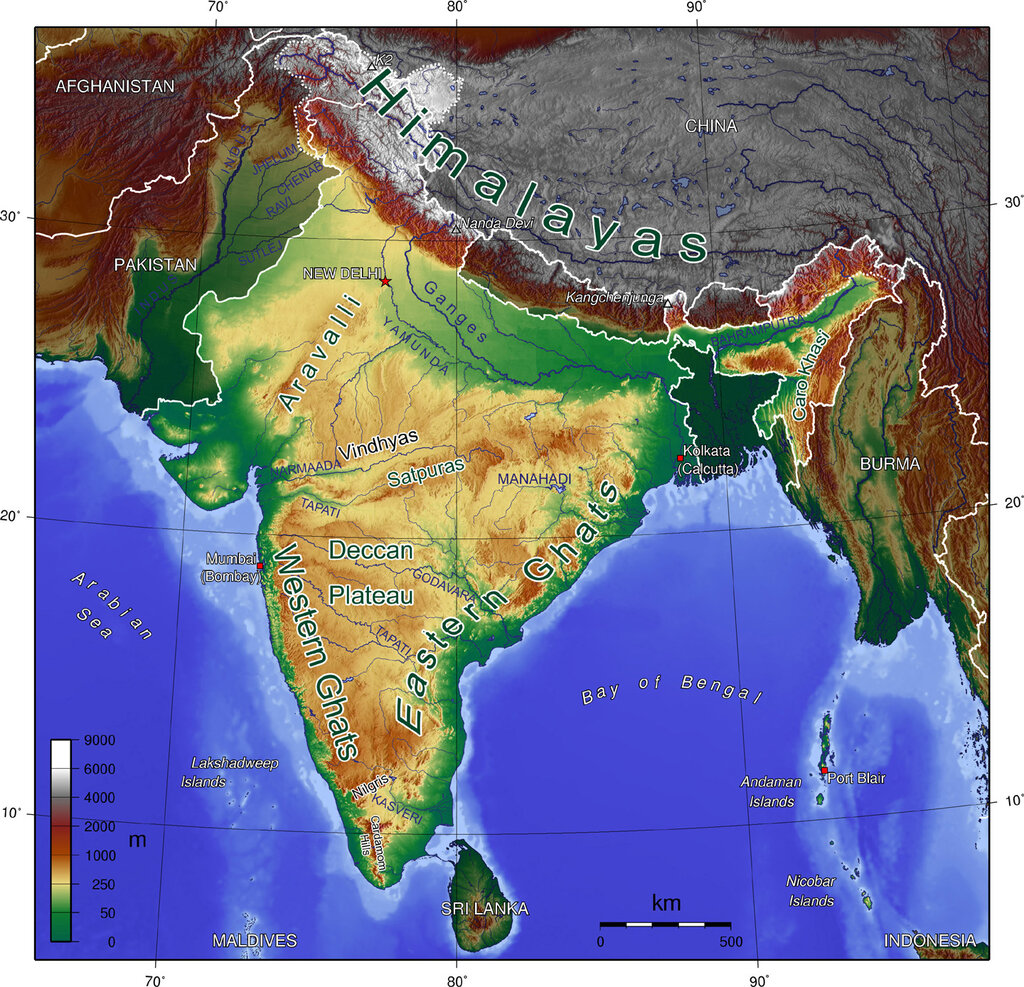
The sheer size of the Indian subcontinent plays a huge role. It spans over 3,000 kilometers from north to south. But two features are particularly influential: the towering Himalayan mountain range to the north and the vast Thar Desert in the northwest. Together with the long coastline and the large central plateau, these features create a complex climatic system.
The Main Climate Zones
Given its geography, climatologists generally group India into a few broad zones. While there are many sub-regions, understanding the main types provides a clear picture.
| Climate Zone | Primary Characteristics | Typical Regions |
|---|---|---|
| Tropical Wet | High temperatures and heavy rainfall year-round. | Southwestern coast, Northeast India |
| Tropical Wet & Dry | Distinct wet and dry seasons. Most of the country falls here. | Most of the peninsular plateau |
| Arid & Semi-Arid | Low rainfall, high temperatures, and dry conditions. | Western India (Thar Desert), parts of the central plateau |
| Subtropical Humid | Hot summers, cool winters, and significant rainfall. | Indo-Gangetic Plain |
| Montane (Alpine) | Cool to cold temperatures depending on altitude. | Himalayan region |
What Shapes the Weather
Three major factors work together to control India's climate. Think of them as the primary dials that set the weather patterns for the entire subcontinent.
The Himalayas act as a massive barrier, protecting the subcontinent from frigid winds blowing down from Central Asia. Without them, much of northern India would be significantly colder in the winter.
The Thar Desert in the northwest heats up intensely during the summer. This creates a low-pressure system that is crucial for drawing in moisture-laden winds from the Indian Ocean, which is the engine of the famous monsoon rains.
Finally, India's long coastline means that the Arabian Sea, Indian Ocean, and Bay of Bengal have a moderating influence. Coastal regions experience less extreme temperature variations compared to the interior of the country.
These three elements—mountains, desert, and sea—are the main architects of India's climate, creating the conditions for its distinct seasons and regional weather patterns.
These foundational elements set the stage for the country's seasons, which we will explore in more detail later. For now, let's review what we've learned.
Time to test your knowledge.
What is the primary role of the Himalayan mountains in shaping India's climate?
The intense heating of the Thar Desert during summer is crucial for which major climatic event?
Understanding these core concepts is the first step to appreciating the complex and fascinating climate of India.