Indian Stock Market Hedging Strategies
Introduction to Risk Management
What is Risk, Really?
When you invest, you're buying a piece of a company's future. The hope is that the future will be bright and your investment will grow. But the future is uncertain. That uncertainty is the heart of investment risk.
Risk
noun
The probability that an investment's actual return will be different from its expected return. This includes the possibility of losing some or all of the original investment.
Think of it like farming. A farmer plants seeds expecting a good harvest. But there's a risk of too little rain, a pest infestation, or a sudden drop in crop prices. They can't eliminate these risks, but they can manage them by irrigating, using pesticides, and diversifying their crops. Investing is similar. You can't erase risk, but you can learn to manage it.
Successful investing isn’t about eliminating risk—it’s about understanding and controlling it.
The Many Faces of Risk
Risk isn't a single, monolithic thing. It comes in several forms, and understanding them is the first step towards managing them. Some risks affect the entire market, while others are specific to a single company or industry.
| Risk Type | Affects | Example |
|---|---|---|
| Market Risk | The entire market | A surprise interest rate hike by the Reserve Bank of India. |
| Credit Risk | A specific company | A company fails to repay its loans, and its stock price falls. |
| Liquidity Risk | A specific investment | You can't find a buyer for your shares without a deep discount. |
Market risk, also known as systematic risk, is the big one. It's the risk that the entire stock market will decline. This can be caused by economic recessions, political turmoil, or major policy changes. You can't avoid this risk by picking different stocks, because it impacts almost everyone.
Credit risk is more personal. It’s the danger that a company you've invested in will fail to meet its debt obligations. If a company defaults on its loans, its reputation is damaged, and its stock value can plummet. This is an unsystematic risk because it’s tied to the health of one specific company.
Finally, there's liquidity risk. This happens when you want to sell your shares but can't find a buyer quickly at a fair price. This is less common for large, popular stocks on the National Stock Exchange (NSE) but can be a real problem for smaller, less-traded companies. It’s the difference between selling a popular brand of smartphone and trying to sell an antique piece of furniture; one has many more potential buyers than the other.
Why Bother Managing Risk?
The goal of risk management isn't to avoid all risk. After all, taking on some risk is necessary to earn returns. The real goal is to make sure you're only taking risks that you understand and that are likely to be rewarded. It's about protecting your capital from catastrophic losses so it can grow over the long term.
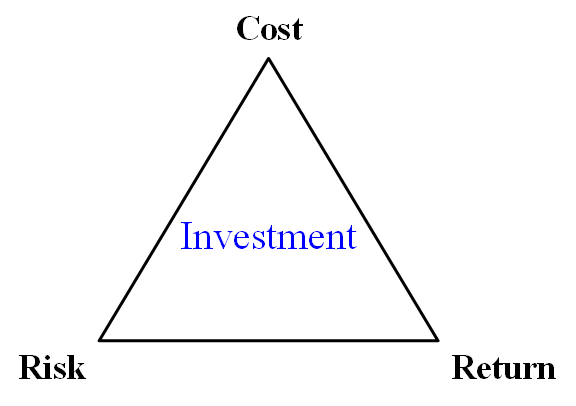
Good risk management helps you sleep at night. It provides a framework for making decisions, preventing you from panicking during market downturns or getting carried away during market highs. It helps align your investments with your financial goals and your comfort level with uncertainty.
Risk management is a continuous process.
A Quick Look at Assessing Risk
So, how do you actually measure risk? While there are complex mathematical models, the basic idea is quite simple. It starts with asking good questions.
For a specific company, you might assess its financial health. Does it have a lot of debt? Are its profits growing consistently? Who are its competitors? This helps you understand the credit risk involved.
For market risk, you can look at historical volatility. How much has the stock's price or the overall market fluctuated in the past? A stock that swings wildly up and down is generally considered riskier than one with a stable price history. Understanding your own risk tolerance is just as important. Are you comfortable with these swings, or would they cause you to sell at the worst possible time?
This initial assessment is the foundation of a solid investment strategy. It turns you from a gambler into a calculated risk-taker.
What is the fundamental concept at the heart of investment risk?
A widespread downturn in the economy causes nearly all stocks to lose value. What type of risk does this situation primarily represent?
Now that you have a grasp of the basics, you're better equipped to start thinking about your own investment journey.