Indian Rights and Judicial Activism
Introduction to the Indian Constitution
The Supreme Law of the Land
Think of a constitution as the ultimate rulebook for a country. It lays out the fundamental principles that guide how the nation is governed, defining the powers of the government and the rights of its citizens. The Constitution of India is unique. It's the longest written constitution of any country in the world.
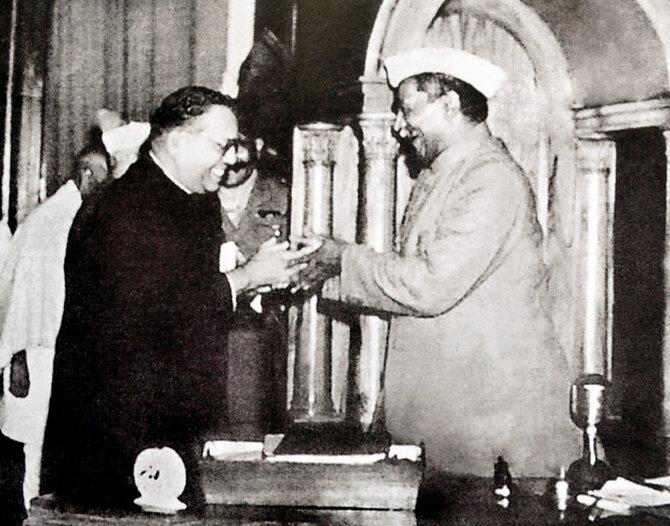
Crafted by the Constituent Assembly over nearly three years, it was adopted on 26 November 1949 and came into effect on 26 January 1950. This date is celebrated annually as India's Republic Day. This document isn't just a set of laws; it's a social contract that reflects the aspirations of a newly independent nation.
The Preamble's Promise
The Constitution begins with a Preamble, which is like its mission statement. It summarises the core values and philosophy of the entire document. It declares India to be a Sovereign, Socialist, Secular, and Democratic Republic, and outlines its commitment to securing justice, liberty, equality, and fraternity for all its citizens.
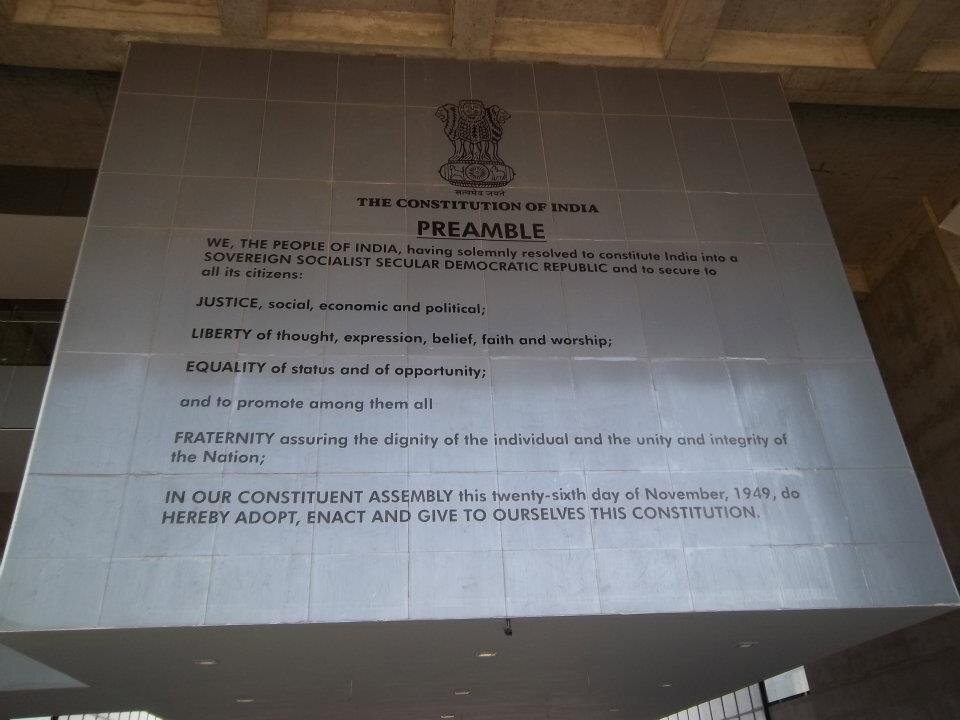
The Preamble reveals four ingredients or components:1. Source of authority of the Constitution: The Preamble states that the Constitution derives its authority from the people of India.2. Nature of Indian State: It declares India to be of a sovereign, socialist, secular democratic and republican polity.3. Objectives of the Constitution: It specifies justice, liberty, equality and fraternity as the objectives.4. Date of adoption of the Constitution: It stipulates November 26, 1949 as the date.
Each word in the Preamble was chosen carefully. For instance, 'Sovereign' means India is an independent authority, free from external control. 'Democratic' signifies that the government is elected by the people. These principles are the bedrock upon which the nation's governance is built.
A Look Inside
The Indian Constitution is a detailed document. Originally, it had 395 articles divided into 22 parts and 8 schedules. Over the years, numerous amendments have been made, adding new articles and parts, reflecting its nature as a 'living document' that can adapt to the changing needs of society.
| Component | Description |
|---|---|
| Preamble | An introductory statement outlining the Constitution's philosophy. |
| Parts | The main body is divided into Parts, each dealing with a specific area of law (e.g., The Union, The States, Citizenship). |
| Articles | Within each Part are Articles, which are the specific legal provisions or rules. |
| Schedules | These are appendices to the Constitution that contain lists and tables with additional details, such as the list of states and union territories. |
This structure helps to organise a vast amount of information logically, making the framework of governance clear and accessible.
Sharing Power
India follows a system of federalism, where power is divided between a central authority (the Union government) and various constituent units (the State governments). This division of power is one of the most important aspects of the Constitution. It ensures that a country as diverse as India can be governed effectively, allowing states to legislate on local issues while the central government handles matters of national importance.
The Seventh Schedule of the Constitution formally outlines this separation through three lists. The Union List covers subjects where only the central parliament can make laws. The State List includes subjects for state legislatures. The Concurrent List contains subjects where both can legislate, though a central law generally prevails in case of a conflict. This carefully balanced structure helps maintain unity while respecting regional diversity.
Ultimately, the Constitution serves as the cornerstone of Indian democracy. It provides the framework for political governance, establishes the structure and procedures of government institutions, and sets out the rights and duties of citizens. Most importantly, it acts as a check on the power of the state, ensuring that the government operates within the law and for the welfare of the people.
What is the primary significance of the date 26th January 1950 in relation to the Indian Constitution?
The Preamble to the Indian Constitution describes India as a 'Sovereign' nation. What does this term imply?
This foundational document is the starting point for understanding how India works. In the articles that follow, we'll explore some of its most crucial components, starting with the Fundamental Rights it guarantees to every citizen.